About 381 minutes
Moonfleet — Reading Notes
Wandering Heroes Classic Adventures
87,500 recorded words. 47 minutes difference from this book's estimate.
View Gutenberg source #10743
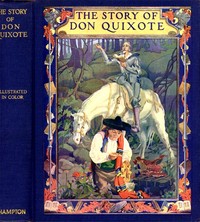
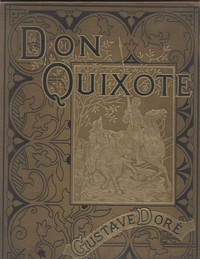
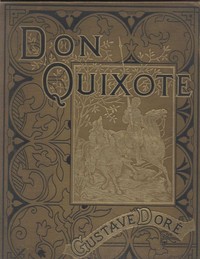
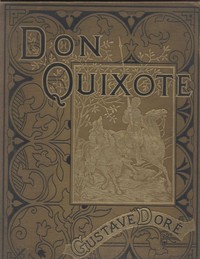
For The Story of Don Quixote — Reading Companion, the stored edition analysis reports 98,218 words, 7 hr 8 min estimated reading time, and 10 detected text sections.
The text analysis averages about 29.5 words per sentence, while the detected sections provide another way to judge how the source is divided.
Project Gutenberg metadata also associates the work with “Spain -- Social life and customs -- 16th century -- Fiction,” connecting these edition facts with the source record’s subject description.
Explore this collection
These alternatives are selected using recorded categories and estimated reading time.
About 381 minutes
Wandering Heroes Classic Adventures
87,500 recorded words. 47 minutes difference from this book's estimate.
View Gutenberg source #10743About 355 minutes
Wandering Heroes Classic Adventures
81,630 recorded words. 73 minutes difference from this book's estimate.
View Gutenberg source #67753About 338 minutes
Wandering Heroes Classic Adventures
77,526 recorded words. 90 minutes difference from this book's estimate.
View Gutenberg source #60339Search stored excerpts and compare books → Choose by your preferences →
Choices use stored catalog measurements. Estimates vary with reading speed. A shared category is a catalog label, not a claim that two books have the same argument or literary quality.
Search reads excerpt text stored with this catalog and links to its associated Gutenberg record. The connection is stored in the site database; this tool does not recheck that every excerpt is word-for-word identical to that external record. Excerpt search does not cover every chapter and does not verify historical publication dates.
Catalog snapshot checked: 2026-09-25. Coverage: 100 public books, 100 available source excerpts.
Read the complete public-domain text at its original source.
Read on Project GutenbergThe adaptation by Arvid Paulson and Clayton Edwards streamlines Cervantes' sprawling narrative into a brisk retelling that leans heavily on dialogue. The voice of Don Quixote is consistently lofty and archaic—he speaks of “castles and royal palaces” and insists that a boat was “sent by magic to fetch him”—while Sancho Panza counters with earthy, practical remarks. This contrast in register creates a comic rhythm that drives many scenes.
The editors also manipulate pace: long, winding descriptions are condensed, and key episodes—such as the search for Dulcinea in El Toboso—unfold through rapid exchanges. The result is a version that moves quickly from one misadventure to the next, emphasizing the absurdity of Quixote's worldview over the novel's philosophical digressions.
The adaptation relies on back-and-forth exchanges to advance the plot and define character. In the El Toboso episode, Quixote’s grand pronouncements (“Where hast thou ever heard of castles and royal palaces being built in alleys?”) are immediately undercut by Sancho’s muttered retorts (“I wish I saw the dogs eating it for leading us such a dance”). This pattern recurs throughout: Quixote frames events in chivalric terms, while Sancho voices the reader’s skepticism.
The editors preserve the original’s verbal sparring but trim descriptive passages, making the dialogue the primary vehicle for humor. Sancho’s soliloquy in Chapter X—where he reasons that if his master can mistake windmills for giants, he can pass off a country girl as Dulcinea—is a standout example of how the adaptation uses internal monologue to reveal character without slowing the narrative.
The adaptation compresses Cervantes’ longer episodes into tighter sequences. For instance, the search for Dulcinea’s palace is reduced to a few paragraphs of back-and-forth between Quixote and Sancho, punctuated by the arrival of a laborer singing a “dreary song.” The scene ends abruptly with the pair retreating to a forest, a decision that maintains momentum.
This condensation sometimes sacrifices the original’s layered irony. In the windmill episode (Chapter VIII-IX), the adaptation likely retains the core joke—Quixote sees giants, Sancho sees windmills—but the pacing is faster, with less time spent on Quixote’s elaborate justifications. The effect is a more straightforward comedy of errors, where the absurdity of Quixote’s delusions is immediately apparent.
The adaptation deliberately heightens the contrast between Quixote’s elevated diction and Sancho’s colloquial speech. Quixote uses formal constructions (“Speak respectfully of what belongs to my lady”) and invokes chivalric codes, while Sancho responds with proverbs and blunt observations (“there is a remedy for everything except death”). This linguistic divide reinforces their opposing worldviews.
The editors also vary sentence length to reflect mood: Quixote’s speeches are often longer and more periodic, while Sancho’s replies are terse. In the graveyard scene, Sancho’s unease is conveyed through short, fragmented thoughts (“his superstitious soul did not like the idea of walking across a graveyard at such an hour”), contrasting with Quixote’s unwavering certainty. These shifts in register and rhythm keep the prose lively and underscore the central conflict between illusion and reality.
Readers familiar with the original novel will notice that this adaptation prioritizes narrative speed over philosophical depth. The editors have chosen to foreground the comic interplay between Quixote and Sancho, making the story accessible while preserving its essential absurdity. Pay attention to how the dialogue reveals character: Quixote’s unwavering idealism and Sancho’s pragmatic cunning are the true engines of this version, not the adventures themselves.
Reading about Don Quixote’s windmills, I felt that ache of wanting, and then remembered how another story—The little elves seeking the beautiful world — Inside the Classic—carries the same quiet longing, just softer, like dusk before the stars. Both create worlds we half-believe, not because they are true, but because they are needed. That old, tender reckoning with hope feels familiar, asleep in my own pages.
A brief reflection can help important ideas stay with you longer.