About 51 minutes
The History of Don Quixote, Volume 1, Part 14 — A Reader’s Guide
Wandering Heroes Classic Adventures
11,517 recorded words. 1 minutes difference from this book's estimate.
View Gutenberg source #5916
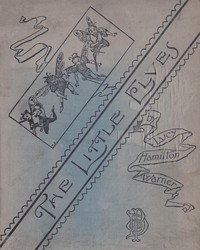
The catalog record for The little elves seeking the beautiful world — Inside the Classic provides practical reading context through 11,498 words, 50 min estimated reading time, and 20 detected text sections.
The text analysis averages about 14.5 words per sentence, while the detected sections provide another way to judge how the source is divided.
Project Gutenberg metadata also associates the work with “Fantasy literature,” connecting these edition facts with the source record’s subject description.
Explore this collection
These alternatives are selected using recorded categories and estimated reading time.
About 51 minutes
Wandering Heroes Classic Adventures
11,517 recorded words. 1 minutes difference from this book's estimate.
View Gutenberg source #5916About 58 minutes
Wandering Heroes Classic Adventures
13,315 recorded words. 8 minutes difference from this book's estimate.
View Gutenberg source #5918About 62 minutes
Wandering Heroes Classic Adventures
14,105 recorded words. 12 minutes difference from this book's estimate.
View Gutenberg source #5914Search stored excerpts and compare books → Choose by your preferences →
Choices use stored catalog measurements. Estimates vary with reading speed. A shared category is a catalog label, not a claim that two books have the same argument or literary quality.
Search reads excerpt text stored with this catalog and links to its associated Gutenberg record. The connection is stored in the site database; this tool does not recheck that every excerpt is word-for-word identical to that external record. Excerpt search does not cover every chapter and does not verify historical publication dates.
Catalog snapshot checked: 2026-09-25. Coverage: 100 public books, 100 available source excerpts.
Read the complete public-domain text at its original source.
Read on Project GutenbergThe four elves named Spider Eyes, Chip Wing, Pointed Toes, and Dusty Cap are introduced as Queen Wishtah's trusty servants, sent to find a pine grove for her new palace. But overhearing children singing about the beautiful world, they redirect their quest, setting up a central tension between duty and personal desire. The narrative voice is brisk and matter-of-fact, yet the elves' repeated deferrals—'We must first make ready the Queen’s palace, then we might leave'—hint at a pattern of postponed goals.
The opening chapter establishes two competing calls: Queen Wishtah's formal summons and the children's spontaneous chant. The queen speaks in declarative sentences—'Arise, go seek one of those wonderful pine groves'—while the children's song is repetitive and communal: 'Let us go to see the beautiful world.' Spider Eyes immediately latches onto the latter, but Pointed Toes insists on duty first. This split among the elves—between obedience and curiosity—drives the early pages. The queen herself is described as 'beautiful' but remains distant; the children are anonymous but joyful. The elves' journey begins as a practical errand but quickly becomes a search for something undefined, a 'beautiful world' that no one has seen.
When Grandfather Grasshopper introduces the elves to Mrs. Field Mouse, her initial courtesy—'I am glad to meet you, gentlemen'—contrasts sharply with her behavior once the grasshopper leaves. She locks the door, assigns harsh tasks, and slaps Spider Eyes for opening a window. The elves' reaction is telling: they repeatedly remind each other that she is not their queen, yet they comply. The text emphasizes their physical helplessness: Spider Eyes cannot lift a baby mouse, and the door is locked with the key taken. The episode turns the quest for a beautiful world into a lesson about misplaced trust and the gap between promise and reality. Mrs. Mouse's home, described as 'close' and dark, becomes a prison.
Throughout the excerpts, the elves' journey is marked by delays and reversals. They set out to find a pine grove for the queen, then decide to seek the beautiful world, then are trapped by Mrs. Mouse. Each step forward is countered by an obstacle. The phrase 'We must first' recurs: 'We must first make ready the Queen’s palace,' then 'We must go to see the beautiful world.' The children's song is a refrain that the elves echo but never fulfill. The narrative structure suggests a cycle of intention and interruption. The illustrations listed—such as 'Spider Eyes Asleep in the Poppy' and 'The Mending of Spider Eyes’ Wing'—hint at further setbacks. The reader is left wondering whether the beautiful world is a destination or a mirage.
The excerpts offer only the first chapter and a later scene, so the full arc of the elves' quest remains unknown. Readers may watch for how the elves' repeated deferrals resolve—or fail to resolve—and whether the beautiful world is ever reached. The story's pattern of promise and captivity suggests a cautionary tone beneath its whimsical surface.
Remembering the elves locked in Mrs. Field Mouse’s pantry, I thought of my own childhood hours spent in a dusty armchair, the world outside dimming. The Story of Don Quixote — Reading Companion once gave me that same ache—a longing for windmills and wide skies while sitting perfectly still, trusting the pages more than the people around me.
Build a private reading journal entry for this title.