About 103 minutes
Kernel Cob And Little Miss Sweetclover — Text and Context
Wandering Heroes Classic Adventures
23,504 recorded words. 14 minutes difference from this book's estimate.
View Gutenberg source #14110
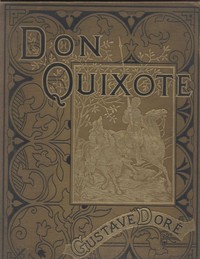
The catalog record for The History of Don Quixote, Volume 1, Part 15 — Themes and Context provides practical reading context through 20,381 words, 1 hr 29 min estimated reading time, and 3 detected text sections.
The text analysis averages about 45.2 words per sentence, while the detected sections provide another way to judge how the source is divided.
Project Gutenberg metadata also associates the work with “Spain -- Social life and customs -- 16th century -- Fiction,” connecting these edition facts with the source record’s subject description.
Explore this collection
These alternatives are selected using recorded categories and estimated reading time.
About 103 minutes
Wandering Heroes Classic Adventures
23,504 recorded words. 14 minutes difference from this book's estimate.
View Gutenberg source #14110About 105 minutes
Wandering Heroes Classic Adventures
23,929 recorded words. 16 minutes difference from this book's estimate.
View Gutenberg source #5911About 110 minutes
Wandering Heroes Classic Adventures
25,146 recorded words. 21 minutes difference from this book's estimate.
View Gutenberg source #5909Search stored excerpts and compare books → Choose by your preferences →
Choices use stored catalog measurements. Estimates vary with reading speed. A shared category is a catalog label, not a claim that two books have the same argument or literary quality.
Search reads excerpt text stored with this catalog and links to its associated Gutenberg record. The connection is stored in the site database; this tool does not recheck that every excerpt is word-for-word identical to that external record. Excerpt search does not cover every chapter and does not verify historical publication dates.
Catalog snapshot checked: 2026-09-25. Coverage: 100 public books, 100 available source excerpts.
Read the complete public-domain text at its original source.
Read on Project GutenbergThis installment of Don Quixote centers on the crowded inn, where a barber's claim to a pack-saddle and a basin ignites a dispute that tests Quixote's chivalric worldview against plain evidence. Cervantes builds the scene through overlapping voices: the barber insists the pack-saddle fits his ass 'like a glove,' Sancho counters with a cuff that 'bathed his teeth in blood,' and Quixote calmly reasserts that the basin is Mambrino's helmet, transformed by enchantment. The author's control of diction—from the barber's earthy oath 'as sure as I owe God a death' to Quixote's formal 'legitimate and lawful possession'—sharpens the comedy of incompatible realities.
The section opens with the captive concluding his story, and Don Fernando praises its telling as 'such as befitted the novelty and strangeness of the matter.' This meta-commentary draws attention to Cervantes's own narrative craft: the tale within a tale is framed by listeners who remark on its structure. The captive's refusal of offers—Don Fernando proposes his brother as godfather for Zoraida's baptism—shows a character who resists easy resolution, maintaining his independence even in gratitude. Cervantes uses this pause to shift tone before the inn's chaos resumes.
The barber's entrance triggers a physical and verbal brawl. His claim—'this pack-saddle is mine as surely as I owe God a death'—grounds the argument in tangible ownership, while Sancho's retort invokes 'fair war' won by his master. Cervantes juxtaposes the barber's concrete evidence (the ass that 'will not let me lie') with Quixote's abstract reasoning: transformations 'will take place in adventures of chivalry.' The author lets the reader see both sides, but the comedy arises from the characters' inability to reconcile them. Sancho's wry aside—'if we have no other proof... Mambrino's helmet is just as much a basin'—undermines his master's certainty.
When Quixote produces the basin and swears it is 'the identical one I took from him, without anything added to or taken from it,' Cervantes highlights the knight's unshakable faith in his own perception. The phrase 'without anything added to or taken from it' echoes legal language, but the object itself contradicts him. The author does not let Quixote's delusion go unchallenged: the barber's incredulity and Sancho's doubt create a triangulated debate. This scene exemplifies how Cervantes uses dialogue to stage epistemological conflict—what each character 'knows' depends on their interpretive framework.
Cervantes populates the inn with multiple characters—Don Fernando, Cardenio, the Judge, servants—each with their own concerns. The narrator notes that 'the devil, who never sleeps, contrived' the barber's arrival, a wry nod to comic timing. The inn becomes a space where social hierarchies and personal histories collide: the captive's noble tale, the barber's practical grievance, and Quixote's chivalric fantasy all demand attention. The author's choice to intercut these voices without privileging any one perspective creates a polyphonic texture, inviting readers to weigh each claim.
Readers attentive to Cervantes's handling of dialogue will notice how each character's speech reveals their worldview: the barber's concrete references, Quixote's formal declarations, Sancho's earthy pragmatism. The inn functions as a microcosm where these languages compete, and the humor emerges from their irreconcilability. This volume rewards a focus on who speaks, how they phrase their claims, and what they assume about truth and evidence.
That moment in Part 15, where the basin becomes a helmet and the saddle a treasure, kept echoing after I closed it. It reminded me of how a place can hold two truths at once—the dusty inn and Quixote's gleaming castle. The Golden Canyon — Background and Themes feels like a quieter cousin to that, a canyon that lingers in the mind as both rock and wonder. Sometimes the ordinary is enough.
Create a short personal record of your experience with this book.