About 103 minutes
Kernel Cob And Little Miss Sweetclover — Text and Context
Wandering Heroes Classic Adventures
23,504 recorded words. 2 minutes difference from this book's estimate.
View Gutenberg source #14110
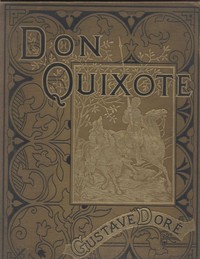
The catalog record for The History of Don Quixote, Volume 1, Part 09 — Themes and Context provides practical reading context through 23,929 words, 1 hr 45 min estimated reading time, and 3 detected text sections.
The text analysis averages about 45.9 words per sentence, while the detected sections provide another way to judge how the source is divided.
Project Gutenberg metadata also associates the work with “Spain -- Social life and customs -- 16th century -- Fiction,” connecting these edition facts with the source record’s subject description.
Explore this collection
These alternatives are selected using recorded categories and estimated reading time.
About 103 minutes
Wandering Heroes Classic Adventures
23,504 recorded words. 2 minutes difference from this book's estimate.
View Gutenberg source #14110About 110 minutes
Wandering Heroes Classic Adventures
25,146 recorded words. 5 minutes difference from this book's estimate.
View Gutenberg source #5909About 89 minutes
Wandering Heroes Classic Adventures
20,381 recorded words. 16 minutes difference from this book's estimate.
View Gutenberg source #5917Search stored excerpts and compare books → Choose by your preferences →
Choices use stored catalog measurements. Estimates vary with reading speed. A shared category is a catalog label, not a claim that two books have the same argument or literary quality.
Search reads excerpt text stored with this catalog and links to its associated Gutenberg record. The connection is stored in the site database; this tool does not recheck that every excerpt is word-for-word identical to that external record. Excerpt search does not cover every chapter and does not verify historical publication dates.
Catalog snapshot checked: 2026-09-25. Coverage: 100 public books, 100 available source excerpts.
Read the complete public-domain text at its original source.
Read on Project GutenbergThis installment of Don Quixote finds the knight deep in the Sierra Morena, where his imitation of Beltenebros's penance is both earnest and absurd. The narrative structure alternates between Don Quixote's solitary performances—sighing, composing verses, and calling upon fauns and satyrs—and the pragmatic scheming of the curate and barber, who have tracked him down. Cervantes weaves a layered comedy of misrecognition: Sancho Panza's encounter with the curate and barber at the inn where he was blanketed sets off a chain of deceptions. The text's movement between the mountain's wild interior and the roadside inn creates a spatial tension that mirrors the characters' conflicting motives.
Don Quixote's poetic efforts in the Sierra Morena reveal a self-conscious literariness. The three deciphered lines of his verse—ending with the insistent addition of "del Toboso"—prompt laughter among those who find them, as the narrator notes that Don Quixote believed the name would be unintelligible without it. This detail underscores his obsessive need to anchor Dulcinea in a specific place, even in verse. The knight also calls on "the fauns and satyrs of the woods and the nymphs of the streams, and Echo, moist and mournful" to answer him, a gesture that blends classical allusion with a palpable loneliness. The narrator wryly observes that had Sancho's return been delayed three weeks instead of three days, Don Quixote's altered countenance would have made him unrecognizable. The verses function not as genuine lyricism but as evidence of a mind so steeped in romance that it cannot separate literary convention from lived experience.
When Sancho Panza emerges from the mountains onto the high road, he immediately recognizes the inn where he suffered the blanket-tossing. His hesitation at the door—driven by hunger and fear—sets the stage for a chance meeting with the curate and barber of his village. They recognize both Sancho and Rocinante at once, and their suspicion that Sancho has murdered his master introduces a note of dark comedy. Sancho's offhand account of Don Quixote's penance, delivered "without stopping," reveals his own blend of loyalty and bewilderment. The curate and barber, though already aware of Don Quixote's madness, are "filled with fresh wonder" at each new report. Their request to see the letter to Dulcinea, and Sancho's explanation that it is written in a notebook to be copied later, sets up a crucial plot device: the letter's contents become a point of manipulation, as the curate and barber begin to devise a scheme to bring the knight home.
The geography of this part is sharply divided between the Sierra Morena's rugged interior and the inn as a social hub. Don Quixote's penance unfolds in a space of isolation, where he composes verses and searches for herbs to sustain himself. In contrast, the inn is a site of recognition, conversation, and plotting. Sancho's journey from the mountains to the high road marks a transition from the knight's private madness to the public world of the curate and barber. The inn itself carries a memory of violence—the blanket-tossing—which Sancho relives as he approaches. Cervantes uses this spatial movement to create a rhythm of retreat and return: the narrative leaves Don Quixote "wrapped up in sighs and verses" to follow Sancho, then shifts back to the curate and barber's plans. This alternating structure keeps the reader suspended between the knight's interior drama and the external machinations of those who seek to cure him.
Once the curate and barber learn of Don Quixote's location and his letter to Dulcinea, they begin to craft a response. Their scheme hinges on their ability to read and manipulate the knight's delusions. The barber's threat to Sancho—"if you don't tell us where he is, we will suspect that you have murdered and robbed him"—shows how quickly they turn suspicion into leverage. Yet their wonder at each new detail of Don Quixote's behavior suggests that even they are not fully in control of the situation. The letter, which Sancho carries in a notebook, becomes a tangible object of negotiation: it is both a token of Don Quixote's love and a potential tool for deception. The curate and barber's plan to intercept and alter the message introduces a meta-fictional layer, as the characters themselves become editors of the knight's narrative. This section sets up a comedy of misreading, where everyone interprets Don Quixote's actions through their own interests.
Readers attentive to structure will notice how Cervantes balances Don Quixote's solitary performances with the social comedy of the curate and barber's plotting. The Sierra Morena functions as both a stage for the knight's self-styled penance and a space where others can observe and intervene. Pay particular attention to the way letters, verses, and verbal reports circulate among characters, each version altering the story. The interplay between what Don Quixote believes he is doing and what others perceive creates a layered irony that deepens with every exchange.
That grey afternoon, I lost myself in Don Quixote’s penance, his tangled fervor echoing off the rocks, when the rain began. The barber’s disguise made me smile, and I thought of other hidden identities. Later, some stray line about liquid sunlight drifted back, almost a reflection of that same mad logic. Don Miguel Lehumada: discoverer of liquid from the sun's rays an occult romance of Mexico and the United States — Context and Discussion felt like the quiet next chapter.
Use these questions to collect your thoughts before moving on.