About 58 minutes
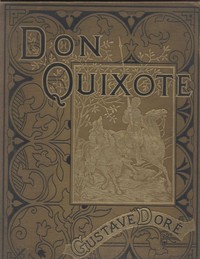
The History of Don Quixote, Volume 1, Part 16 — A Closer Reading
Wandering Heroes Classic Adventures
13,315 recorded words. 4 minutes difference from this book's estimate.
View Gutenberg source #5918
This digital edition of The History of Don Quixote, Volume 1, Part 12 — Reading Companion is described by source-level measurements including 14,105 words, 1 hr 2 min estimated reading time, and 2 detected text sections.
The text analysis averages about 36.1 words per sentence, while the detected sections provide another way to judge how the source is divided.
Project Gutenberg metadata also associates the work with “Spain -- Social life and customs -- 16th century -- Fiction,” connecting these edition facts with the source record’s subject description.
Explore this collection
These alternatives are selected using recorded categories and estimated reading time.
About 58 minutes
Wandering Heroes Classic Adventures
13,315 recorded words. 4 minutes difference from this book's estimate.
View Gutenberg source #5918About 51 minutes
Wandering Heroes Classic Adventures
11,517 recorded words. 11 minutes difference from this book's estimate.
View Gutenberg source #5916About 50 minutes
Wandering Heroes Classic Adventures
11,498 recorded words. 12 minutes difference from this book's estimate.
View Gutenberg source #70090Search stored excerpts and compare books → Choose by your preferences →
Choices use stored catalog measurements. Estimates vary with reading speed. A shared category is a catalog label, not a claim that two books have the same argument or literary quality.
Search reads excerpt text stored with this catalog and links to its associated Gutenberg record. The connection is stored in the site database; this tool does not recheck that every excerpt is word-for-word identical to that external record. Excerpt search does not cover every chapter and does not verify historical publication dates.
Catalog snapshot checked: 2026-09-25. Coverage: 100 public books, 100 available source excerpts.
Read the complete public-domain text at its original source.
Read on Project GutenbergThis part opens with Don Quixote defending his liberation of the galley slaves, insisting that knights-errant must aid the afflicted without inquiring into their guilt. His vehemence—calling any objector a "whoreson villain"—shows how his chivalric code overrides legal or moral nuance. The scene quickly shifts to Sancho Panza, whose earthy pragmatism contrasts with his master's idealism. Sancho admits he cannot read yet delivers shrewd observations, prompting Quixote to exclaim, "One would think thou hadst studied." This tension between learned folly and unlettered wisdom runs through the chapters.
When the curate recounts the freeing of the galley slaves, Sancho immediately identifies his master as the culprit, adding that he warned him it was a sin. Quixote's response is a fierce defense of knight-errant duty: "It only concerns them to aid them as persons in need of help, having regard to their sufferings and not to their rascalities." He challenges anyone who disagrees—except the licentiate—to a duel, calling them a liar and "whoreson villain." The speech reveals a rigid moral framework that refuses to weigh consequences. Quixote's logic is internally consistent but detached from worldly justice, a pattern that recurs throughout the narrative.
Sancho, weary from inventing stories about Dulcinea, fears his master will catch him in a lie. He admits he has never seen the peasant girl he claims to have visited. This moment of self-awareness is rare for Sancho, who usually blunders without reflection. Earlier, he parodies theological love—"I would rather love and serve him for what he could do"—prompting Quixote's admiration. The squire's blend of superstition and cunning creates a comic counterpoint to Quixote's grandiloquence. His inability to read does not prevent him from occasionally uttering "shrewd things," as Quixote notes, though the knight attributes this to study rather than native wit.
The reappearance of the boy Andres provides a stark test of Quixote's earlier heroism. Quixote recounts with pride how he forced Andres's master to swear he would pay the boy and treat him well. But Andres corrects him: as soon as Quixote left, the master tied him up again and flogged him "like a flayed Saint Bartholomew," mocking Quixote with each stroke. The boy's testimony directly contradicts Quixote's claim that knights-errant are essential for justice. The episode exposes the gap between Quixote's intentions and the real-world outcomes of his interventions. Andres's bitter account leaves Quixote's authority undermined, though the knight does not acknowledge the failure.
These chapters pivot between high-flown debate and deflating reality. Readers should watch how Cervantes uses Sancho's lies and Andres's return to question the effectiveness of Quixote's chivalry. The inn setting, where multiple characters converge, amplifies the contrast between Quixote's self-image and the messy consequences of his actions. Pay attention to who gets the last word in each exchange—often it is not the knight.
I keep thinking about the moment Andres reappears, undoing all of Quixote's grand claims — how our best intentions can curdle into somebody else's memory of harm. It felt like a quiet ache, that truth slipping under the comedy. I remembered that same gentleness in The little elves seeking the beautiful world — Inside the Classic, where small kindnesses also carry unintended weight. Perhaps that’s just how it goes, reading these old tales — seeing ourselves in the cracks.
A brief reflection can help important ideas stay with you longer.