About 62 minutes
The History of Don Quixote, Volume 1, Part 12 — Reading Companion
Wandering Heroes Classic Adventures
14,105 recorded words. 4 minutes difference from this book's estimate.
View Gutenberg source #5914
The History of Don Quixote, Volume 1, Part 16 — A Closer Reading can be approached with a clearer sense of reading commitment from its source measurements: 13,315 words, 58 min estimated reading time, and 2 detected text sections.
The text analysis averages about 43.8 words per sentence, while the detected sections provide another way to judge how the source is divided.
Project Gutenberg metadata also associates the work with “Spain -- Social life and customs -- 16th century -- Fiction,” connecting these edition facts with the source record’s subject description.
Explore this collection
These alternatives are selected using recorded categories and estimated reading time.
About 62 minutes
Wandering Heroes Classic Adventures
14,105 recorded words. 4 minutes difference from this book's estimate.
View Gutenberg source #5914About 51 minutes
Wandering Heroes Classic Adventures
11,517 recorded words. 7 minutes difference from this book's estimate.
View Gutenberg source #5916About 50 minutes
Wandering Heroes Classic Adventures
11,498 recorded words. 8 minutes difference from this book's estimate.
View Gutenberg source #70090Search stored excerpts and compare books → Choose by your preferences →
Choices use stored catalog measurements. Estimates vary with reading speed. A shared category is a catalog label, not a claim that two books have the same argument or literary quality.
Search reads excerpt text stored with this catalog and links to its associated Gutenberg record. The connection is stored in the site database; this tool does not recheck that every excerpt is word-for-word identical to that external record. Excerpt search does not cover every chapter and does not verify historical publication dates.
Catalog snapshot checked: 2026-09-25. Coverage: 100 public books, 100 available source excerpts.
Read the complete public-domain text at its original source.
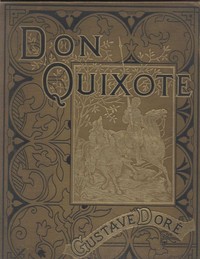
Read on Project GutenbergDon Quixote's confinement in a cage atop an ox-cart marks a stark departure from the airborne enchantments of chivalric romance. His protest—'never yet have I read, seen, or heard of their carrying off enchanted knights-errant in this fashion'—underscores the gap between literary expectation and lived absurdity. The slow pace of 'lazy, sluggish animals' contrasts with the swift clouds or hippogriffs of his reading, grounding his delusion in a mundane, almost comical reality.
Sancho, meanwhile, begins to voice suspicions that the masked figures are their own curate and barber, not enchanters. This tension between Sancho's emerging skepticism and Quixote's unwavering faith in enchantment drives the dialogue, as the knight rationalizes that enchanters 'may have taken those of our friends' to confuse him. The scene sets up a central conflict: is Quixote enchanted or merely deceived?
Quixote's reaction to his mode of transport reveals his deep immersion in chivalric literature. He notes that enchanted knights are 'always taken away through the air with marvellous swiftness, enveloped in a dark thick cloud, or on a chariot of fire.' The ox-cart, by contrast, is a pedestrian, almost humiliating conveyance. This discrepancy forces Quixote to hypothesize that 'the chivalry and enchantments of our day take a different course.' His willingness to adapt his worldview to accommodate the absurdity shows the flexibility of his delusion.
The cage itself becomes a symbol of his entrapment—not just physically, but within his own narrative. The barber and curate, disguised as enchanters, exploit his literary expectations. The scene echoes earlier episodes where Quixote's reality is shaped by what he has read, but here the manipulation is more explicit. The ox-cart's slow pace contrasts with the swiftness of magical transport, emphasizing the gap between ideal and reality.
Sancho's whispered conversation with Quixote marks a shift in his role. He directly challenges the enchantment narrative, claiming the masked figures are 'the curate of our village and the barber.' He suspects 'pure envy' rather than magic. His request to ask a question—'if you answer me as I believe you will answer, you will be able to lay your finger on the trick'—shows his attempt to apply logic.
Quixote's response is a masterclass in circular reasoning: he admits the figures seem like the curate and barber, but insists enchanters can 'take any form they please.' He warns Sancho that this is a 'labyrinth of fancies' from which he will find 'no escape though thou hadst the cord of Theseus.' This mythological reference underscores Quixote's self-perception as a hero navigating a deceptive world. Sancho's doubt, however, plants a seed of uncertainty for the reader.
In Chapter XLVIII, the canon engages the curate in a discussion about books of chivalry, offering a meta-commentary on the very genre Quixote emulates. The canon's critique—though not fully quoted here—provides a counterpoint to Quixote's fervor. The setting shifts to a 'fair valley' where the party halts for rest, and the canon, attracted by the 'aspect of the fair valley' and the curate's conversation, decides to linger.
This pastoral pause contrasts with the preceding tension. The canon's servants fetch provisions, and the scene becomes a moment of respite. Yet the conversation about chivalric literature continues, blurring the line between the fictional world Quixote inhabits and the real world of the other characters. The canon's presence introduces an external, rational perspective, yet his willingness to discuss chivalry suggests that even skeptics are drawn into Quixote's orbit.
This part of Don Quixote rewards attention to the interplay between dialogue and action. Sancho's questioning and Quixote's rationalizations reveal how deeply narrative shapes perception. The canon's literary critique offers a frame for understanding the novel's self-awareness. Readers may note how Cervantes uses the cage not just as a plot device but as a metaphor for the constraints of genre and belief.
I’ve always found something tender in watching Don Quixote question his own enchantment, the cage rattling truth against delusion. Years later, I recalled that same restless doubting while holding Melmoth the Wanderer, Vol. 4 — A Reader’s Guide—a quieter kinship, both wandering through what we fear to believe, yet cannot quite set down.
Answer a few questions and save a private reflection on this device.