About 105 minutes
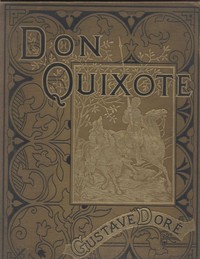
The History of Don Quixote, Volume 1, Part 09 — Themes and Context
Wandering Heroes Classic Adventures
23,929 recorded words. 5 minutes difference from this book's estimate.
View Gutenberg source #5911
Before opening The History of Don Quixote, Volume 1, Part 07 — Edition Insights, the edition data offers a quick orientation: 25,146 words, 1 hr 50 min estimated reading time, and 3 detected text sections.
The text analysis averages about 43.5 words per sentence, while the detected sections provide another way to judge how the source is divided.
Project Gutenberg metadata also associates the work with “Spain -- Social life and customs -- 16th century -- Fiction,” connecting these edition facts with the source record’s subject description.
Explore this collection
These alternatives are selected using recorded categories and estimated reading time.
About 105 minutes
Wandering Heroes Classic Adventures
23,929 recorded words. 5 minutes difference from this book's estimate.
View Gutenberg source #5911About 103 minutes
Wandering Heroes Classic Adventures
23,504 recorded words. 7 minutes difference from this book's estimate.
View Gutenberg source #14110About 89 minutes
Wandering Heroes Classic Adventures
20,381 recorded words. 21 minutes difference from this book's estimate.
View Gutenberg source #5917Search stored excerpts and compare books → Choose by your preferences →
Choices use stored catalog measurements. Estimates vary with reading speed. A shared category is a catalog label, not a claim that two books have the same argument or literary quality.
Search reads excerpt text stored with this catalog and links to its associated Gutenberg record. The connection is stored in the site database; this tool does not recheck that every excerpt is word-for-word identical to that external record. Excerpt search does not cover every chapter and does not verify historical publication dates.
Catalog snapshot checked: 2026-09-25. Coverage: 100 public books, 100 available source excerpts.
Read the complete public-domain text at its original source.
Read on Project GutenbergIn Part 7 of Don Quixote, Cervantes sharpens the contrast between his two protagonists through their verbal exchanges. Don Quixote's speeches are laden with chivalric references—he cites Amadis of Gaul and Galaor to instruct Sancho on proper squirely conduct—while Sancho responds with earthy proverbs and pragmatic concerns about wages. This dialogue reveals not only their differing worldviews but also the author's skill in using conversation to advance character and comedy.
Don Quixote's lecture to Sancho in Chapter XVIII is a masterclass in hierarchical correction. He invokes the model of Gandalin, squire to Amadis of Gaul, who addressed his lord with 'his cap in his hand, his head bowed down and his body bent double.' The contrast with Sancho's familiar tone—'your worship knows how to hit the right point with your pike'—is deliberate. Cervantes uses these exchanges to parody the idealized relationships of chivalric romances while grounding them in the realities of service. Sancho's retort about wages, comparing squires to bricklayers, deflates Quixote's lofty rhetoric with a dose of economic practicality.
The adventure of the fulling mills in Chapter XX exemplifies Cervantes' method of undercutting knight-errantry. Don Quixote's terror at the 'noise of the hammers' is a direct parody of the fearless hero he aspires to be. Sancho's earlier discomfort with the same noise is dismissed, but Quixote's own fear is later rationalized as enchantment. The author repeatedly sets up expectations of heroic action only to subvert them with mundane or absurd outcomes. The 'rich prize of Mambrino's helmet' in Chapter XXI is another such instance: what Quixote perceives as a legendary helm is, in the narrative reality, a barber's basin.
Cervantes' descriptions are economical but vivid. Sancho reaches his master 'so limp and faint that he could not urge on his beast,' a physical detail that conveys both exhaustion and the aftermath of the blanket-tossing. The author's eye for bodily comedy—Quixote's inability to mount Rocinante during Sancho's ordeal, or the precise placement of a pike blow that hits the shoulder instead of the head—creates a slapstick rhythm. These moments are not merely humorous; they ground the fantastical in the tangible, reminding the reader of the characters' physical vulnerability.
Don Quixote's insistence on enchantment as an explanation for every setback reveals a mind that reshapes reality to fit chivalric patterns. When he cannot climb the wall to aid Sancho, he attributes it to enchantment rather than his own limitations. Sancho, meanwhile, operates in a world of cause and effect, noting that 'he loves thee well that makes thee weep.' Cervantes never resolves this tension; instead, he lets the two perspectives coexist. The reader is left to navigate between Quixote's noble delusions and Sancho's grounded skepticism, a balancing act that defines the novel's enduring appeal.
Readers approaching Part 7 should attend to the rhythm of conversation: how Quixote's book-learned speeches clash with Sancho's folk wisdom, and how each adventure is framed by their differing interpretations. The humor arises not from plot alone but from the friction between language and reality. Cervantes' authorial choices in diction and description reward close reading, as every exchange and detail contributes to a layered portrait of two men bound by a shared, improbable quest.
I remember sitting with my father, him trying to explain why the Knight's madness felt so tender. This editorial unpacking of the dialogue between him and Sancho brought that afternoon back. It's the same ache I get from Melmoth the Wanderer, Vol. 3 — Story, Setting & Ideas, where isolation sharpens every spoken word into something haunting. Both are long, quiet conversations about being lost in your own head.
Capture what you thought, learned, and would like to remember.