About 333 minutes
Melmoth the Wanderer, Vol. 4 — A Reader’s Guide
Wandering Heroes Classic Adventures
76,525 recorded words. 5 minutes difference from this book's estimate.
View Gutenberg source #53688
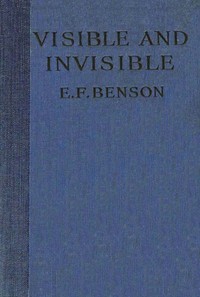
The catalog record for Visible and Invisible — Reading Companion provides practical reading context through 77,526 words, 5 hr 38 min estimated reading time, and 14 detected text sections.
The text analysis averages about 20.1 words per sentence, while the detected sections provide another way to judge how the source is divided.
Project Gutenberg metadata also associates the work with “Horror tales, English,” connecting these edition facts with the source record’s subject description.
Explore this collection
These alternatives are selected using recorded categories and estimated reading time.
About 333 minutes
Wandering Heroes Classic Adventures
76,525 recorded words. 5 minutes difference from this book's estimate.
View Gutenberg source #53688About 355 minutes
Wandering Heroes Classic Adventures
81,630 recorded words. 17 minutes difference from this book's estimate.
View Gutenberg source #67753About 381 minutes
Wandering Heroes Classic Adventures
87,500 recorded words. 43 minutes difference from this book's estimate.
View Gutenberg source #10743Search stored excerpts and compare books → Choose by your preferences →
Choices use stored catalog measurements. Estimates vary with reading speed. A shared category is a catalog label, not a claim that two books have the same argument or literary quality.
Search reads excerpt text stored with this catalog and links to its associated Gutenberg record. The connection is stored in the site database; this tool does not recheck that every excerpt is word-for-word identical to that external record. Excerpt search does not cover every chapter and does not verify historical publication dates.
Catalog snapshot checked: 2026-09-25. Coverage: 100 public books, 100 available source excerpts.
Read the complete public-domain text at its original source.
Read on Project GutenbergThe first story, 'And the Dead Spake—,' opens with a meticulous description of Newsome Terrace, a quiet London cul-de-sac inhabited by 'leisurely and retired folk' who value tranquillity. Benson's eye for detail—the railinged gardens, the policeman with his bull's-eye lantern, the absence of children and dogs—establishes a setting of orderly calm that will be disrupted. The narrative voice is unhurried, almost documentary, before it shifts into a tale of a séance and a vengeful spirit. This contrast between the mundane and the supernatural is a hallmark of the collection.
Benson often builds horror from the familiar: a suburban terrace, a farmhouse, a gardener's cottage. In 'The Outcast,' the protagonist's crime—murder by strangulation—is followed by an attempt to dispose of the body through fire. The prose becomes increasingly frantic as the man's plan unravels: 'the wild cymbals of panic crashed in his brain.' The setting shifts from a quiet studio to a blazing room, and the reader is drawn into the character's deteriorating mental state. Benson's use of sensory details—the smell of oil, the crackle of flames, the scorching of a hand—grounds the supernatural in physical reality.
Several stories employ first-person or close third-person narration that immerses the reader in the protagonist's perspective. In 'And the Dead Spake—,' the narrator is a participant in the séance, and the reader experiences the growing terror alongside him. The dialogue is sparse but effective; the dead 'speak' through a medium, and their words are chillingly direct. Benson avoids melodrama, letting the horror emerge from the characters' reactions. The psychological realism—the way a character's mind 'responded with counsels of precautions' even in crisis—makes the supernatural elements more credible.
Fire appears repeatedly as a destructive and purifying force. In 'The Outcast,' the murderer uses fire to try to erase his crime, but the flames also reveal the truth. Water, too, is a motif: in 'The Horror-Horn,' a fog over the marshes conceals a monstrous presence. Benson uses weather and landscape to amplify dread. The 'dry crack and snap' of a fire, the 'welter of storm and gale,' the 'stupefaction of the smoke'—these elements are not mere backdrop but active agents in the horror. They reflect the characters' inner turmoil and the intrusion of the invisible into the visible world.
Benson often leaves the reader uncertain whether the supernatural is real or a product of a character's guilt or madness. In 'The Outcast,' the murderer sees the bed empty and is 'distraught with terror,' but the narrative does not confirm whether the body has vanished or he is hallucinating. The line 'whatever trick his imagination had played on him' suggests self-doubt. This ambiguity is a strength: the stories work as both ghost tales and psychological studies. The reader must decide what to believe, and the lack of resolution in some tales adds to their unsettling power.
These twelve stories reward a reader who pays attention to setting and psychology. Benson's ghosts are rarely seen; they are felt in a chill, a sound, a sudden absence. The collection's title points to its central concern: the boundary between the seen and the unseen, and how easily it can be crossed. Read slowly, and let the accumulating details work on you.
I finished Visible and Invisible on a rainy afternoon, and that quiet dread stayed with me for days—the way Benson lets ordinary rooms turn strange without ever raising his voice. It reminded me of something gentler though, the careful buildup in The Golden Canyon — Background and Themes. Both seem to whisper that place itself can hold more than we notice at first glance.
Build a private reading journal entry for this title.