About 494 minutes
Les Misérables, v. 1/5: Fantine — Edition Insights
Historical Psychological Social Fiction
113,426 recorded words. 16 minutes difference from this book's estimate.
View Gutenberg source #48731
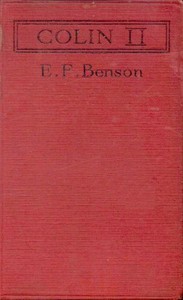
Before opening Colin II: A Novel — A Reader’s Guide, the edition data offers a quick orientation: 109,753 words, 7 hr 58 min estimated reading time, and 10 detected text sections.
The text analysis averages about 16.8 words per sentence, while the detected sections provide another way to judge how the source is divided.
Project Gutenberg metadata also associates the work with “England -- Fiction,” connecting these edition facts with the source record’s subject description.
Explore this collection
These alternatives are selected using recorded categories and estimated reading time.
About 494 minutes
Historical Psychological Social Fiction
113,426 recorded words. 16 minutes difference from this book's estimate.
View Gutenberg source #48731About 501 minutes
Historical Psychological Social Fiction
115,025 recorded words. 23 minutes difference from this book's estimate.
View Gutenberg source #7006About 368 minutes
Historical Psychological Social Fiction
84,561 recorded words. 110 minutes difference from this book's estimate.
View Gutenberg source #69891Search stored excerpts and compare books → Choose by your preferences →
Choices use stored catalog measurements. Estimates vary with reading speed. A shared category is a catalog label, not a claim that two books have the same argument or literary quality.
Search reads excerpt text stored with this catalog and links to its associated Gutenberg record. The connection is stored in the site database; this tool does not recheck that every excerpt is word-for-word identical to that external record. Excerpt search does not cover every chapter and does not verify historical publication dates.
Catalog snapshot checked: 2026-09-25. Coverage: 100 public books, 100 available source excerpts.
Read the complete public-domain text at its original source.
Read on Project GutenbergThe introduction to Colin II establishes a landscape saturated with history: a yew-hedge planted by the first Earl of Yardley in Elizabethan times, a lake created by the same hand, and a house that has weathered three centuries of English upheaval. Benson’s prose invests the setting with a symbolic weight that the catalog subject “paranormal fiction” only partially captures. The family’s unbroken prosperity is described as “anchored and protected beyond all power of ruinous vicissitudes,” yet the preface reminds us that this romance concerns a bargain with Satan. The tension between visible stability and invisible threat is the novel’s engine.
In the domestic scenes that follow, Colin’s return triggers a quiet struggle with his wife Violet over their son Dennis. The dialogue reveals Colin’s charm and casual authority, but Violet’s “tigress-motherhood” suggests she senses a danger the catalog does not name. The excerpts offer no explicit paranormal event, only the residue of a pact and a father’s ambiguous interest in his son’s “inheritance.”
The opening pages of Colin II devote considerable attention to the physical fabric of the Stanier estate: the yew-hedge, the lake, the dam clothed with rhododendrons, and the house that “kept watch, stately and steadfast.” Benson uses these details to evoke continuity and power, but the preface undercuts this stability by reminding readers that the family’s fortunes rest on a supernatural bargain. The catalog subject “England — Fiction” is accurate but reductive; the setting is not generic English countryside but a carefully wrought symbol of inherited privilege and hidden cost. The description of the lake as “fifteen feet of dark water” and the hedge as a “serge rampart” suggests enclosure and depth, qualities that mirror the novel’s psychological and paranormal dimensions.
The excerpted dialogue between Colin, Violet, and their son Dennis reveals a family dynamic that the catalog subject “Gay men — Fiction” does not directly illuminate. Colin’s language to Dennis is affectionate but manipulative: he calls him “old boy,” teases him about being “an ugly little devil,” and invites him to dinner with the promise of billiards. Yet Violet’s reaction—“Oh, Colin, leave me Dennis”—and her “tigress-motherhood” signal a deeper conflict. Colin speaks of Dennis’s “inheritance” and “family history” in terms that suggest more than property. The boy himself is cheerful and unguarded, calling his great-grandmother “dotty,” but the reader, aware of the satanic pact, may hear menace in Colin’s insistence that Dennis “must learn.”
The catalog lists “Paranormal fiction” as a subject, yet the excerpts contain no ghost, no apparition, no overt supernatural event. Instead, the paranormal is present as a backstory: the preface states that Colin II completes the history of “his association with the bargain his ancestor struck with Satan.” The novel’s paranormal element is thus structural rather than scenic—a premise that shapes character motivation and plot trajectory. In the domestic scenes, Colin’s interest in Dennis’s development takes on an ominous cast precisely because the reader knows about the pact. Benson’s method is to let the ordinary (a father returning home, a boy’s excitement) carry the weight of the extraordinary, a technique that distinguishes this work from more overtly supernatural fiction.
Benson’s narrative voice in the introduction is formal and slightly archaic, with sentences like “the shadow of the great yew-hedge began to flow like some tide, dark and clear.” This elevated register contrasts with the colloquial, affectionate banter of the family scenes. The shift in tone is itself a clue: the house and its history are described in a language of permanence, while the human interactions are fleeting and charged. The catalog subject “Psychological & Social Fiction” fits this attention to inner states and family politics, but the excerpts also show Benson using setting as a psychological mirror. The “heat-hazed levels of the Romney marsh” and the “dark water” of the lake suggest a landscape that is both beautiful and threatening, much like Colin’s own charm.
Readers approaching Colin II should attend to the gap between what characters say and what the narrative implies. The preface frames the book as the second half of a romance about a diabolical bargain, but the excerpts focus on domestic reunion and paternal interest. Benson’s art lies in making the ordinary seem charged, and the reader’s task is to watch for the moment when the visible world cracks to reveal the pact beneath. The catalog subjects offer a map, but the novel’s power is in the spaces between them.
Years of shelving these old companions taught me how a father’s shadow can darken a son’s path, as in Colin II. Yet The Abbot — Edition Insights lingers beside it, whispering of guardianship and quiet duty—an older, gentler hand steadying the heir, where Colin’s own grasp falters. A tender counterweight, indeed.
Save your reaction, strongest insight, and memorable passage.