About 818 minutes
The Abbot — Edition Insights
Historical Psychological Social Fiction
188,015 recorded words. 4 minutes difference from this book's estimate.
View Gutenberg source #6407
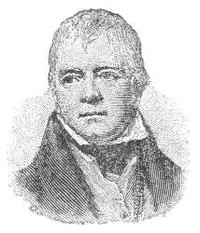
For St. Ronan's Well — Context and Discussion, the stored edition analysis reports 187,178 words, 13 hr 34 min estimated reading time, and 22 detected text sections.
The text analysis averages about 25.4 words per sentence, while the detected sections provide another way to judge how the source is divided.
Project Gutenberg metadata also associates the work with “Historical fiction,” connecting these edition facts with the source record’s subject description.
Explore this collection
These alternatives are selected using recorded categories and estimated reading time.
About 818 minutes
Historical Psychological Social Fiction
188,015 recorded words. 4 minutes difference from this book's estimate.
View Gutenberg source #6407About 767 minutes
Historical Psychological Social Fiction
176,240 recorded words. 47 minutes difference from this book's estimate.
View Gutenberg source #13260About 1,029 minutes
Historical Psychological Social Fiction
236,507 recorded words. 215 minutes difference from this book's estimate.
View Gutenberg source #7979Search stored excerpts and compare books → Choose by your preferences →
Choices use stored catalog measurements. Estimates vary with reading speed. A shared category is a catalog label, not a claim that two books have the same argument or literary quality.
Search reads excerpt text stored with this catalog and links to its associated Gutenberg record. The connection is stored in the site database; this tool does not recheck that every excerpt is word-for-word identical to that external record. Excerpt search does not cover every chapter and does not verify historical publication dates.
Catalog snapshot checked: 2026-09-25. Coverage: 100 public books, 100 available source excerpts.
Read the complete public-domain text at its original source.
Read on Project GutenbergSt. Ronan's Well is Walter Scott's sole novel set in his own era, a fact that shapes its distinctive narrative voice. The opening chapters establish a leisurely, ironic tone as the narrator surveys the spa's eccentric visitors—from the pragmatic landlady Meg Dods to the hypochondriacal Dr. Quackleben. Yet this comic surface is repeatedly punctured by abrupt shifts in pace and mood. The description of the amateur theatricals, for instance, moves from farcical planning to Mrs. Blower's pointed refusal, her Scots dialect grounding the satire in a specific social reality. These tonal fluctuations are not accidental; they signal the novel's deeper preoccupation with hidden histories and unresolved tensions.
The narrator of St. Ronan's Well often adopts the posture of a detached observer, cataloguing the foibles of the spa's clientele with dry precision. This voice is most evident in the extended set-piece of the proposed amateur theatricals, where characters are assigned roles from A Midsummer Night's Dream with absurd literalism. The narrator notes that Captain MacTurk's variegated kilt is voted to be the kirtle of a Grecian mountaineer, and that Mr. Winterblossom is bribed with a cameo to play Philostratus. The comedy arises from the mismatch between classical pretension and provincial reality. Yet the narrator's irony is never cruel; it lingers on the social mechanics that drive such performances. The pace here is deliberate, allowing each character's vanity to unfold in full. This measured rhythm, however, is a prelude to the novel's more urgent registers.
Scott deploys Scots dialect not merely for local colour but as a tool to modulate narrative tempo. Mrs. Blower's refusal to participate in the play is rendered in a dense Scots that slows the reader, demanding attention to each phrase: 'I dinna greatly like stage-plays... a' my things riven aff my back.' The phonetic spelling and colloquial syntax create a texture distinct from the narrator's standard English. This linguistic shift signals a change in pace—from the swift, ironic flow of the narrator's observations to the deliberate, weighted speech of a character grounded in a different value system. Mrs. Blower's objections—that dressing up is 'blasphemy' and that changing one's baptismal name is 'an awful falling away from our vows'—introduce a moral seriousness that undercuts the frivolity. The novel's voice thus becomes polyphonic, with each register carrying its own temporal weight.
Contemporary readers like Sydney Smith singled out 'the knife scene' as masterly, and it exemplifies the novel's capacity for sudden, violent shifts in tone. In the excerpts provided, this scene is not directly quoted, but its reputation—and the editorial introduction's emphasis on 'the last scene between Clara and her brother'—points to a narrative voice that can abandon irony entirely. Where the spa scenes unfold with expansive, satirical leisure, the Clara plot compresses time and emotion into sharp, almost theatrical confrontations. The narrator's language becomes stark, stripped of ornament. This alternation between the comic and the tragic is not a flaw but a deliberate structural principle. Scott uses the spa's artificial sociability as a foil for the claustrophobic intensity of the Mowbray family drama, and the resulting changes in pace create a reading experience that is both disorienting and revealing.
Readers attentive to narrative voice will find St. Ronan's Well a study in contrasts: the expansive, amused tone of the spa's public scenes versus the terse, almost Gothic urgency of Clara's story. Scott's decision to set a novel in his own time forced him to adapt his characteristic 'big bow-wow strain' to a smaller, more domestic canvas. The result is a work that rewards close attention to its shifts in register and tempo, and that invites comparison with the contemporary novels of Jane Austen, whose influence Scott acknowledged even as he pursued a different, more volatile path.
Reading St. Ronan’s Well, I kept noticing how Scott’s voice slips between bright satire and something almost melancholy, especially around Clara. That tension reminded me of another of his quieter works, where the pace shifts unexpectedly between courtly intrigue and private grief. There is a similar feeling of watching characters move toward an inevitable, tender unease. The contrast lingers, like a half-remembered tune. The Abbot — Edition Insights came to mind for precisely that reason.
Use these questions to collect your thoughts before moving on.