About 191 minutes
The King of Gee-Whiz — A Closer Reading
Young Readers Enchanted Adventures
43,922 recorded words. 14 minutes difference from this book's estimate.
View Gutenberg source #41361
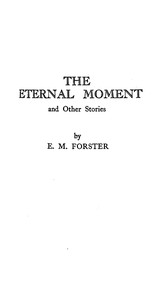
For The eternal moment, and other stories — Context and Discussion, the stored edition analysis reports 40,585 words, 2 hr 57 min estimated reading time, and 4 detected text sections.
The text analysis averages about 15.0 words per sentence, while the detected sections provide another way to judge how the source is divided.
Project Gutenberg metadata also associates the work with “Science fiction,” connecting these edition facts with the source record’s subject description.
Explore this collection
These alternatives are selected using recorded categories and estimated reading time.
About 191 minutes
Young Readers Enchanted Adventures
43,922 recorded words. 14 minutes difference from this book's estimate.
View Gutenberg source #41361About 151 minutes
Young Readers Enchanted Adventures
34,656 recorded words. 26 minutes difference from this book's estimate.
View Gutenberg source #42574About 149 minutes
Young Readers Enchanted Adventures
34,106 recorded words. 28 minutes difference from this book's estimate.
View Gutenberg source #19002Search stored excerpts and compare books → Choose by your preferences →
Choices use stored catalog measurements. Estimates vary with reading speed. A shared category is a catalog label, not a claim that two books have the same argument or literary quality.
Search reads excerpt text stored with this catalog and links to its associated Gutenberg record. The connection is stored in the site database; this tool does not recheck that every excerpt is word-for-word identical to that external record. Excerpt search does not cover every chapter and does not verify historical publication dates.
Catalog snapshot checked: 2026-09-25. Coverage: 100 public books, 100 available source excerpts.
Read the complete public-domain text at its original source.
Read on Project GutenbergIn 'The Machine Stops,' the opening paragraph describes a hexagonal room 'like the cell of a bee,' lit by a soft radiance, with no windows or lamps. The inhabitant is a 'swaddled lump of flesh' with a face 'as white as a fungus.' This precise, almost clinical imagery immediately establishes a world where human life is reduced to isolated, mechanically sustained existence. The story's setting—an underground hive of identical cells—contrasts sharply with the catalog subject 'Great Britain -- Social life and customs -- 20th century,' suggesting Forster uses futuristic fantasy to critique contemporary society rather than depict it directly.
The catalog lists 'Science fiction' and 'Fantasy fiction' as primary subjects, and the excerpts indeed contain speculative elements: a machine-run world, a heaven with virgins and harps, and a school co-ordinating all studies around Napoleon. Yet Forster's fantasy is never merely escapist. In 'The Machine Stops,' the protagonist Vashti lectures on 'Music during the Australian Period,' a detail that satirizes academic specialization in a world where direct experience has vanished. The story's horror stems not from technology itself but from the characters' complacent acceptance of mediated existence. Similarly, 'Mr. Andrews' depicts a heaven where expectations are fulfilled but hopes are not—a theological fantasy that questions the limits of human imagination. Forster uses the fantastic to sharpen his critique of Edwardian society, not to abandon realism.
Across the excerpts, characters are physically or emotionally isolated. Vashti lives alone in her cell, communicating only via machine. In 'Mr. Andrews,' the protagonist finds heaven 'curiously empty' despite having all he expected. The schoolgirls in 'Co-ordination' play a duet that 'can't be done' because their fingers clash on middle G. Yet each story also gestures toward connection: Vashti's son Kuno insists on visiting her in person; Mr. Andrews and the Turk pray for each other's entry into heaven; the duet is an attempt at harmony, however flawed. Forster's prose often dwells on the tension between solitude and the desire for genuine contact. The catalog subject 'Great Britain -- Social life and customs -- 20th century' is thus refracted through these stories as a commentary on the emotional costs of modern life.
Forster's narrative voice in these excerpts is notable for its dry irony and precise observation. In 'The Machine Stops,' the description of Vashti's room is matter-of-fact, almost clinical, which heightens the strangeness. In 'Co-ordination,' the repetition of 'they played worse than... but not as badly as Ellen' creates a comic rhythm that underscores the absurdity of the co-ordinative system. The author's preface, written after World War I, notes that 'Fantasy has tended to retreat' under the 'mass-shock of facts,' framing the stories as products of a particular pre-war sensibility. Structurally, the collection moves from a dystopian future to a metaphysical afterlife to a schoolroom comedy, suggesting Forster deliberately varied his modes. The catalog subjects do not capture this tonal range, which includes both satire and earnest metaphysical inquiry.
Readers approaching this collection should attend to the interplay between the fantastic premise and the mundane details that ground it. Forster often embeds social observation within speculative frames, so that a story about a machine-run world becomes a commentary on communication, and a tale of heaven becomes a meditation on desire. The excerpts suggest that the catalog subjects—science fiction, fantasy, short stories—are accurate but incomplete; the work also rewards attention to voice, irony, and the subtle critique of early twentieth-century life.
Something in Forster’s quiet dread—that humming machine-world—stayed with me long after I closed the book, the way certain childhood stories do. I once found myself thinking of Uncle Wiggily in Wonderland — Text and Context beside it, both holding a strange gentleness beneath their strangeness. I still feel that echo sometimes, soft and uninvited.
Build a private reading journal entry for this title.









