About 147 minutes
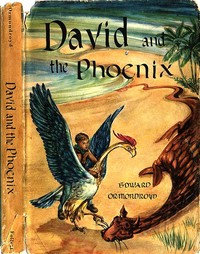
David and the Phoenix — Context and Discussion
Young Readers Enchanted Adventures
33,600 recorded words. 2 minutes difference from this book's estimate.
View Gutenberg source #27922

The source record for Alice's Adventures Under Ground Being a facsimile of the original Ms. book afterwards developed into "Alice's Adventures in Wonderland" — Text and Context measures this digital text at 34,106 words, 2 hr 29 min estimated reading time, and 7 detected text sections.
The text analysis averages about 20.1 words per sentence, while the detected sections provide another way to judge how the source is divided.
Project Gutenberg metadata also associates the work with “Fantasy fiction,” connecting these edition facts with the source record’s subject description.
Explore this collection
These alternatives are selected using recorded categories and estimated reading time.
About 147 minutes
Young Readers Enchanted Adventures
33,600 recorded words. 2 minutes difference from this book's estimate.
View Gutenberg source #27922About 151 minutes
Young Readers Enchanted Adventures
34,656 recorded words. 2 minutes difference from this book's estimate.
View Gutenberg source #42574About 140 minutes
Young Readers Enchanted Adventures
32,030 recorded words. 9 minutes difference from this book's estimate.
View Gutenberg source #27085Search stored excerpts and compare books → Choose by your preferences →
Choices use stored catalog measurements. Estimates vary with reading speed. A shared category is a catalog label, not a claim that two books have the same argument or literary quality.
Search reads excerpt text stored with this catalog and links to its associated Gutenberg record. The connection is stored in the site database; this tool does not recheck that every excerpt is word-for-word identical to that external record. Excerpt search does not cover every chapter and does not verify historical publication dates.
Catalog snapshot checked: 2026-09-25. Coverage: 100 public books, 100 available source excerpts.
Read the complete public-domain text at its original source.
Read on Project GutenbergThis facsimile reproduces Lewis Carroll's original handwritten manuscript, Alice's Adventures Under Ground, the direct precursor to the published Alice's Adventures in Wonderland. The text, transcribed from the author's own pages, includes his thirty-seven illustrations, offering a rare glimpse into the story's earliest known form. Readers encounter a version that is both familiar and distinct: the opening scene on the riverbank, the White Rabbit's pocket-watch, and the fall down the rabbit-hole are present, but the phrasing and pacing sometimes differ from the later edition. The manuscript's handwritten quality—preserved in this digital facsimile through cursive fonts and page images—foregrounds the physical act of composition, reminding us that this is a work in progress, not a polished final product.
Carroll's manuscript is not merely a text but a material artifact. The transcriber's note explains that this e-book reproduces the original handwritten MS., with images of some pages included to convey the feel of the original. An additional version uses cursive fonts to imitate the handwriting. This editorial choice highlights the manuscript's status as a personal document—Carroll wrote it by hand, illustrated it himself, and gave it as a gift to Alice Liddell. The facsimile format allows readers to observe the physical traces of composition: the flow of ink, the spacing of words, and the integration of text and image on the same page. These features are absent from later typeset editions, making this version a unique record of the story's genesis.
Comparing this manuscript to the published Wonderland reveals subtle but telling differences. For instance, the opening paragraph here includes the line "where is the use of a book, thought Alice, without pictures or conversations?"—a sentiment that remains in the final version but is phrased slightly differently. The manuscript also contains passages that were later cut or revised, such as Alice's extended internal monologue about pretending to be two people. The chapter divisions are fewer: the manuscript has four chapters (I–IV), whereas the published book has twelve. This compressed structure suggests that Carroll initially conceived the story as a shorter, more continuous narrative. Readers attentive to these variations can trace how Carroll expanded and refined his material for publication.
Carroll's own illustrations, reproduced in this facsimile, offer a direct visual counterpart to the text. Unlike John Tenniel's later, more polished drawings, Carroll's sketches are simpler and more idiosyncratic. They often emphasize the absurdity of scale—Alice towering over the White Rabbit or shrinking to a tiny size—and capture expressions with minimal lines. The illustrations are integrated into the manuscript pages, sometimes interrupting the text or filling margins. This interplay between word and image reflects Carroll's dual role as author and artist, and it invites readers to consider how the story's visual dimension was conceived from the outset. The facsimile preserves these drawings in their original context, allowing us to see the story as Carroll first envisioned it.
Reading this facsimile alongside the published Alice's Adventures in Wonderland illuminates the creative decisions Carroll made during revision. The manuscript's raw, unpolished quality—its handwritten text, its simpler structure, its authorial illustrations—offers a counterpoint to the familiar published work. For those interested in the process of literary creation, this edition provides a direct window into the story's formative stage, before it was shaped for a wider audience.
Holding this facsimile, I remembered my grandmother’s worn Bible, its margins filled with her pencil notes—a private conversation with the text. Carroll’s tiny drawings feel similarly intimate. Later, I found that same tenderness in The Cattle-Raid of Cualnge (Tain Bo Cualnge) : An Old Irish Prose-Epic — Edition Insights, where the scribe’s own hesitations and flourishes whisper through the heroic lines, making something ancient feel suddenly, achingly human.
Save your reaction, strongest insight, and memorable passage.