About 46 minutes
The Woggle-Bug Book — Story, Setting & Ideas
Young Readers Enchanted Adventures
10,579 recorded words. 3 minutes difference from this book's estimate.
View Gutenberg source #21914
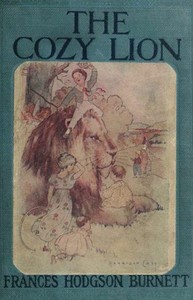
This digital edition of The Cozy Lion: As Told by Queen Crosspatch — A Reader’s Guide is described by source-level measurements including 9,724 words, 43 min estimated reading time, and 2 detected text sections.
The text analysis averages about 18.0 words per sentence, while the detected sections provide another way to judge how the source is divided.
Project Gutenberg metadata also associates the work with “Fantasy literature,” connecting these edition facts with the source record’s subject description.
Explore this collection
These alternatives are selected using recorded categories and estimated reading time.
About 46 minutes
Young Readers Enchanted Adventures
10,579 recorded words. 3 minutes difference from this book's estimate.
View Gutenberg source #21914About 30 minutes
Young Readers Enchanted Adventures
6,792 recorded words. 13 minutes difference from this book's estimate.
View Gutenberg source #32580About 58 minutes
Young Readers Enchanted Adventures
13,270 recorded words. 15 minutes difference from this book's estimate.
View Gutenberg source #71109Search stored excerpts and compare books → Choose by your preferences →
Choices use stored catalog measurements. Estimates vary with reading speed. A shared category is a catalog label, not a claim that two books have the same argument or literary quality.
Search reads excerpt text stored with this catalog and links to its associated Gutenberg record. The connection is stored in the site database; this tool does not recheck that every excerpt is word-for-word identical to that external record. Excerpt search does not cover every chapter and does not verify historical publication dates.
Catalog snapshot checked: 2026-09-25. Coverage: 100 public books, 100 available source excerpts.
Read the complete public-domain text at its original source.
Read on Project GutenbergThe narrator, Queen Crosspatch, introduces herself as the reformer of the Cozy Lion, claiming the story is "a great credit to me." From the first paragraph, she establishes a distinctive voice: bossy, self-congratulatory, and impatient with human foolishness. She scolds the lion for living near a village and frightening mothers, but her tone is more exasperated than threatening. The opening also includes a metafictional instruction: the grown-up reading aloud "MUST know how to Roar." This direct address to the reader, combined with the fairy's confidence that lions cannot bite fairies, sets up a playful power dynamic. The excerpts show that the story's humor depends on the narrator's attitude rather than on plot suspense.
The opening excerpt reveals that Queen Crosspatch speaks in long, rambling sentences full of dashes and exclamations. She interrupts herself to mock "loonies" who do not believe in fairies and provides a rhyming spell they should have used. This voice is not merely decorative; it shapes how a first-time reader encounters the story. The narrator's constant commentary—"of course they hadn't!"—creates a sense of shared superiority with the listener. The instruction to roar aloud further blurs the line between story and performance. A reader should notice how the fairy's personality dominates the exposition. The lion himself does not speak in the opening; he is described and scolded. The narrative energy comes from the fairy's irritation and her elaborate explanations of fairy rules.
In the middle excerpt, the lion's transformation is shown through concrete, physical interactions. He whispers to the fairy, wants to "jump up and roar for joy," and asks to lick a child. The fairy's solution is practical: she has a worker plane his tongue "like satin velvet—not silk velvet, but satin velvet." This precision matters. The lion does not simply become gentle; his body is altered to be safe. The children respond to the lion's new softness: they crowd around, ask for kisses, and ride on his back. The excerpt lists specific games—tag, carrying children, shaking down "Ice–cream–grape–juice Melons." These details ground the fantasy in sensory experience. A first-time reader can track the lion's progress from dangerous outsider to playmate through these small, physical changes rather than through abstract moral lessons.
The later excerpt emphasizes the children's active role in the lion's reformation. They do not passively receive his affection; they demand it. One child holds out her hand and says, "Kiss me too. Kiss me, Liony." Another calls out that he is "kissing her as if he was a mother cat and she was his kitten." The lion responds with visible happiness: "He smiled and smiled." The narrator notes that "the things he did that afternoon really made me admire him." This is a shift from the opening scolding. The lion's delight in playing with children—trotting gently, lying down carefully for riders—is presented as evidence of his reform. The fairy's admiration is earned through action, not promise. A reader should note that the children's fearlessness and the lion's careful movements are the story's proof of change, not the fairy's lectures.
The excerpts show a story that resolves its central problem early. The lion's reformation begins almost immediately after the fairy's scolding. There is no prolonged struggle or setback. The middle and later excerpts depict only successful play. The narrative tension comes not from whether the lion will behave, but from how his behavior will be expressed. The fairy's voice provides the only friction, as she continues to instruct and supervise. The story's structure is episodic: a series of games and interactions rather than a plot with rising action. A first-time reader may find that the pleasure lies in the accumulation of charming details—the plane on the tongue, the "sweetie" whispered by the lion, the children scrambling onto his back. The lack of conflict is itself a feature of the cozy tone promised by the title.
Because the excerpts reveal the story's full arc—from scolding to harmonious play—a first reading can focus on the narrator's voice and the physical comedy. Notice how the fairy's self-importance never wavers, even as the lion becomes the center of attention. The lion's dialogue is limited to whispers and exclamations; his character is built through action and the fairy's interpretation. The children are nearly interchangeable, distinguished only by size or a white sailor suit. The story rewards attention to small details: the exact texture of the lion's tongue, the way he carries children "by their frocks or little trousers." These specifics make the fantasy feel tangible.
Queen Crosspatch’s lion learns to belong through patient play, not magic alone. That same gentle unfolding of a child’s world waits inside Half-Past Bedtime — Story, Setting & Ideas, where bedtime becomes a place of quiet ritual. I have shelved both for years, and they whisper to each other about becoming comfortable in one’s own skin.
Build a private reading journal entry for this title.









