About 22 minutes
A flower book — Context and Discussion
Young Readers Enchanted Adventures
5,050 recorded words. 8 minutes difference from this book's estimate.
View Gutenberg source #23302
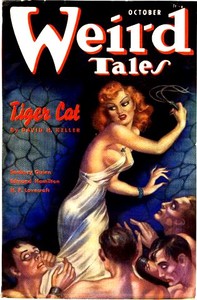
This digital edition of The Golgotha Dancers — Edition Insights is described by source-level measurements including 6,792 words, 30 min estimated reading time, and 1 detected text section.
The text analysis averages about 17.3 words per sentence, while the detected sections provide another way to judge how the source is divided.
Project Gutenberg metadata also associates the work with “Short stories,” connecting these edition facts with the source record’s subject description.
Explore this collection
These alternatives are selected using recorded categories and estimated reading time.
About 22 minutes
Young Readers Enchanted Adventures
5,050 recorded words. 8 minutes difference from this book's estimate.
View Gutenberg source #23302About 43 minutes
Young Readers Enchanted Adventures
9,724 recorded words. 13 minutes difference from this book's estimate.
View Gutenberg source #42366About 46 minutes
Young Readers Enchanted Adventures
10,579 recorded words. 16 minutes difference from this book's estimate.
View Gutenberg source #21914Search stored excerpts and compare books → Choose by your preferences →
Choices use stored catalog measurements. Estimates vary with reading speed. A shared category is a catalog label, not a claim that two books have the same argument or literary quality.
Search reads excerpt text stored with this catalog and links to its associated Gutenberg record. The connection is stored in the site database; this tool does not recheck that every excerpt is word-for-word identical to that external record. Excerpt search does not cover every chapter and does not verify historical publication dates.
Catalog snapshot checked: 2026-09-25. Coverage: 100 public books, 100 available source excerpts.
Read the complete public-domain text at its original source.
Read on Project GutenbergThe story opens not with the titular dancers but with a museum-goer frustrated by a crowded Goya exhibition. Wandering through galleries of armor, porcelain, and Egyptian gods, he stumbles on a rear stairway where Arnold Böcklin's The Isle of the Dead usually hangs. Instead, a gilt-framed painting of a bare plateau fills the space: twelve plump, naked, evil-looking creatures dance around a prone cross, while two more hammer a beautifully rendered human figure onto it. The narrator's precise, clinical description—counting the dancers, noting the victim's anatomical correctness—establishes a tone of detached observation that will soon shatter.
The narrator's first encounter with the painting is purely visual, but the text quickly blurs the boundary between art and reality. He notes the dancers are “as patently evil as the meditations of Satan,” yet he treats the scene as a static object for analysis. Later, when the creatures step out of the frame into his apartment, the same descriptive language returns: the leader hesitates “within the circle of the light,” and the narrator feels “fungoid tissue” when biting one. The painting is not merely a portal; it is a living entity that can be wounded. Miss Dolby stabs the canvas with a paper-cutter, and each gash makes a dancer vanish from the room. The artwork becomes a battlefield where physical damage to the representation kills the original.
The narrator speaks in a measured, almost scholarly tone, even as his world turns nightmarish. He describes the museum’s layout with the familiarity of a regular, and his account of the fight is punctuated by self-doubt: “I think I expected to see a blank canvas”; “I refuse to remember for certain.” This uncertainty contrasts with Miss Dolby’s decisive action. She reads the inscription—“A living picture”—and immediately grasps its literal truth. The narrator, by contrast, wonders aloud if a living picture can be killed, calling it “a childish quibble.” Their dynamic—his hesitation, her boldness—drives the climax, where she tears the canvas while he grapples with the remaining dancers.
Wellman embeds a precise numerical pattern in the horror. The narrator counts twelve dancers in a half-circle, plus two hammer-wielders, making fourteen creatures total. This number echoes the fourteen stations of the cross in Christian tradition, though the painting inverts the symbolism: the victim is crucified by demons, not saved. When Miss Dolby destroys the dancers one by one, the count dwindles in reverse, and the final line—“Only one left. Then none.”—mirrors the initial tally. The symmetry extends to the setting: the story begins in a museum gallery and ends in a domestic fire, where the burning frame completes the destruction. The numerical structure gives the chaos a hidden order, as if the painting’s evil follows a logic the narrator only half-grasps.
Readers should pay close attention to the story’s framing devices: the museum’s layout, the substitution of Böcklin’s painting, and the narrator’s habit of counting. These details are not decorative—they are clues to how the supernatural intrudes on the ordinary. The final line, “All at once I knew that I loved her,” arrives abruptly, suggesting that survival has forged a bond as inexplicable as the painting’s power. The story rewards a second reading, where the early descriptions of the dancers’ “pink, plump” bodies take on a more sinister weight.
After The Golgotha Dancers, I kept thinking about how a story can trap you inside its own weird logic, like a room you can’t leave. It reminded me of a much gentler escape, though — that odd little The Woggle-Bug Book — Story, Setting & Ideas, where nonsense becomes its own kind of freedom. Strange how different paths still lead to the same quiet ache.
Capture what you thought, learned, and would like to remember.









