About 258 minutes
Auriol; or, The Elixir of Life — Edition Insights
Historical Psychological Social Fiction
59,284 recorded words. 10 minutes difference from this book's estimate.
View Gutenberg source #36481
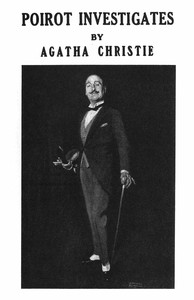
The catalog record for Poirot Investigates — Key Ideas to Explore provides practical reading context through 56,998 words, 4 hr 8 min estimated reading time, and 7 detected text sections.
The text analysis averages about 11.7 words per sentence, while the detected sections provide another way to judge how the source is divided.
Project Gutenberg metadata also associates the work with “Private investigators -- England -- Fiction,” connecting these edition facts with the source record’s subject description.
Explore this collection
These alternatives are selected using recorded categories and estimated reading time.
About 258 minutes
Historical Psychological Social Fiction
59,284 recorded words. 10 minutes difference from this book's estimate.
View Gutenberg source #36481About 261 minutes
Historical Psychological Social Fiction
60,024 recorded words. 13 minutes difference from this book's estimate.
View Gutenberg source #35198About 283 minutes
Historical Psychological Social Fiction
65,013 recorded words. 35 minutes difference from this book's estimate.
View Gutenberg source #58820Search stored excerpts and compare books → Choose by your preferences →
Choices use stored catalog measurements. Estimates vary with reading speed. A shared category is a catalog label, not a claim that two books have the same argument or literary quality.
Search reads excerpt text stored with this catalog and links to its associated Gutenberg record. The connection is stored in the site database; this tool does not recheck that every excerpt is word-for-word identical to that external record. Excerpt search does not cover every chapter and does not verify historical publication dates.
Catalog snapshot checked: 2026-09-25. Coverage: 100 public books, 100 available source excerpts.
Read the complete public-domain text at its original source.
Read on Project GutenbergThe first story, “The Adventure of ‘The Western Star’,” opens with Hastings at a window, spinning a dramatic theory about a young woman being shadowed. Poirot rises, looks, and corrects him: the woman is a film star, her followers are admirers, and she knows it. “As usual, your facts are tinged with your incurable romanticism,” Poirot says. This exchange establishes a pattern that runs through the collection: Hastings misreads situations, Poirot points to simpler truths, and the reader sees both the surface drama and the underlying method.
The excerpts also reveal Christie’s interest in exotic settings and supernatural trappings. In “The Adventure of the Egyptian Tomb,” Poirot draws pentagrams in the sand and lectures on White Magic, while an Egyptologist snorts that Poirot confuses medieval superstitions with ancient beliefs. The story balances rational detection with atmospheric menace—a dog-headed figure appears, and Poirot is poisoned via his beloved camomile tea.
Hastings’ narration consistently colors events with romantic suspicion. In the opening pages, he sees a “drama” where Poirot sees a celebrity. Later, in the Egyptian tale, Hastings feels “the fascination” of the desert and the vanished civilization, while Poirot lies poisoned. Hastings’ emotional reactions—annoyance at being corrected, concern over Poirot’s collapse—drive the narrative but also mislead. Christie uses his voice to heighten tension: he rushes to fetch a doctor, but the reader already suspects the tea. The excerpts show that Hastings is not merely a sidekick but a deliberate foil whose misjudgments highlight Poirot’s clarity.
Poirot’s methods in these excerpts are performative. He draws pentagrams, crosses himself at the sight of Anubis, and delivers impromptu lectures on witchcraft. Yet his theatricality masks precise observation: he recognizes Mary Marvell after seeing her once on screen, while Hastings, who has seen her a dozen times, does not. Poirot’s boast—“When one is unique, one knows it!”—is both comic and accurate. The stories balance his eccentricity with genuine deductive skill, as when he deduces the shadowers are admirers, not criminals. The Egyptian episode shows him taking “energetic measures” for safety, blending superstition with practicality.
The excerpts move from London streets to an Egyptian excavation camp. In the desert, the atmosphere is thick with menace: a servant warns of “evil in the air,” a dog-headed figure appears, and Poirot is poisoned. Christie layers supernatural imagery—Anubis, the Book of the Dead—over a rational plot. The Egyptologist Dr. Tosswill dismisses Poirot’s “hotch-potch of ignorance,” but the threat is real. The stories use exotic locales not just as backdrop but as active elements: the desert’s isolation, the servants’ superstitions, and the archaeological setting all contribute to the mystery. Poirot’s camomile tea, a recurring comfort, becomes a vehicle for poison.
Readers approaching Poirot Investigates should watch for the interplay between Hastings’ romanticism and Poirot’s pragmatism. The collection’s variety—from jewel thefts to kidnappings to tomb curses—showcases Christie’s early range. The excerpts suggest that Poirot’s methods are consistent even when the settings shift: he observes what others miss, corrects misperceptions, and solves crimes through logic, not luck. Pay attention to the small details Hastings dismisses; they often hold the key.
Reading how Poirot gently steadies Hastings’ romantic leaps made me think of my grandfather, who always knew the real story behind family gossip. That quiet correction of assumption reminds me of the careful, forensic patience in John Thorndyke's Cases related by Christopher Jervis and edited by R. Austin Freeman — Edition Insights, where another doctor’s method also waits for evidence, not excitement.
Answer a few questions and save a private reflection on this device.