About 96 minutes
The Pinafore Picture Book: the Story of H.M.S. Pinafore — Inside the Classic
Young Readers Enchanted Adventures
22,042 recorded words. 2 minutes difference from this book's estimate.
View Gutenberg source #65291
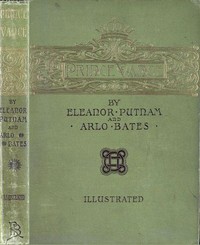
The catalog record for Prince Vance: The Story of a Prince with a Court in His Box — Reading Notes provides practical reading context through 22,432 words, 1 hr 38 min estimated reading time, and 4 detected text sections.
The text analysis averages about 19.4 words per sentence, while the detected sections provide another way to judge how the source is divided.
Project Gutenberg metadata also associates the work with “Fantasy literature,” connecting these edition facts with the source record’s subject description.
Explore this collection
These alternatives are selected using recorded categories and estimated reading time.
About 96 minutes
Young Readers Enchanted Adventures
22,042 recorded words. 2 minutes difference from this book's estimate.
View Gutenberg source #65291About 65 minutes
Young Readers Enchanted Adventures
14,745 recorded words. 33 minutes difference from this book's estimate.
View Gutenberg source #36497About 62 minutes
Young Readers Enchanted Adventures
14,041 recorded words. 36 minutes difference from this book's estimate.
View Gutenberg source #14044Search stored excerpts and compare books → Choose by your preferences →
Choices use stored catalog measurements. Estimates vary with reading speed. A shared category is a catalog label, not a claim that two books have the same argument or literary quality.
Search reads excerpt text stored with this catalog and links to its associated Gutenberg record. The connection is stored in the site database; this tool does not recheck that every excerpt is word-for-word identical to that external record. Excerpt search does not cover every chapter and does not verify historical publication dates.
Catalog snapshot checked: 2026-09-25. Coverage: 100 public books, 100 available source excerpts.
Read the complete public-domain text at its original source.
Read on Project GutenbergFrom its opening verses, Prince Vance announces itself as a deliberately crafted whimsy—a “twisted, tangled web of whims” addressed to a child named Oric. The story wastes no time establishing its central conceit: Prince Vance’s bad behavior summons a Blue Wizard who shrinks the entire court to fit inside a bonbon box. The narrative voice oscillates between playful absurdity and pointed moral commentary, often within the same sentence. When the giantess threatens to pop Vance into a steaming kettle, she does so “playfully,” and the jellyfish’s logical contortions (“if that isn’t true, why, I suppose it is false”) reveal a world where rules are both arbitrary and rigidly enforced.
The book’s central device—a prince whose court becomes a set of living toys—creates a narrative that constantly recalibrates danger and comedy. When the giantess hangs the King and Queen from her ears as “eardrops,” the scene is simultaneously grotesque and silly. The text dwells on physical details: the spool of pink silk “about the size of a Saratoga trunk,” the bird-cage hung high on the wall. These specifics ground the fantasy in a tactile reality, making the peril feel immediate even as the tone remains light. The giantess’s casual cruelty (“only enough to make them kick; they are so amusing when they kick”) is undercut by her vanity and eventual boredom, a pattern that recurs throughout the excerpts. Threats are introduced with matter-of-factness, then deflated by the next absurd turn.
Much of the narrative energy comes from the contrast between Prince Vance’s impulsive speech and the deliberate, often pedantic replies of other characters. When the jellyfish offers to wish him free, Vance interrupts with “Who cares for boundaries?”—only to be corrected by the creature’s relentless logic. The jellyfish’s offer to convert cannibals or rescue the prince is delivered with deadpan indifference, a tonal choice that makes the humor land without moralizing. Similarly, the Blue Wizard’s earlier actions are described with a shrug: “the Blue Wizard answered carelessly, giving the King in turn a bath in the finger-bowl.” These exchanges create a rhythm of impatience met with implacable calm, a dynamic that propels the plot forward while underscoring the prince’s need to learn patience.
The excerpts reveal a narrative that moves in fits and starts, often interrupted by digressions or sudden shifts in scale. Chapter breaks occur at moments of heightened tension—Vance trapped in the cage, the giantess admiring herself—but the text quickly pivots to a new complication. The jellyfish’s arrival, for instance, follows a moment of despair, but its rambling speech about boundaries and Gobbs Island delays the rescue. This pattern of interruption mirrors the prince’s own inability to focus, and it gives the story a breathless, episodic quality. The tailpieces and illustrations (e.g., “The Hissing Swans,” “The Giant’s Castle”) suggest that the visual pacing reinforces this stop-start rhythm, with each chapter offering a self-contained set piece rather than a continuous arc.
Readers should pay attention to how the book uses its own rules—the jellyfish’s one-wish-per-visit, the giantess’s vanity, the Blue Wizard’s unexplained motives—as both plot devices and commentary on fairy-tale logic. The story does not explain why things happen; it simply presents them, leaving the prince (and the reader) to adapt. This makes Prince Vance a work that rewards attention to its tonal shifts and the way its absurdity is always grounded in precise, physical detail.
That rainy afternoon, Prince Vance's shrunken court felt less like a moral and more like a quiet ache—how small we become when we hoard ourselves. Later, drying the book's spine, I found Uncle Wiggily in Wonderland — Text and Context on the shelf, its old rabbit gentleness a strange, comforting echo of Vance's lopsided journey.
Use these questions to collect your thoughts before moving on.









