About 140 minutes
Rootabaga Stories — Key Ideas to Explore
Young Readers Enchanted Adventures
32,030 recorded words. 6 minutes difference from this book's estimate.
View Gutenberg source #27085
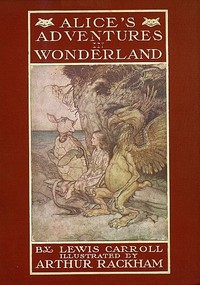
The catalog record for Alice's Adventures in Wonderland Illustrated by Arthur Rackham. With a Proem by Austin Dobson — Inside the Classic provides practical reading context through 30,776 words, 2 hr 14 min estimated reading time, and 13 detected text sections.
The text analysis averages about 17.8 words per sentence, while the detected sections provide another way to judge how the source is divided.
Project Gutenberg metadata also associates the work with “Fantasy fiction,” connecting these edition facts with the source record’s subject description.
Explore this collection
These alternatives are selected using recorded categories and estimated reading time.
About 140 minutes
Young Readers Enchanted Adventures
32,030 recorded words. 6 minutes difference from this book's estimate.
View Gutenberg source #27085About 147 minutes
Young Readers Enchanted Adventures
33,600 recorded words. 13 minutes difference from this book's estimate.
View Gutenberg source #27922About 149 minutes
Young Readers Enchanted Adventures
34,106 recorded words. 15 minutes difference from this book's estimate.
View Gutenberg source #19002Search stored excerpts and compare books → Choose by your preferences →
Choices use stored catalog measurements. Estimates vary with reading speed. A shared category is a catalog label, not a claim that two books have the same argument or literary quality.
Search reads excerpt text stored with this catalog and links to its associated Gutenberg record. The connection is stored in the site database; this tool does not recheck that every excerpt is word-for-word identical to that external record. Excerpt search does not cover every chapter and does not verify historical publication dates.
Catalog snapshot checked: 2026-09-25. Coverage: 100 public books, 100 available source excerpts.
Read the complete public-domain text at its original source.
Read on Project GutenbergThe edition opens with Austin Dobson's proem, which explicitly acknowledges that Alice is "a Type" akin to "Lear and Hamlet" and that Rackham now "re-drapes" her. This self-aware framing invites readers to consider the illustrations as a fresh costume on a familiar figure. The prefatory poem "All in the golden afternoon" then establishes the story's origin as a tale told to three girls—Prima, Secunda, Tertia—whose demands shape the narrative. These opening verses, with their emphasis on "nonsense" and "dream-child," prepare readers for a work that is both deliberately whimsical and structurally aware of its own telling.
Dobson's proem, written for this edition, does more than praise Carroll. It positions Alice as a timeless archetype that can be "re-draped to taste," directly referencing Rackham's role as a new "Costumier." This meta-commentary encourages readers to pay attention to how the illustrations reinterpret familiar scenes. The proem also contrasts Tenniel's original black-and-white with Rackham's color plates, hinting at a visual dialogue between editions. For a first-time reader, this preface signals that the book is both a classic and a fresh artistic object, not a mere reprint.
The poem "All in the golden afternoon" recounts the actual boat trip during which Carroll first told the story. It names the three listeners—Prima, Secunda, Tertia—and shows them demanding "nonsense" and interrupting the tale. This frame establishes that the story is a collaborative, oral performance, not a solitary authorial product. The line "Thus grew the tale of Wonderland" suggests a gradual, almost improvised construction. Readers encountering this poem first are primed to expect a meandering, episodic structure and to view Alice as a "dream-child" moving through a land of "wonders wild and new."
The Mad Tea-party excerpt showcases Carroll's characteristic wordplay and logical inversions. The Hatter's song parody of "Twinkle, twinkle, little bat" and the Dormouse's tale of three sisters living on treacle at the bottom of a "treacle-well" exemplify how language is twisted for comic effect. Alice's insistence on literal logic—"they'd have been ill"—is met with the Dormouse's deadpan "So they were; very ill." This pattern of absurd premises followed by pseudo-logical consequences recurs throughout the book. The tea party also introduces the idea of time stopped at six o'clock, creating a perpetual tea-time that mirrors the story's own resistance to linear progression.
The excerpts reveal a consistent structural device: each chapter introduces a new setting and a new set of characters who challenge Alice's assumptions. The pool of tears, the caucus-race, the caterpillar's advice, the pig-and-pepper house, the mad tea-party, the croquet ground, and the trial all follow this pattern. The narrative rarely lingers; Alice moves from one encounter to the next, often by growing or shrinking. The closing chapters, including the trial of the Knave of Hearts, escalate the arbitrariness of Wonderland's rules, culminating in Alice's defiance. This episodic structure, signaled by the table of contents, means readers can enjoy each chapter as a self-contained vignette while following Alice's gradual growth in assertiveness.
For a first reading, pay attention to how the framing poems and the chapter openings set expectations. The proem and the prefatory poem are not mere ornaments; they establish the story's origin as a spoken tale and invite you to compare Rackham's vision with earlier ones. The tea-party excerpt is a good example of how Carroll uses logical puzzles and wordplay to create humor. Notice how Alice's reactions shift from confusion to indignation as the story progresses. This edition rewards readers who enjoy both the narrative and the visual reinterpretation.
That rainy afternoon, Rackham’s twisted trees and the Hatter’s sad glee lingered longer than the story itself—this queer ache beneath nonsense. Later, idly, I found The Happy Hypocrite: A Fairy Tale for Tired Men — Background and Themes on a shelf, and its worn cover felt like the same soft, uneasy weather, asking nothing of me but company.
Capture what you thought, learned, and would like to remember.









