C
Callista Fenn
Guest
- Thread Author
- #1
Late October light falls across California patios, and potted plumerias start looking worn. Leaves yellow and drift down one by one, while a few long branches stretch awkwardly toward the fence.
The urge to tidy things up feels natural.
Pruning shears, however, carry more weight this time of year than many gardeners expect.
A single cut can shape how a plumeria handles the cool, damp months ahead, and how it performs once warm weather returns.
The plant itself sends clear signals about when it’s ready, though they’re easy to overlook.
A few smart exceptions apply as well, along with some simple habits that protect both the plant and the hands holding the shears. Patience, it turns out, often pays in blossoms.
© Reddit
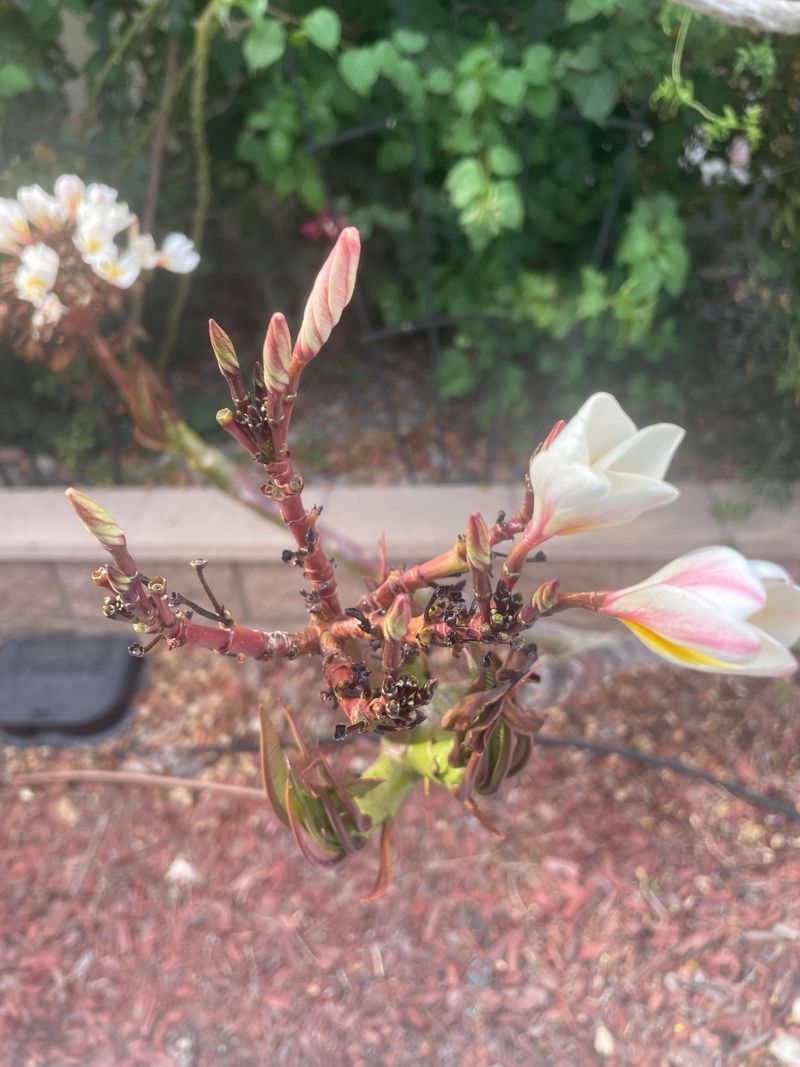
Branch tips tell the story in late winter. Small, tight buds begin to swell as days lengthen and soil warms, a quiet signal that the best pruning window has arrived.
General pruning belongs right before growth resumes. In much of coastal Southern California, that often lands somewhere from late February into April.
Inland valleys and Northern California gardens may warm later, so the plant and local weather make better guides than a calendar date.
A run of mild nights in the 50s or warmer says more than any specific day.
Timing matters because a plumeria in active growth responds quickly. Fresh cells form around the wound, and new shoots push from buds just below the cut.
A single cut stem often branches into two or three new arms, which helps create a fuller shape.
One tradeoff deserves attention. Plumeria blooms at the tips of mature branches, so heavy pruning can mean fewer flowers that summer, while light shaping usually costs far less bloom.
Badly overgrown plants respond well when the work spreads across two seasons.
Clean shears wiped with household disinfectant make smooth cuts that close faster, and sharp blades matter just as much.
A step back to view the whole plant helps before the first snip. Branches that cross, crowd, or stretch too far become the likeliest candidates.
Planned cuts that open the center to light and air keep the canopy balanced as it fills out over summer.
© Reddit
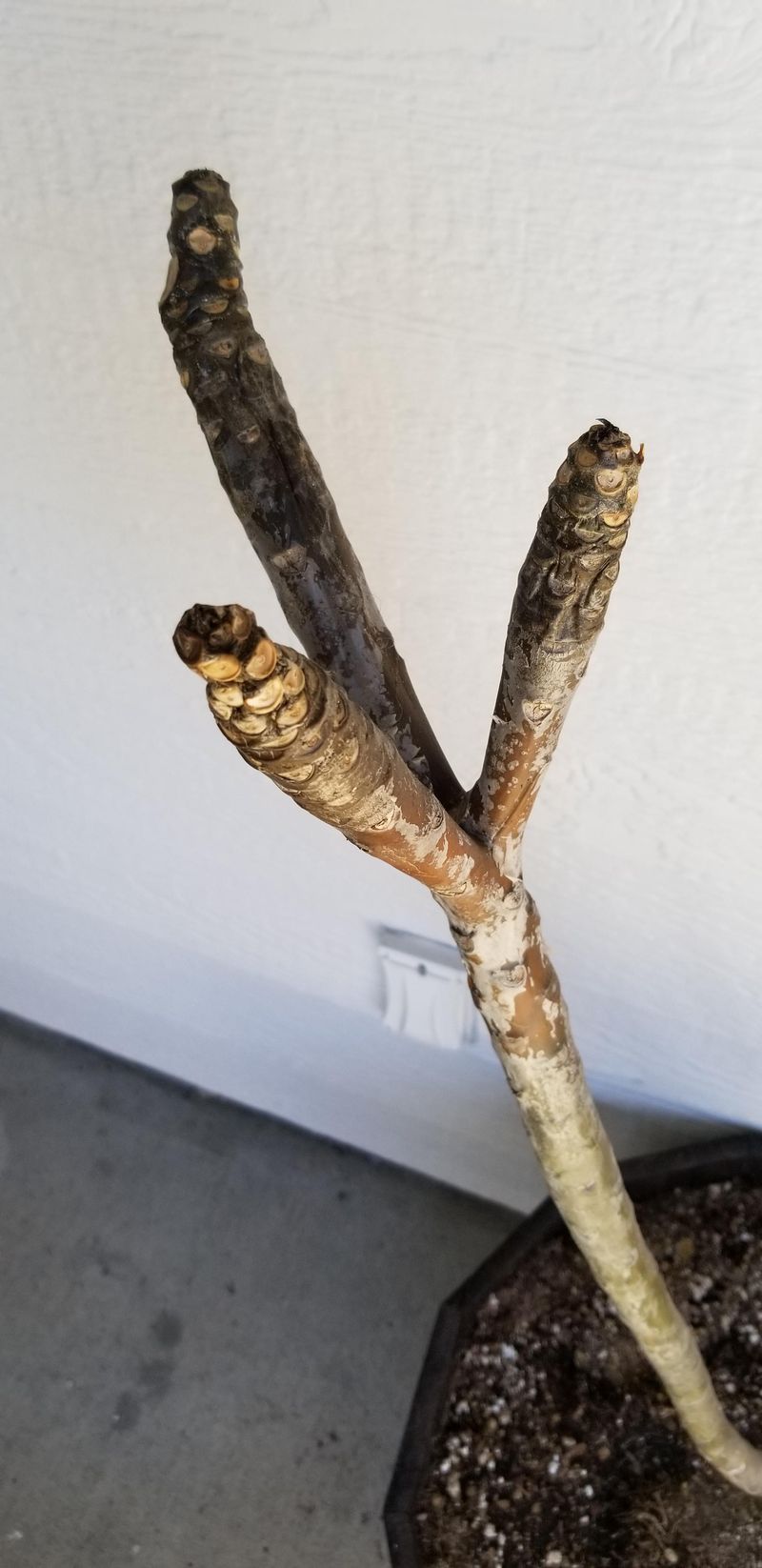
A fresh cut made in December can look perfectly fine for a week. Then the tip darkens, softens, and starts to shrivel down the stem.
Many gardeners blame the variety, though the calendar usually deserves the blame.
Plumerias come from warm tropical regions and dislike cold, wet weather, which many California winters deliver. An open wound sitting in chilly rain stays moist for days.
Fungi and bacteria thrive on that damp, exposed tissue, and stem rot can creep downward from the cut.
Cold adds a second problem. Plumeria tissue is soft and full of water, so frost injures it easily, and a freshly cut end lacks its outer protective layer.
Tender tissue near the wound can suffer on a frosty night, and the injury may spread as the stem softens.
Damage from winter cuts often shows up weeks later as black streaks, a hollow tip, or bark that wrinkles and pulls away.
At that point, another cut back into firm, healthy wood usually becomes necessary, costing more branch than originally planned.
The simple rule is patience. A long branch can look awkward through winter, but it rarely causes harm by staying put.
Waiting a few months costs little compared with watching a good stem turn mushy before spring.
Coastal gardens with mild winters carry less risk than inland valleys, yet even there, damp weather slows healing considerably.
© Reddit
A plumeria in January resembles a bear in a cave. Its leaves are gone, roots barely work, and energy sits tucked away in thick, fleshy branches.
Asking it to repair a wound now is like waking that bear for chores.
Healing takes active growth. When a branch is cut, the plant forms a callus over the opening, a natural bandage that keeps out water and germs.
Building that callus requires warmth and steady energy, and a dormant plant has very little of either to spare.
Cool temperatures slow nearly everything inside the stem. Cell division drags, and the wound may stay open far longer than it would in warm weather.
Each extra day without a seal gives rot organisms another chance to move in.
Spring changes the story quickly. Rising temperatures switch the plant back on, and sap begins moving toward the tips.
A cut made at this stage callouses faster, and new buds often wake just below it within weeks.
Readiness shows clearly once leaf buds start plumping at branch tips or the first small leaves unfold. Those signs mean the plant has its engine running again.
Pruning then works with the plant rather than against it, and cuts get a strong head start on healing.
In mild coastal areas, plumerias may hold some leaves into winter, yet growth still slows enough that the same patience applies.
© Reddit
A November windstorm snaps a branch, leaving a jagged limb dangling. Leaving it there until spring rarely makes sense, since some problems simply can’t wait for perfect timing.
Broken, diseased, or rotting wood deserves removal whenever it appears. A torn branch already carries an open wound, and a ragged break heals worse than a clean cut.
Rot that has started will keep moving down the stem when left alone. Removing the bad section stops the spread and protects the rest of the plant.
The goal is to cut back until reaching firm, healthy wood. Healthy plumeria stems feel solid and show pale, clean tissue inside.
Soft, brown, or black tissue means the cut needs to go lower. Sharp tools keep each wound as small as possible.
Blades wiped with household disinfectant between cuts prevent germs from traveling from a sick branch to a healthy one.
Diseased pieces belong in the trash rather than the compost pile.
Winter emergency cuts need extra care afterward. Keeping the plant dry, sheltered from rain, and protected from frost while the wound callouses gives it the best chance.
A covered patio or garage spot works well for potted plants.
In-ground plumerias can benefit from frost cloth on cold nights, removed each morning so the plant doesn’t overheat.
Making the best of a difficult situation means giving the plant every advantage until warmer days arrive.
© Reddit
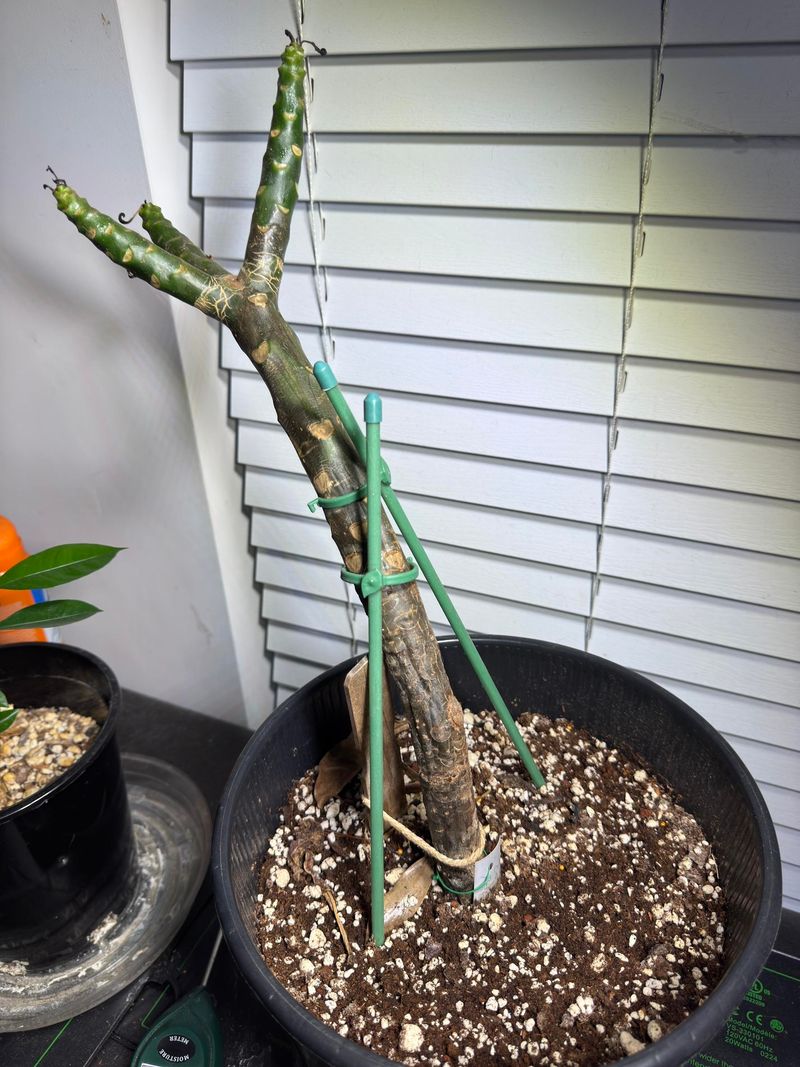
A seven-foot garage door and an eight-foot plumeria make a poor match. Something has to give, and the door shouldn’t be it.
Gardeners in colder parts of California often move potted plumerias indoors or into a garage for winter, and sometimes a branch or two simply won’t fit.
A storage trim makes sense in that case, though timing still matters. Waiting until the plant drops its leaves and goes dormant works best.
Leaves still on the plant send sugars back into the branches. Letting them yellow and fall naturally helps the plant store energy for spring.
Trimming too early can rob the plant of those reserves.
Storage cuts work best kept as light as possible, removing only what’s needed to fit the space. Clean cuts and a warm, dry spot help wounds callous.
Most dormant plumerias need little or no water in storage, since soggy soil plus fresh wounds invites trouble.
Temperatures above about 40 degrees keep stored plants comfortable, and light matters little once leaves have fallen.
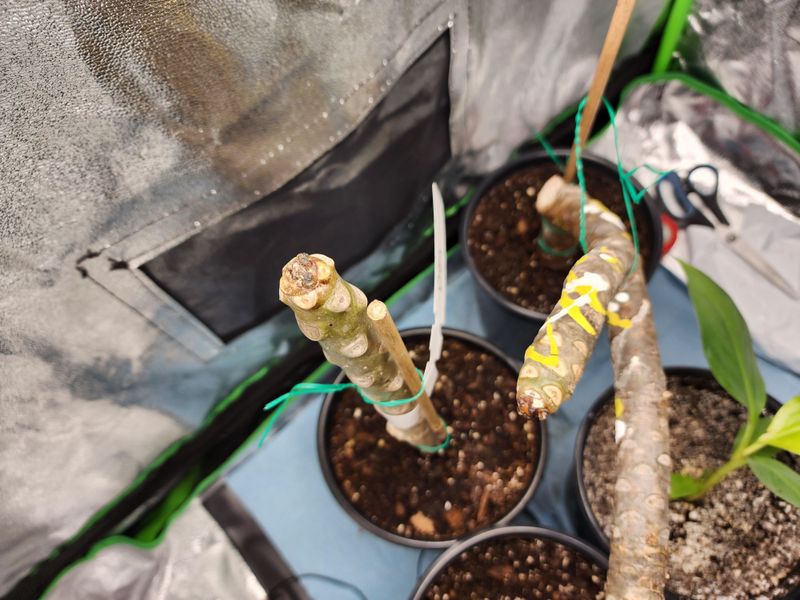
Trimmed pieces offer a bonus, since they can become new plants later. Stored somewhere cool, dry, and frost-free, they hold well through winter.
Plumeria cuttings root best in warm weather, so planting waits until frost danger has passed in spring.
A too-tall problem can turn into a few gifts for friends and family by early summer.
© Gardening In LA
Reaching for the hose right after pruning feels like kindness. A splash of water on a fresh plumeria cut, however, invites trouble.
Open wounds need time to dry and form a callus. Water sitting on cut tissue keeps it soft and moist, exactly what rot organisms want.
Plumerias are especially prone to stem rot because their branches already hold so much water. A dry wound gives the plant a fighting chance to seal itself.
Weather planning helps. A stretch of dry, mild days with no rain in the forecast makes the ideal pruning window.
Overhead watering is best avoided for several days after cutting. A plant that truly needs a drink can receive water at the soil line instead.
Many gardeners simply wait until cut ends look dry and sealed before resuming a normal routine.
Overwatering causes trouble with plumeria in general. Roots sitting in soggy soil can rot too, especially in cool weather.
A fast-draining potting mix and a container with good drainage holes help, with the top few inches of soil drying between waterings once growth resumes.
The same rule applies to cuttings headed for rooting. Cut ends dry and callous for a week or more before planting.
Afterward, soil stays only lightly moist until roots form. Patience here pays off with firmer, healthier stems.
Saucers under pots deserve emptying after rain, since trapped water keeps roots cold and wet.
© Reddit
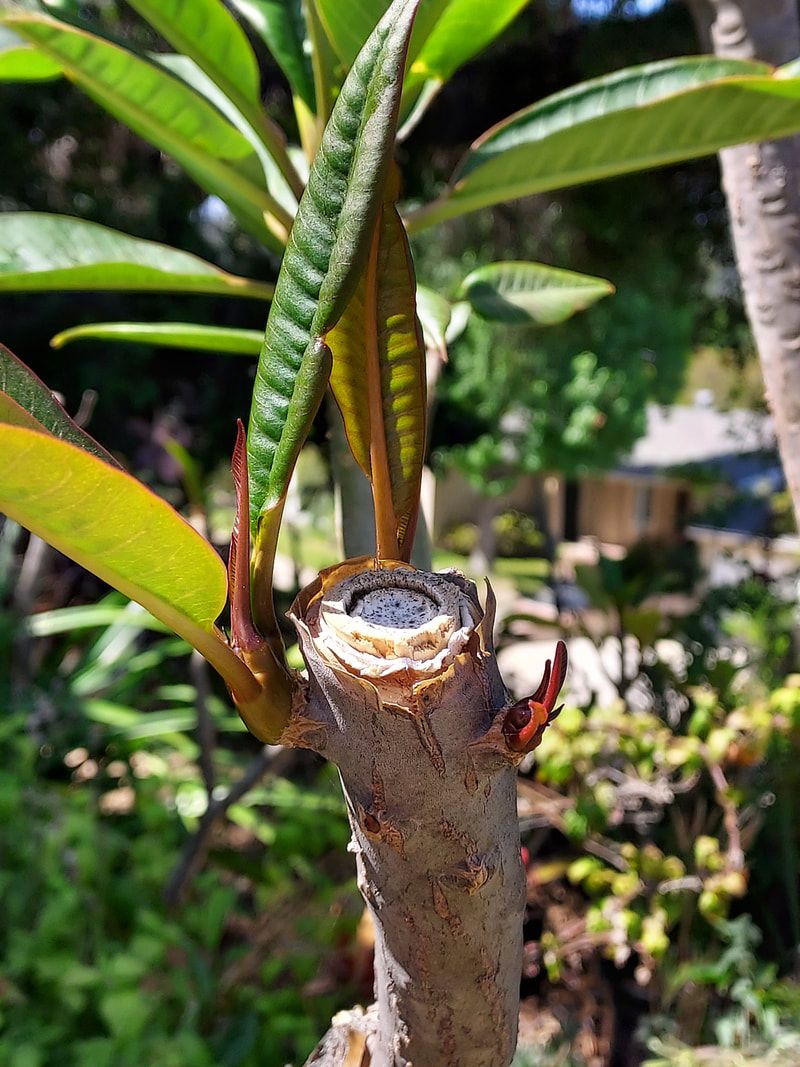
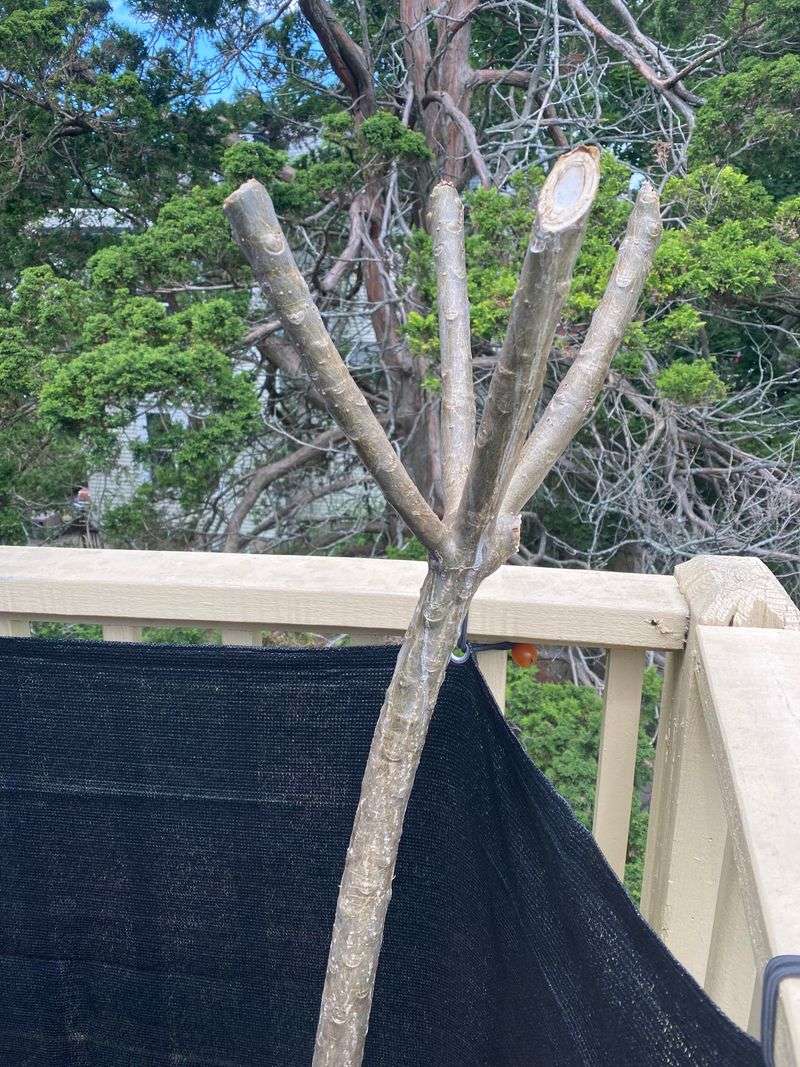
A long stub left behind becomes a rot runway. That leftover stick of wood has no growing point, so it often shrivels and decays rather than healing.
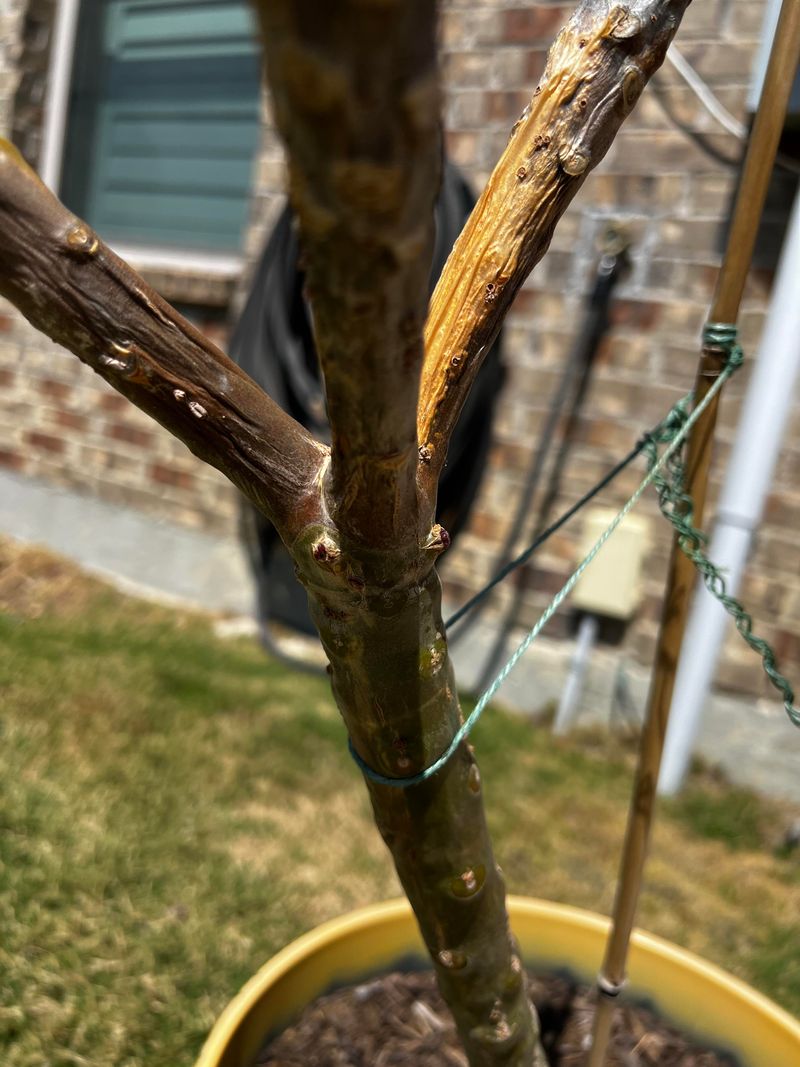
Good placement solves the problem. Cuts belong just above a node or a branch fork.
On a plumeria, nodes appear where leaves once grew, often marked by small, crescent-shaped leaf scars. New buds tend to form near these points.
A cut placed there encourages fresh growth right where it’s wanted.
When removing an entire branch, the cut goes close to where it joins a larger stem, without gouging into the main stem itself.
A clean, neat wound without a protruding stub closes faster and looks better too.
Many gardeners angle cuts slightly so water runs off instead of pooling on top. Sharp bypass pruners handle smaller stems, and a clean pruning saw manages thick ones.
Dull blades crush tissue and leave ragged edges that heal poorly.
Shape deserves thought before each snip. A plumeria cut once often sends out two or three new branches from below the cut.
That habit can turn a gangly, single-stemmed plant into a rounder, fuller one over a couple of seasons.
Cut points chosen to balance the canopy, plus frequent pauses to check progress, keep the shape even. A few thoughtful cuts beat many hasty ones.
Branches thicker than a few inches heal more slowly, so smaller cuts generally make safer choices.
© Pasadena Star News
A snipped plumeria branch quickly beads with white drops. That milky sap looks harmless, almost like school glue, yet it deserves more respect.
Plumeria belongs to the dogbane family, and its latex sap can irritate skin. Some people develop redness, itching, or a rash, and sensitive gardeners may react more strongly.
Sap in the eyes can be painful, so eye protection matters as much as hand protection.
Waterproof gloves, long sleeves, and safety glasses make sense, especially when cutting branches overhead. Sap can drip or flick when a stem springs back.
A damp rag kept nearby helps wipe tools and hands during the work.
Accidents still happen. Sap on skin calls for washing right away with soap and water, and touching the face is best avoided until hands are clean.
Sap in the eyes calls for rinsing with clean water for several minutes. Poison Control or a doctor can help if irritation lingers.
Pruners deserve cleaning afterward too. Dried sap turns sticky and gummy, and a cloth with household disinfectant or warm soapy water removes it.
Children and pets do best kept away from fresh clippings during the work.
Clippings headed for propagation can be stored safely out of reach while they callous.
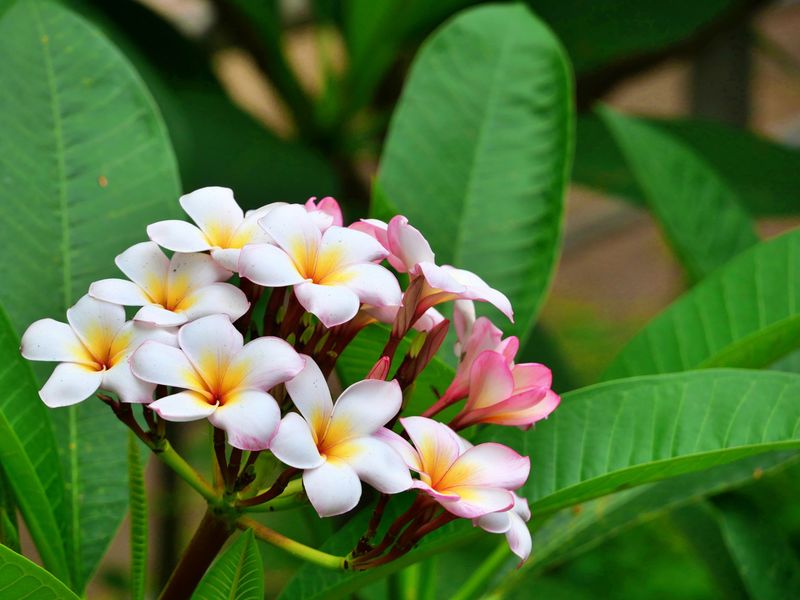
With the right gear, pruning stays a pleasant spring task, and the plant rewards that care with fragrant summer blooms.
The post Should You Prune A California Plumeria Before Winter Or Wait Until Spring? appeared first on Positivebloom.
The urge to tidy things up feels natural.
Pruning shears, however, carry more weight this time of year than many gardeners expect.
A single cut can shape how a plumeria handles the cool, damp months ahead, and how it performs once warm weather returns.
The plant itself sends clear signals about when it’s ready, though they’re easy to overlook.
A few smart exceptions apply as well, along with some simple habits that protect both the plant and the hands holding the shears. Patience, it turns out, often pays in blossoms.
1. Wait Until Late Winter Or Early Spring
Branch tips tell the story in late winter. Small, tight buds begin to swell as days lengthen and soil warms, a quiet signal that the best pruning window has arrived.
General pruning belongs right before growth resumes. In much of coastal Southern California, that often lands somewhere from late February into April.
Inland valleys and Northern California gardens may warm later, so the plant and local weather make better guides than a calendar date.
A run of mild nights in the 50s or warmer says more than any specific day.
Timing matters because a plumeria in active growth responds quickly. Fresh cells form around the wound, and new shoots push from buds just below the cut.
A single cut stem often branches into two or three new arms, which helps create a fuller shape.
One tradeoff deserves attention. Plumeria blooms at the tips of mature branches, so heavy pruning can mean fewer flowers that summer, while light shaping usually costs far less bloom.
Badly overgrown plants respond well when the work spreads across two seasons.
Clean shears wiped with household disinfectant make smooth cuts that close faster, and sharp blades matter just as much.
A step back to view the whole plant helps before the first snip. Branches that cross, crowd, or stretch too far become the likeliest candidates.
Planned cuts that open the center to light and air keep the canopy balanced as it fills out over summer.
2. Winter Cuts Invite Rot And Cold Damage
A fresh cut made in December can look perfectly fine for a week. Then the tip darkens, softens, and starts to shrivel down the stem.
Many gardeners blame the variety, though the calendar usually deserves the blame.
Plumerias come from warm tropical regions and dislike cold, wet weather, which many California winters deliver. An open wound sitting in chilly rain stays moist for days.
Fungi and bacteria thrive on that damp, exposed tissue, and stem rot can creep downward from the cut.
Cold adds a second problem. Plumeria tissue is soft and full of water, so frost injures it easily, and a freshly cut end lacks its outer protective layer.
Tender tissue near the wound can suffer on a frosty night, and the injury may spread as the stem softens.
Damage from winter cuts often shows up weeks later as black streaks, a hollow tip, or bark that wrinkles and pulls away.
At that point, another cut back into firm, healthy wood usually becomes necessary, costing more branch than originally planned.
The simple rule is patience. A long branch can look awkward through winter, but it rarely causes harm by staying put.
Waiting a few months costs little compared with watching a good stem turn mushy before spring.
Coastal gardens with mild winters carry less risk than inland valleys, yet even there, damp weather slows healing considerably.
3. Dormant Plants Heal Slowly
A plumeria in January resembles a bear in a cave. Its leaves are gone, roots barely work, and energy sits tucked away in thick, fleshy branches.
Asking it to repair a wound now is like waking that bear for chores.
Healing takes active growth. When a branch is cut, the plant forms a callus over the opening, a natural bandage that keeps out water and germs.
Building that callus requires warmth and steady energy, and a dormant plant has very little of either to spare.
Cool temperatures slow nearly everything inside the stem. Cell division drags, and the wound may stay open far longer than it would in warm weather.
Each extra day without a seal gives rot organisms another chance to move in.
Spring changes the story quickly. Rising temperatures switch the plant back on, and sap begins moving toward the tips.
A cut made at this stage callouses faster, and new buds often wake just below it within weeks.
Readiness shows clearly once leaf buds start plumping at branch tips or the first small leaves unfold. Those signs mean the plant has its engine running again.
Pruning then works with the plant rather than against it, and cuts get a strong head start on healing.
In mild coastal areas, plumerias may hold some leaves into winter, yet growth still slows enough that the same patience applies.
4. Prune Damaged Wood Anytime
A November windstorm snaps a branch, leaving a jagged limb dangling. Leaving it there until spring rarely makes sense, since some problems simply can’t wait for perfect timing.
Broken, diseased, or rotting wood deserves removal whenever it appears. A torn branch already carries an open wound, and a ragged break heals worse than a clean cut.
Rot that has started will keep moving down the stem when left alone. Removing the bad section stops the spread and protects the rest of the plant.
The goal is to cut back until reaching firm, healthy wood. Healthy plumeria stems feel solid and show pale, clean tissue inside.
Soft, brown, or black tissue means the cut needs to go lower. Sharp tools keep each wound as small as possible.
Blades wiped with household disinfectant between cuts prevent germs from traveling from a sick branch to a healthy one.
Diseased pieces belong in the trash rather than the compost pile.
Winter emergency cuts need extra care afterward. Keeping the plant dry, sheltered from rain, and protected from frost while the wound callouses gives it the best chance.
A covered patio or garage spot works well for potted plants.
In-ground plumerias can benefit from frost cloth on cold nights, removed each morning so the plant doesn’t overheat.
Making the best of a difficult situation means giving the plant every advantage until warmer days arrive.
5. Trim For Storage Only After Leaf Drop
A seven-foot garage door and an eight-foot plumeria make a poor match. Something has to give, and the door shouldn’t be it.
Gardeners in colder parts of California often move potted plumerias indoors or into a garage for winter, and sometimes a branch or two simply won’t fit.
A storage trim makes sense in that case, though timing still matters. Waiting until the plant drops its leaves and goes dormant works best.
Leaves still on the plant send sugars back into the branches. Letting them yellow and fall naturally helps the plant store energy for spring.
Trimming too early can rob the plant of those reserves.
Storage cuts work best kept as light as possible, removing only what’s needed to fit the space. Clean cuts and a warm, dry spot help wounds callous.
Most dormant plumerias need little or no water in storage, since soggy soil plus fresh wounds invites trouble.
Temperatures above about 40 degrees keep stored plants comfortable, and light matters little once leaves have fallen.
Trimmed pieces offer a bonus, since they can become new plants later. Stored somewhere cool, dry, and frost-free, they hold well through winter.
Plumeria cuttings root best in warm weather, so planting waits until frost danger has passed in spring.
A too-tall problem can turn into a few gifts for friends and family by early summer.
6. Let Cuts Dry Before Watering
© Gardening In LA
Reaching for the hose right after pruning feels like kindness. A splash of water on a fresh plumeria cut, however, invites trouble.
Open wounds need time to dry and form a callus. Water sitting on cut tissue keeps it soft and moist, exactly what rot organisms want.
Plumerias are especially prone to stem rot because their branches already hold so much water. A dry wound gives the plant a fighting chance to seal itself.
Weather planning helps. A stretch of dry, mild days with no rain in the forecast makes the ideal pruning window.
Overhead watering is best avoided for several days after cutting. A plant that truly needs a drink can receive water at the soil line instead.
Many gardeners simply wait until cut ends look dry and sealed before resuming a normal routine.
Overwatering causes trouble with plumeria in general. Roots sitting in soggy soil can rot too, especially in cool weather.
A fast-draining potting mix and a container with good drainage holes help, with the top few inches of soil drying between waterings once growth resumes.
The same rule applies to cuttings headed for rooting. Cut ends dry and callous for a week or more before planting.
Afterward, soil stays only lightly moist until roots form. Patience here pays off with firmer, healthier stems.
Saucers under pots deserve emptying after rain, since trapped water keeps roots cold and wet.
7. Cut Just Above A Node Or Branch Fork
A long stub left behind becomes a rot runway. That leftover stick of wood has no growing point, so it often shrivels and decays rather than healing.
Good placement solves the problem. Cuts belong just above a node or a branch fork.
On a plumeria, nodes appear where leaves once grew, often marked by small, crescent-shaped leaf scars. New buds tend to form near these points.
A cut placed there encourages fresh growth right where it’s wanted.
When removing an entire branch, the cut goes close to where it joins a larger stem, without gouging into the main stem itself.
A clean, neat wound without a protruding stub closes faster and looks better too.
Many gardeners angle cuts slightly so water runs off instead of pooling on top. Sharp bypass pruners handle smaller stems, and a clean pruning saw manages thick ones.
Dull blades crush tissue and leave ragged edges that heal poorly.
Shape deserves thought before each snip. A plumeria cut once often sends out two or three new branches from below the cut.
That habit can turn a gangly, single-stemmed plant into a rounder, fuller one over a couple of seasons.
Cut points chosen to balance the canopy, plus frequent pauses to check progress, keep the shape even. A few thoughtful cuts beat many hasty ones.
Branches thicker than a few inches heal more slowly, so smaller cuts generally make safer choices.
8. Wear Gloves Because The Sap Irritates
© Pasadena Star News
A snipped plumeria branch quickly beads with white drops. That milky sap looks harmless, almost like school glue, yet it deserves more respect.
Plumeria belongs to the dogbane family, and its latex sap can irritate skin. Some people develop redness, itching, or a rash, and sensitive gardeners may react more strongly.
Sap in the eyes can be painful, so eye protection matters as much as hand protection.
Waterproof gloves, long sleeves, and safety glasses make sense, especially when cutting branches overhead. Sap can drip or flick when a stem springs back.
A damp rag kept nearby helps wipe tools and hands during the work.
Accidents still happen. Sap on skin calls for washing right away with soap and water, and touching the face is best avoided until hands are clean.
Sap in the eyes calls for rinsing with clean water for several minutes. Poison Control or a doctor can help if irritation lingers.
Pruners deserve cleaning afterward too. Dried sap turns sticky and gummy, and a cloth with household disinfectant or warm soapy water removes it.
Children and pets do best kept away from fresh clippings during the work.
Clippings headed for propagation can be stored safely out of reach while they callous.
With the right gear, pruning stays a pleasant spring task, and the plant rewards that care with fragrant summer blooms.
The post Should You Prune A California Plumeria Before Winter Or Wait Until Spring? appeared first on Positivebloom.