M
Marvin Mayfield
Guest
- Thread Author
- #1
One frosty night can turn a cheerful porch into a sad, slumped mess. The pumpkins go soft, the mums turn brown, and the whole display looks tired by breakfast.
Anyone who lives in New York knows how fast the thermometer can drop. One day smells like woodsmoke and crunchy leaves, and the next brings a hard freeze.
Some decorations, though, actually love the cold. A few even look better after a chilly night or a light dusting of snow.
Others hold their shape for months with very little fuss. Picking the right pieces saves money and keeps your front steps welcoming well past Thanksgiving.
A few classic favorites are worth swapping out before they turn into a soggy surprise. The rest can carry your porch straight into winter.
© Yahoo
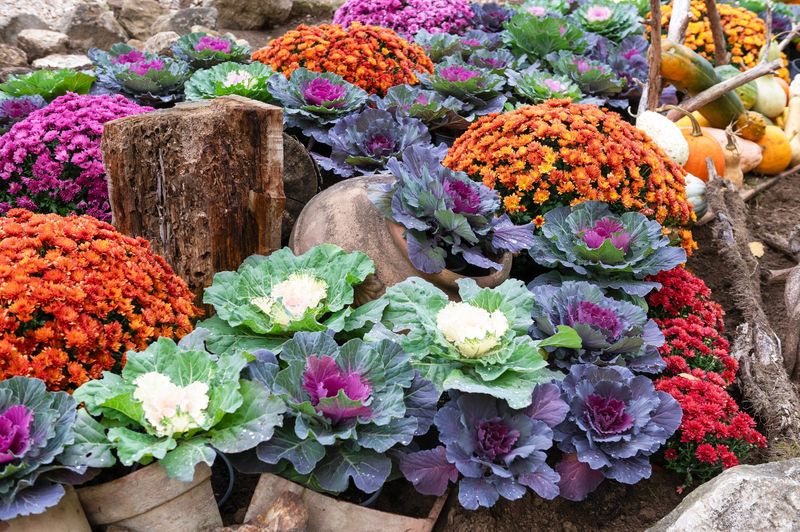
Most plants sulk when the weather turns chilly, but ornamental kale throws a party instead. Cold nights actually make its colors deeper and brighter.
Once temperatures slip below 50 degrees, pinks, purples, and creamy whites start popping in the center. The show gets better as fall moves along.
These leafy beauties can handle temperatures as low as 5 degrees Fahrenheit. They look happiest above 20 degrees, though, so a mild cold snap is their sweet spot.
In a New York yard, kale and cabbage can last into late winter. Some even hang on until early spring when the season stays steady.
Watering is simple once you get the hang of it. Push a finger into the soil and water only when the top inch feels dry.
Too much water causes more trouble than too little. Soggy roots can rot, especially when the soil freezes and thaws over and over.
Heavy snow and icy rain can flatten the leaves after a while. Tossing a light sheet over the pots during big storms helps them bounce back faster.
Pair them with evergreen boughs or white pumpkins for a fresh look. The ruffled leaves add shape that flat flowers just cannot match.
Fun fact: these plants are edible, but they taste pretty bitter. Most folks happily leave them on the porch for looks alone.
© Better Homes & Gardens
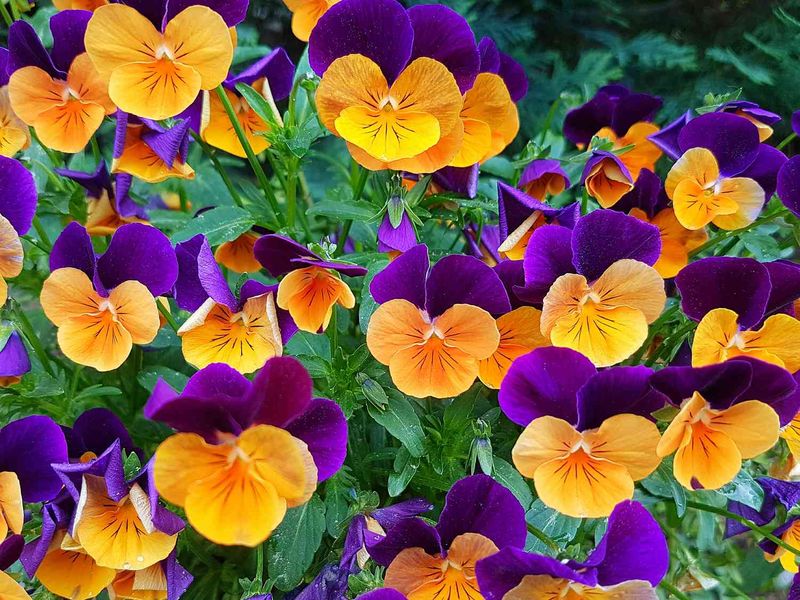
Picture a tiny flower with a cheerful face peeking out from under frost. Pansies and violas pull off that trick every single fall.
These little bloomers look delicate, yet they are surprisingly tough. Strong, established plants can handle temperatures down to minus 10 degrees when mulched well.
After a hard frost, the open flowers may wilt and look droopy. Hidden buds stay safe in the leafy crown, ready to open once the air warms.
Timing makes a big difference for success. Plant them in early fall so the roots settle in before the deep cold arrives.
New York City gardeners often grow them in window boxes and porch pots. They fit small spaces nicely and add bright color where little else blooms.
Containers get colder than garden soil, so potted plants need extra care. Slide pots into a sheltered corner when a harsh cold snap is coming.
Keep the soil evenly moist, but make sure water drains freely. A layer of straw or mulch helps when temperatures dip below 15 degrees.
Violas usually have smaller flowers than pansies, but they make up for it with sheer numbers. Mixing both gives your planter a full, lively look.
Pick deep purples and sunny yellows to stand out against gray skies. Those shades glow nicely beside orange pumpkins or silvery dusty miller leaves.
© House of Hawthornes
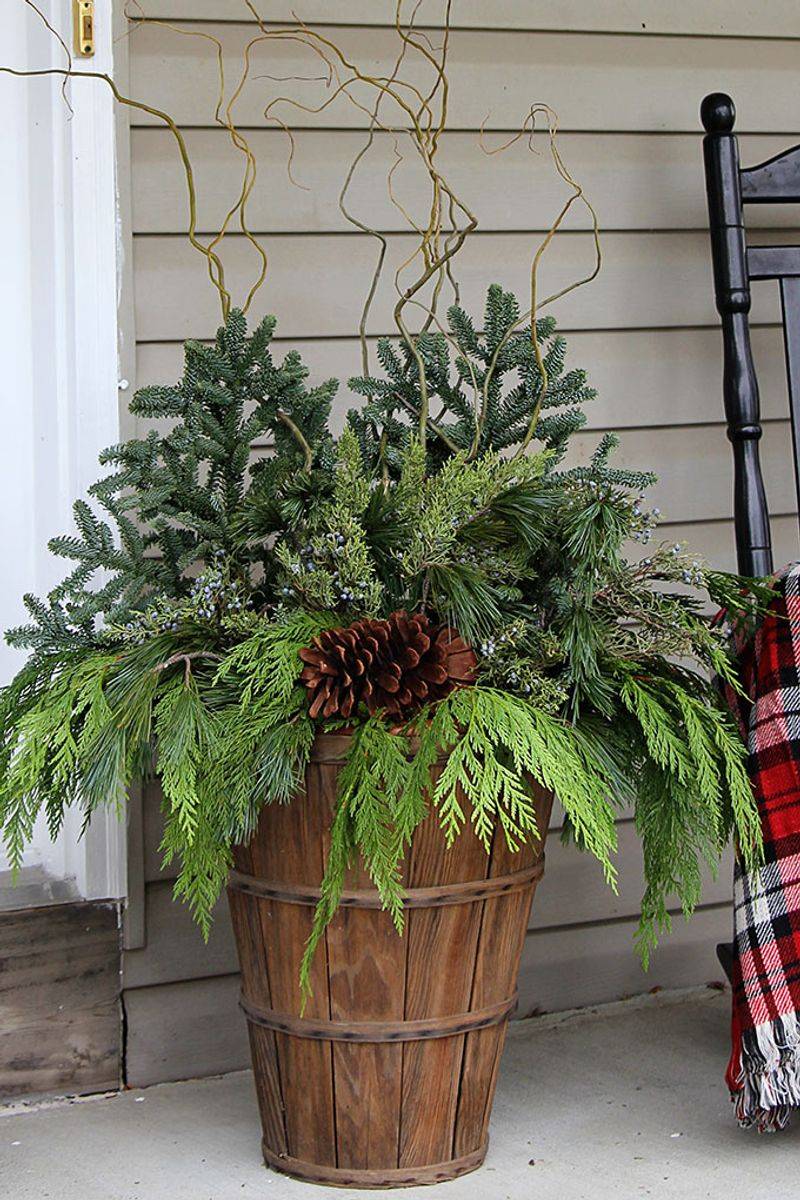
Grandma had a trick for her porch urns that still works today. She stuffed them with fresh fir branches and let winter do the rest.
Cut evergreen boughs can last six to eight weeks in outdoor pots. With good care, many stay fresh right through March.
Fraser fir, balsam fir, and noble fir hold their needles especially well. Mountain hemlock is another tough choice for chilly porches.
Pine, spruce, cedar, and juniper add different textures and shades of green. Mixing three or four types makes a display look rich and full.
Shop carefully before you buy anything. Skip branches with brown or yellow patches, since those spots only get worse.
Give the boughs a long drink first. Soak them in water mixed with floral preservative before tucking them into your pots.
A cool, shady spot keeps them fresher for longer. On days above freezing, mist the needles every few days so they stay plump.
Some people spray boughs with anti-desiccant to lock in moisture. Avoid it on juniper, cedar, and blue spruce, because it harms their waxy coating.
Across the state, evergreens bridge the gap between fall and the holidays nicely. Add a plaid ribbon in December, and you have a brand new look.
© House Beautiful
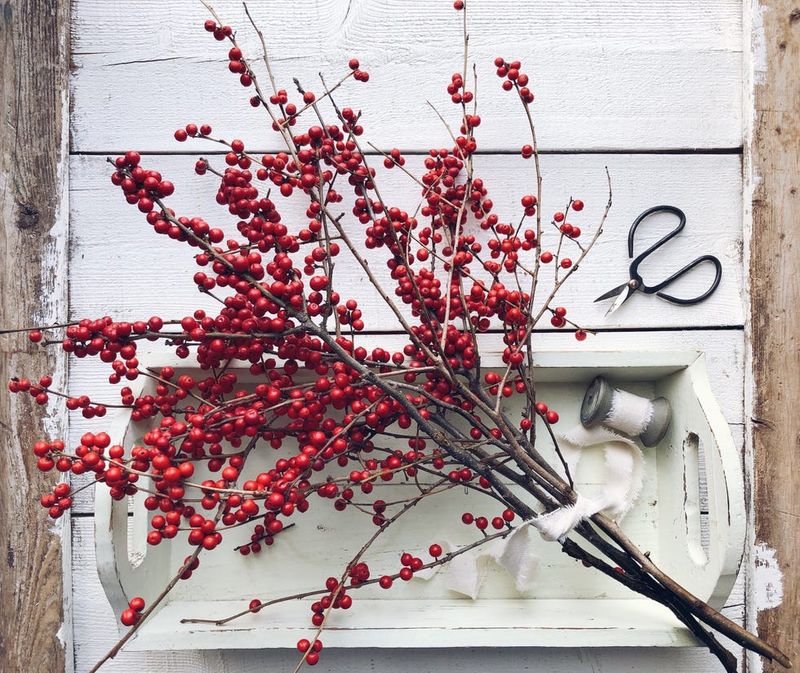
Few sights beat bright red berries glowing against fresh white snow. Winterberry delivers that storybook moment with almost no effort.
Winterberry is a holly that drops its leaves in fall. Once bare, its branches show off clusters of shiny scarlet berries.
The shrub is native to the Northeast and grows in USDA zones 3 through 9. Cold weather does not bother it one bit.
Berries usually hang on from late fall through winter. They often last until early spring, unless hungry birds discover them first.
Cut branches work beautifully in porch pots, even without water. They keep their color for many weeks, which makes them a busy family favorite.
Stick a few tall stems into an evergreen arrangement for height. The red pops even more when surrounded by dark green needles.
Thinking about growing your own supply? You need both male and female shrubs, since only the females make berries.
One male plant can pollinate several females nearby. Ask your local nursery which male variety matches the female you choose.
On a gray afternoon, a bucket of winterberry feels like a small burst of cheer. Birds may visit too, adding a little extra life to your steps.
© mehrflower.design
Ever watched tall grass sway in a winter breeze? There is something calm and graceful about it, like nature doing a slow dance.
Dried grasses and seed heads bring that movement right to your door. They handle freezing weather with easy charm.
Pampas grass, miscanthus, and feather reed grass are great picks. Karl Foerster feather reed grass stands especially tall and straight.
Fountain grass, like the Hameln variety, adds soft, fluffy plumes. Even under snow, these grasses keep their shape surprisingly well.
Seed heads offer fun silhouettes too. Try coneflowers, asters, sedums, and alliums for interesting knobs and starbursts.
For porch displays, keep everything dry and skip the water. Arranged in a vase, dried grasses can last for months or even years.
Growing grasses in pots? Containers expose roots to more cold, so they may need extra protection than plants in the ground.
Garden beds can stay standing all winter for a bonus perk. Birds snack on the seeds and small critters hide among the stems.
Cut the old growth back in early spring before new shoots appear. Until then, enjoy the golden, feathery texture beside your front door.
© WM Design House
Here is a decoration that will not droop, drip, or demand water. Birch logs and lanterns stay handsome no matter what the forecast says.
Birch bark has a striking white color with dark stripes. Stack the logs in a basket, a planter, or an unused fireplace for instant rustic style.
Kiln-dried birch holds its look longer outdoors. The drying process helps the bark stay neat and bright through rough weather.
Around New York and the rest of the Northeast, birch logs are a classic porch touch. Many garden centers sell bundles every fall.
Lanterns add a warm glow on long, dark evenings. Choose ones built to handle freezing weather instead of flimsy indoor styles.
Powder-coated steel, aluminum, copper, and galvanized iron hold up nicely. Sealed glass panels keep moisture from sneaking inside.
LED bulbs work best in the cold. If you go with battery or solar lanterns, check that they perform well in low temperatures.
Tuck lanterns under an overhang to protect them from heavy snow. Keep them off the steps so nobody trips on an icy morning.
A grouping of three lanterns in different heights looks polished. Add a few birch logs nearby, and your porch feels like a cabin hideaway.
© My Garden Inspo
Nothing stings quite like finding your favorite pot split in two after a cold night. Sadly, the wrong planter can crack faster than an egg.
The culprit is called the freeze-thaw cycle. Water soaks into porous material, freezes, expands, and pushes the walls apart.
Standard terracotta and unglazed ceramic pots suffer the most. High-fired or weatherproofed ceramic holds up better, but it costs more.
Safer choices include fiberglass, concrete, metal, wood, and fiberstone. Double-walled resin or plastic pots also handle frosty weather well.
Fiberglass is a top pick for New York City porches. It does not soak up water, it lasts for years, and it is light enough to move.
Drainage matters just as much as material. Make sure every pot has a hole so extra water can escape.
Pot feet are a small trick with big results. Lifting the planter keeps water from pooling underneath and freezing in place.
Want to protect plant roots during deep freezes? Line the inside walls with rigid foam before adding soil.
Spending a bit more on good pots pays off over time. You will reuse them every season instead of sweeping up broken pieces each spring.
© Farmers’ Almanac
Let us be honest about the star of fall decor. Real pumpkins look amazing, but they are no match for a serious freeze.
A light frost might leave them alone. Long stretches below 28 to 32 degrees burst their cells, though.
Once the pumpkin thaws, the flesh turns soft, watery, and mushy. Rot usually sets in within a couple of days.
Damage can hide at first, which feels a bit sneaky. Dull, sunken, soft spots may take a day or two to show up on the rind.
White pumpkins are the most delicate of the bunch. They often brown or yellow after just a light frost.
To stretch their life, watch the forecast closely. Bring pumpkins inside or cover them with a cloth blanket before temperatures dip below 32.
Cold concrete speeds up trouble. Set pumpkins on a wooden crate or mat so air can flow underneath.
Want something that lasts longer? Artificial pumpkins look surprisingly real these days and survive any storm.
Pinecones, acorns, gourds, and dried botanicals are other easy swaps. Arrange them in a wooden bowl for a charming, freeze-friendly display.
© Reddit
Mums are the fall flower everyone loves to buy. By November, though, many porch pots look more crispy than colorful.
Potted mums usually stay pretty for about four to six weeks outdoors. Variety, temperature, and bloom stage all affect how long they last.
Cool weather can actually brighten their petals for a while. A hard frost, however, turns leaves and stems limp and black.
Not all mums are the same, and the labels can be confusing. Hardy mums are perennials, while florist mums are mainly for one season.
Florist mums rarely handle a harsh New York winter. Hardy types may return if planted in the ground early enough.
Hoping to save hardy mums for next year? Plant them in the ground by early September and skip trimming them in fall.
Spread a thick layer of mulch around the base for insulation. The old stems also help shield the plant through winter.
Once browning spreads, it is time for a fresh look. Pull out the tired plants and toss them in the compost pile.
Fill the empty pots with evergreen boughs, kale, or pansies. Your porch will stay lively and welcoming for the rest of the cold season.
The post 9 Fall Porch Decorations That Can Survive A New York Freeze appeared first on Positivebloom.
Anyone who lives in New York knows how fast the thermometer can drop. One day smells like woodsmoke and crunchy leaves, and the next brings a hard freeze.
Some decorations, though, actually love the cold. A few even look better after a chilly night or a light dusting of snow.
Others hold their shape for months with very little fuss. Picking the right pieces saves money and keeps your front steps welcoming well past Thanksgiving.
A few classic favorites are worth swapping out before they turn into a soggy surprise. The rest can carry your porch straight into winter.
1. Ornamental Kale And Cabbage Brighten Up In The Cold
© Yahoo
Most plants sulk when the weather turns chilly, but ornamental kale throws a party instead. Cold nights actually make its colors deeper and brighter.
Once temperatures slip below 50 degrees, pinks, purples, and creamy whites start popping in the center. The show gets better as fall moves along.
These leafy beauties can handle temperatures as low as 5 degrees Fahrenheit. They look happiest above 20 degrees, though, so a mild cold snap is their sweet spot.
In a New York yard, kale and cabbage can last into late winter. Some even hang on until early spring when the season stays steady.
Watering is simple once you get the hang of it. Push a finger into the soil and water only when the top inch feels dry.
Too much water causes more trouble than too little. Soggy roots can rot, especially when the soil freezes and thaws over and over.
Heavy snow and icy rain can flatten the leaves after a while. Tossing a light sheet over the pots during big storms helps them bounce back faster.
Pair them with evergreen boughs or white pumpkins for a fresh look. The ruffled leaves add shape that flat flowers just cannot match.
Fun fact: these plants are edible, but they taste pretty bitter. Most folks happily leave them on the porch for looks alone.
2. Pansies And Violas Keep Blooming Through Frosty Nights
© Better Homes & Gardens
Picture a tiny flower with a cheerful face peeking out from under frost. Pansies and violas pull off that trick every single fall.
These little bloomers look delicate, yet they are surprisingly tough. Strong, established plants can handle temperatures down to minus 10 degrees when mulched well.
After a hard frost, the open flowers may wilt and look droopy. Hidden buds stay safe in the leafy crown, ready to open once the air warms.
Timing makes a big difference for success. Plant them in early fall so the roots settle in before the deep cold arrives.
New York City gardeners often grow them in window boxes and porch pots. They fit small spaces nicely and add bright color where little else blooms.
Containers get colder than garden soil, so potted plants need extra care. Slide pots into a sheltered corner when a harsh cold snap is coming.
Keep the soil evenly moist, but make sure water drains freely. A layer of straw or mulch helps when temperatures dip below 15 degrees.
Violas usually have smaller flowers than pansies, but they make up for it with sheer numbers. Mixing both gives your planter a full, lively look.
Pick deep purples and sunny yellows to stand out against gray skies. Those shades glow nicely beside orange pumpkins or silvery dusty miller leaves.
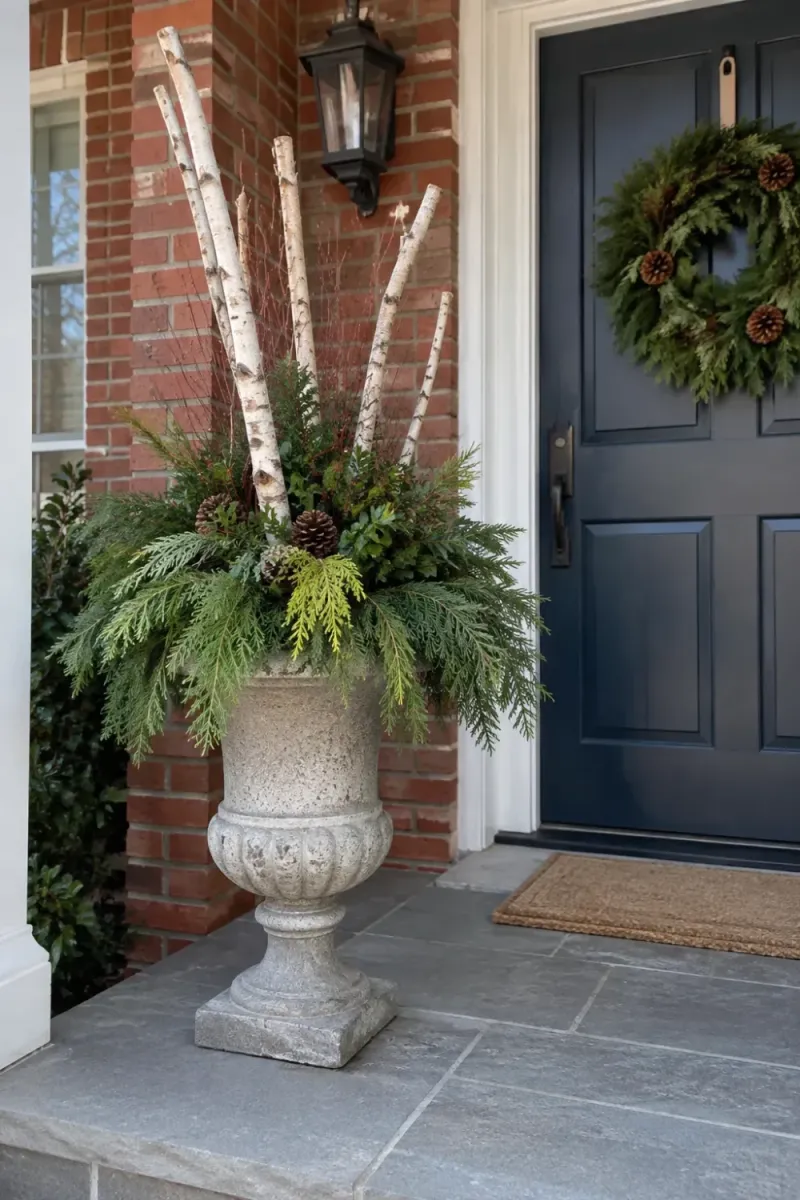
3. Evergreen Boughs Stay Green For Months
© House of Hawthornes
Grandma had a trick for her porch urns that still works today. She stuffed them with fresh fir branches and let winter do the rest.
Cut evergreen boughs can last six to eight weeks in outdoor pots. With good care, many stay fresh right through March.
Fraser fir, balsam fir, and noble fir hold their needles especially well. Mountain hemlock is another tough choice for chilly porches.
Pine, spruce, cedar, and juniper add different textures and shades of green. Mixing three or four types makes a display look rich and full.
Shop carefully before you buy anything. Skip branches with brown or yellow patches, since those spots only get worse.
Give the boughs a long drink first. Soak them in water mixed with floral preservative before tucking them into your pots.
A cool, shady spot keeps them fresher for longer. On days above freezing, mist the needles every few days so they stay plump.
Some people spray boughs with anti-desiccant to lock in moisture. Avoid it on juniper, cedar, and blue spruce, because it harms their waxy coating.
Across the state, evergreens bridge the gap between fall and the holidays nicely. Add a plaid ribbon in December, and you have a brand new look.
4. Winterberry Branches Add Bright Red Pops
© House Beautiful
Few sights beat bright red berries glowing against fresh white snow. Winterberry delivers that storybook moment with almost no effort.
Winterberry is a holly that drops its leaves in fall. Once bare, its branches show off clusters of shiny scarlet berries.
The shrub is native to the Northeast and grows in USDA zones 3 through 9. Cold weather does not bother it one bit.
Berries usually hang on from late fall through winter. They often last until early spring, unless hungry birds discover them first.
Cut branches work beautifully in porch pots, even without water. They keep their color for many weeks, which makes them a busy family favorite.
Stick a few tall stems into an evergreen arrangement for height. The red pops even more when surrounded by dark green needles.
Thinking about growing your own supply? You need both male and female shrubs, since only the females make berries.
One male plant can pollinate several females nearby. Ask your local nursery which male variety matches the female you choose.
On a gray afternoon, a bucket of winterberry feels like a small burst of cheer. Birds may visit too, adding a little extra life to your steps.
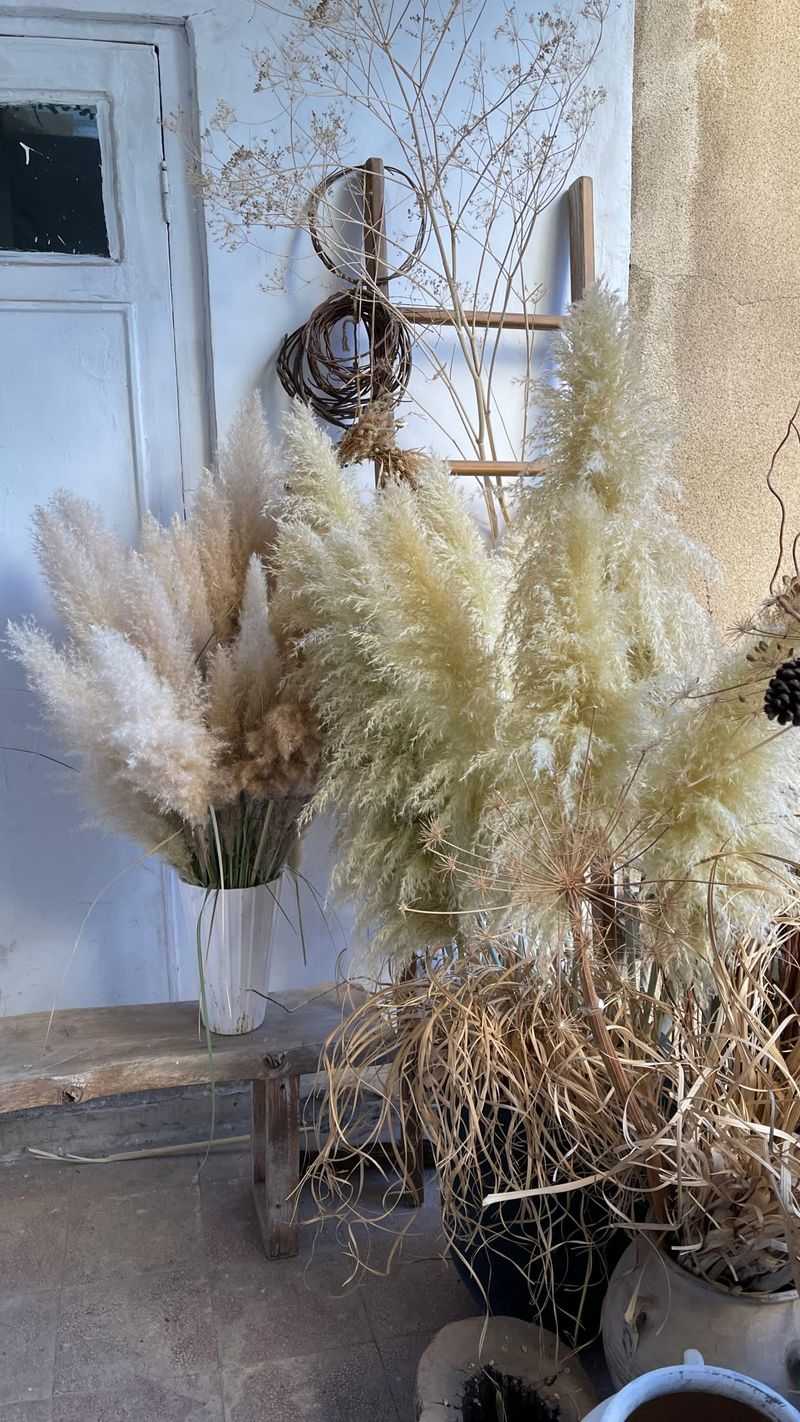
5. Dried Grasses And Seed Heads Bring Texture
© mehrflower.design
Ever watched tall grass sway in a winter breeze? There is something calm and graceful about it, like nature doing a slow dance.
Dried grasses and seed heads bring that movement right to your door. They handle freezing weather with easy charm.
Pampas grass, miscanthus, and feather reed grass are great picks. Karl Foerster feather reed grass stands especially tall and straight.
Fountain grass, like the Hameln variety, adds soft, fluffy plumes. Even under snow, these grasses keep their shape surprisingly well.
Seed heads offer fun silhouettes too. Try coneflowers, asters, sedums, and alliums for interesting knobs and starbursts.
For porch displays, keep everything dry and skip the water. Arranged in a vase, dried grasses can last for months or even years.
Growing grasses in pots? Containers expose roots to more cold, so they may need extra protection than plants in the ground.
Garden beds can stay standing all winter for a bonus perk. Birds snack on the seeds and small critters hide among the stems.
Cut the old growth back in early spring before new shoots appear. Until then, enjoy the golden, feathery texture beside your front door.
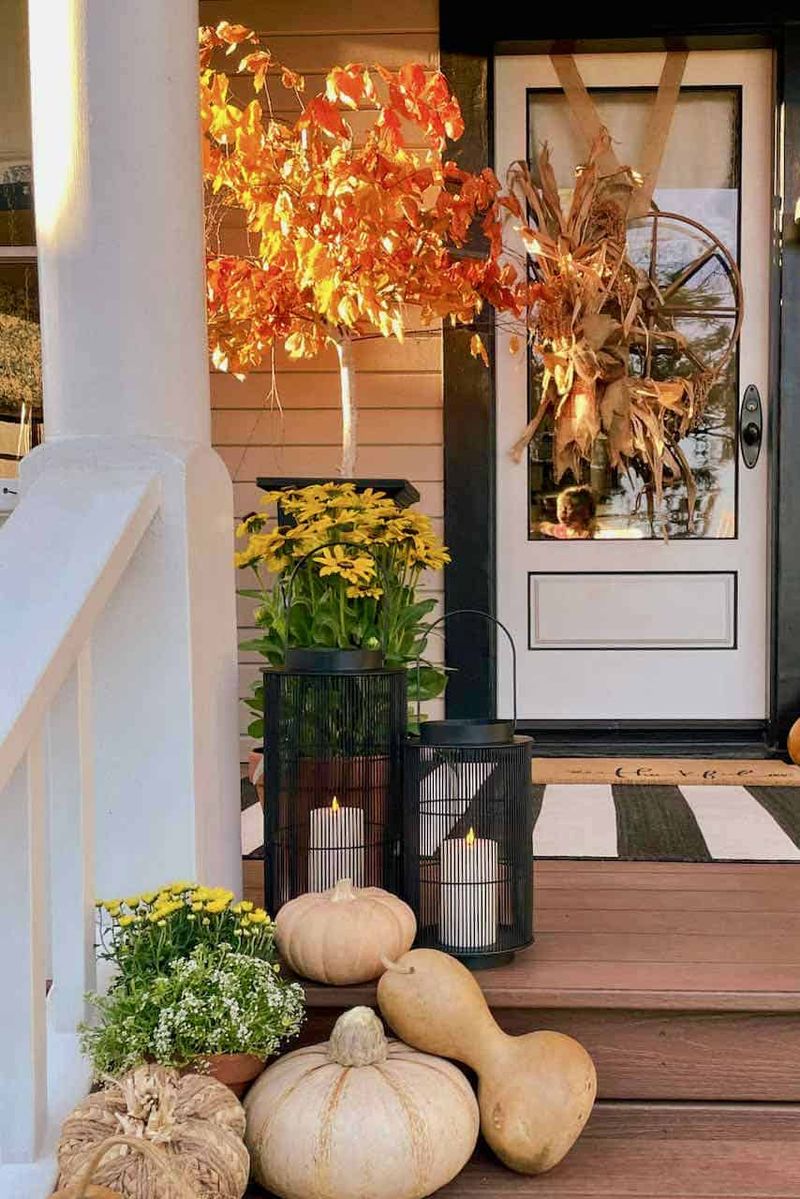
6. Birch Logs And Lanterns Never Wilt
© WM Design House
Here is a decoration that will not droop, drip, or demand water. Birch logs and lanterns stay handsome no matter what the forecast says.
Birch bark has a striking white color with dark stripes. Stack the logs in a basket, a planter, or an unused fireplace for instant rustic style.
Kiln-dried birch holds its look longer outdoors. The drying process helps the bark stay neat and bright through rough weather.
Around New York and the rest of the Northeast, birch logs are a classic porch touch. Many garden centers sell bundles every fall.
Lanterns add a warm glow on long, dark evenings. Choose ones built to handle freezing weather instead of flimsy indoor styles.
Powder-coated steel, aluminum, copper, and galvanized iron hold up nicely. Sealed glass panels keep moisture from sneaking inside.
LED bulbs work best in the cold. If you go with battery or solar lanterns, check that they perform well in low temperatures.
Tuck lanterns under an overhang to protect them from heavy snow. Keep them off the steps so nobody trips on an icy morning.
A grouping of three lanterns in different heights looks polished. Add a few birch logs nearby, and your porch feels like a cabin hideaway.
7. Frost-Proof Pots Won’t Crack When Temperatures Drop
© My Garden Inspo
Nothing stings quite like finding your favorite pot split in two after a cold night. Sadly, the wrong planter can crack faster than an egg.
The culprit is called the freeze-thaw cycle. Water soaks into porous material, freezes, expands, and pushes the walls apart.
Standard terracotta and unglazed ceramic pots suffer the most. High-fired or weatherproofed ceramic holds up better, but it costs more.
Safer choices include fiberglass, concrete, metal, wood, and fiberstone. Double-walled resin or plastic pots also handle frosty weather well.
Fiberglass is a top pick for New York City porches. It does not soak up water, it lasts for years, and it is light enough to move.
Drainage matters just as much as material. Make sure every pot has a hole so extra water can escape.
Pot feet are a small trick with big results. Lifting the planter keeps water from pooling underneath and freezing in place.
Want to protect plant roots during deep freezes? Line the inside walls with rigid foam before adding soil.
Spending a bit more on good pots pays off over time. You will reuse them every season instead of sweeping up broken pieces each spring.
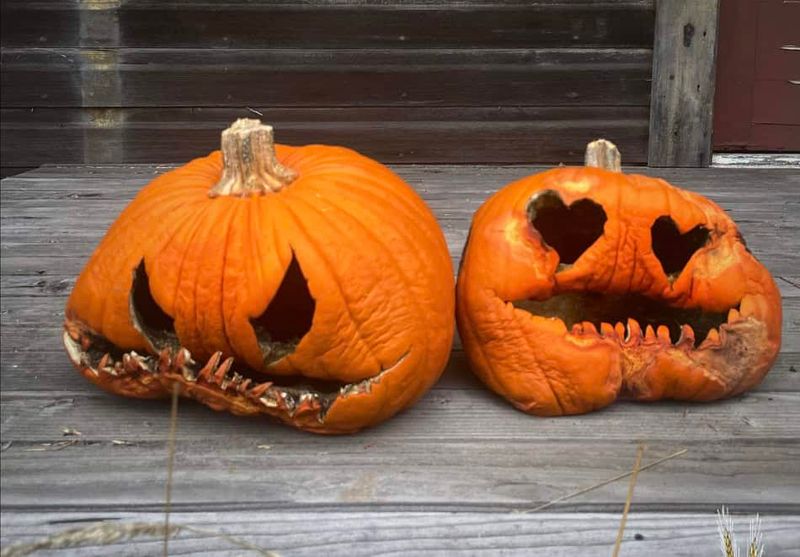
8. Real Pumpkins Turn To Mush After A Hard Freeze
© Farmers’ Almanac
Let us be honest about the star of fall decor. Real pumpkins look amazing, but they are no match for a serious freeze.
A light frost might leave them alone. Long stretches below 28 to 32 degrees burst their cells, though.
Once the pumpkin thaws, the flesh turns soft, watery, and mushy. Rot usually sets in within a couple of days.
Damage can hide at first, which feels a bit sneaky. Dull, sunken, soft spots may take a day or two to show up on the rind.
White pumpkins are the most delicate of the bunch. They often brown or yellow after just a light frost.
To stretch their life, watch the forecast closely. Bring pumpkins inside or cover them with a cloth blanket before temperatures dip below 32.
Cold concrete speeds up trouble. Set pumpkins on a wooden crate or mat so air can flow underneath.
Want something that lasts longer? Artificial pumpkins look surprisingly real these days and survive any storm.
Pinecones, acorns, gourds, and dried botanicals are other easy swaps. Arrange them in a wooden bowl for a charming, freeze-friendly display.
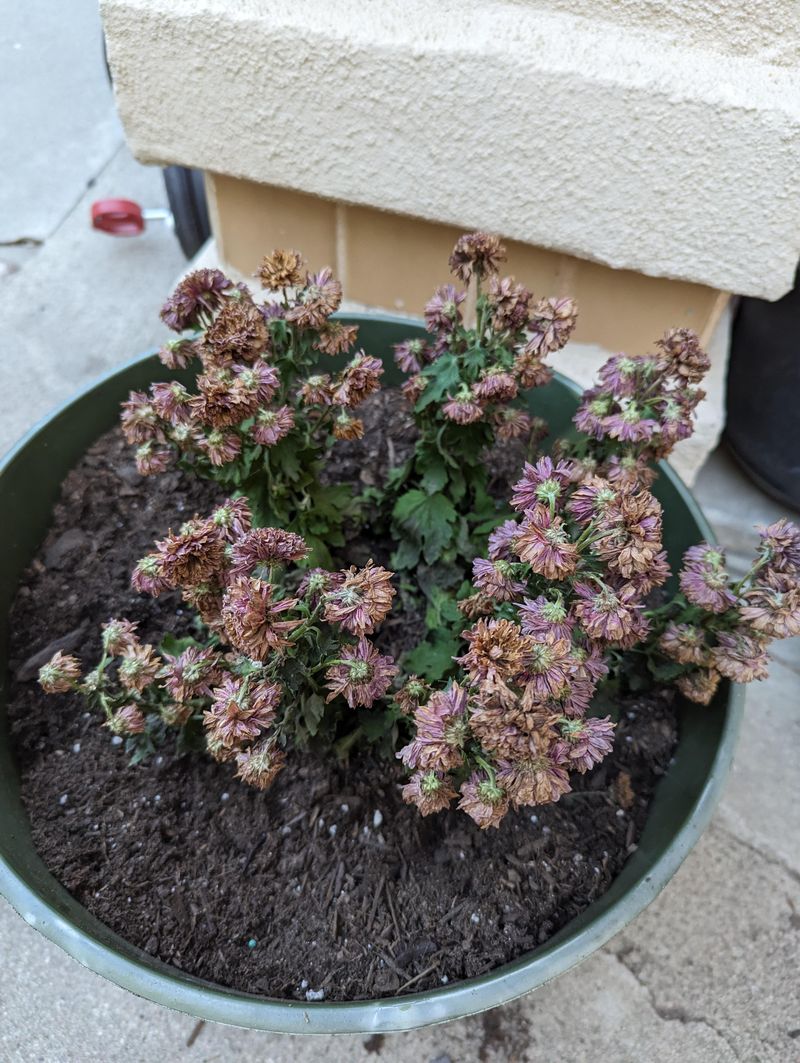
9. Swap Mums Out Once They Start To Brown
Mums are the fall flower everyone loves to buy. By November, though, many porch pots look more crispy than colorful.
Potted mums usually stay pretty for about four to six weeks outdoors. Variety, temperature, and bloom stage all affect how long they last.
Cool weather can actually brighten their petals for a while. A hard frost, however, turns leaves and stems limp and black.
Not all mums are the same, and the labels can be confusing. Hardy mums are perennials, while florist mums are mainly for one season.
Florist mums rarely handle a harsh New York winter. Hardy types may return if planted in the ground early enough.
Hoping to save hardy mums for next year? Plant them in the ground by early September and skip trimming them in fall.
Spread a thick layer of mulch around the base for insulation. The old stems also help shield the plant through winter.
Once browning spreads, it is time for a fresh look. Pull out the tired plants and toss them in the compost pile.
Fill the empty pots with evergreen boughs, kale, or pansies. Your porch will stay lively and welcoming for the rest of the cold season.
The post 9 Fall Porch Decorations That Can Survive A New York Freeze appeared first on Positivebloom.