About 40 minutes
The Golden Judge — Background and Themes
Machines Inventions Early Science Fiction
9,189 recorded words. 1 minutes difference from this book's estimate.
View Gutenberg source #24495
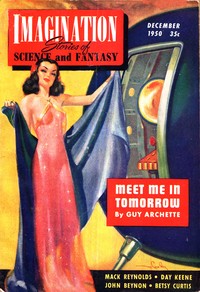
For "What So Proudly We Hail..." — Reading Companion, the stored edition analysis reports 9,258 words, 41 min estimated reading time, and 1 detected text section.
The text analysis averages about 13.6 words per sentence, while the detected sections provide another way to judge how the source is divided.
Project Gutenberg metadata also associates the work with “Science fiction,” connecting these edition facts with the source record’s subject description.
Explore this collection
These alternatives are selected using recorded categories and estimated reading time.
About 40 minutes
Machines Inventions Early Science Fiction
9,189 recorded words. 1 minutes difference from this book's estimate.
View Gutenberg source #24495About 42 minutes
Machines Inventions Early Science Fiction
9,472 recorded words. 1 minutes difference from this book's estimate.
View Gutenberg source #31009About 40 minutes
Machines Inventions Early Science Fiction
9,112 recorded words. 1 minutes difference from this book's estimate.
View Gutenberg source #67364Search stored excerpts and compare books → Choose by your preferences →
Choices use stored catalog measurements. Estimates vary with reading speed. A shared category is a catalog label, not a claim that two books have the same argument or literary quality.
Search reads excerpt text stored with this catalog and links to its associated Gutenberg record. The connection is stored in the site database; this tool does not recheck that every excerpt is word-for-word identical to that external record. Excerpt search does not cover every chapter and does not verify historical publication dates.
Catalog snapshot checked: 2026-09-25. Coverage: 100 public books, 100 available source excerpts.
Read the complete public-domain text at its original source.
Read on Project GutenbergThe story opens with Ephraim Hale waking from a rum-induced sleep, expecting a headache but finding none—only the disorientation of having traveled from 1789 to 1950. Keene immediately establishes a comic tone through Hale's dignified but absurd predicament: naked in a cave in Central Park, his clothes and purse stolen. The contrast between his formal, 18th-century speech and the modern world's slang is the engine of the humor. A seven-year-old boy greets him with “Holy smoke, mister. What you out front for? A second Nature Boy, or Tarzan Comes To Television?”—a line that encapsulates the cultural gap Hale must navigate.
Keene uses Hale's language to signal his historical origin and to generate comedy. Hale thinks in period-appropriate phrases: “in the name of the Continental Congress,” “E-yah,” and “I will be beholden to you.” He refers to Patrick Henry as “Mr. Henry” and recalls the line “Give me liberty or give me death” as a familiar touchstone. When confronted by a modern boy, he asks “on whose estate I am trespassing,” a formulation that belongs to an era of landed gentry. The boy's reply—“Ya heard me”—is a blunt, informal contrast. Keene does not explain the time travel; he lets the linguistic clash do the work. Hale's internal voice remains consistent throughout, even as he adapts to 1950 slang, creating a running tension between his identity and his environment.
Once Hale accepts his new era, Keene shifts the satire to modern economic life. Hale quickly adopts the trappings of 1950s consumer culture: he buys a diamond ring on installment, a living room suite, and a bedroom set, all with down payments and carrying charges. The narrative itemizes these purchases with deadpan specificity—“five dollars a week for four years, plus a nominal carrying charge, for a one thousand five hundred dollar diamond engagement ring.” The humor escalates when Hale sells a historical letter for $225,000, only to see it reduced by federal income tax, state income tax, and a broker's commission. The scene in Mr. Le Duc Neimors' office is a cascade of deductions, each tax agent appearing in turn to take a cut. Keene's point is not merely that taxes are high, but that the modern world's complexity overwhelms a man from a simpler time.
Hale begins the story literally naked, and this physical vulnerability recurs as a motif for his cultural dispossession. After losing his clothes, he fashions a loincloth from an old leather jerkin—a makeshift that underscores his reduced circumstances. Later, when his fortune is stripped by taxes and fees, he is figuratively naked again: “By the time he paid for the things he had purchased and returned Benny's $1,000 he would be back where he'd started.” The Internal Revenue agent takes even the remaining cash, leaving Hale with nothing. Keene repeats the pattern of loss: first clothes and purse, then money, then dignity. The final blow comes when Gertie, his new wife, is more concerned with stroking her dog than with his distress. The motif of dispossession ties the physical and economic threads together.
Keene tells the story from Hale's limited point of view, which allows the reader to experience 1950 as a series of baffling novelties. Hale does not understand television, rent control, or income tax; he interprets them through his 18th-century framework. When a boy mentions “Tarzan Comes To Television,” Hale is simply puzzled. The narrative never steps outside his perspective to explain modern references—the reader must infer them. This technique creates a double vision: we see both Hale's earnest confusion and the absurdity of the modern world he encounters. Keene also uses Hale's voice for ironic understatement. After losing most of his money, Hale “wished he hadn't eaten the olive in his second martini. It felt like it had gone to seed and was putting out branches in his stomach.” The physical image deflates the financial disaster, keeping the tone comic rather than bitter.
Keene's story is a time-travel comedy that uses its premise to critique mid-century American life without ever becoming preachy. The humor depends on precise period details—from the slang of a seven-year-old to the itemized tax forms—and on Hale's unwavering dignity in the face of chaos. Readers should pay attention to the way Keene balances satire with affection: Hale is ridiculous, but never contemptible. The story rewards attention to its small, specific observations about how language and money shape identity.
That rainy afternoon, Ephraim Hale’s bafflement at neon signs and canned beer made me grin, but his homesickness lingered. After closing the book, I sat with the rain, wondering how we measure home across centuries. That’s when I found The Star — Themes and Context, which asked a quieter version of the same question. Strange how one alien voice leads to another, each echoing the same ache.
Answer a few questions and save a private reflection on this device.









