About 40 minutes
The Golden Judge — Background and Themes
Machines Inventions Early Science Fiction
9,189 recorded words. 0 minutes difference from this book's estimate.
View Gutenberg source #24495
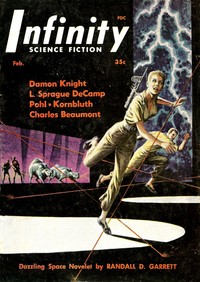
The catalog record for A Likely Story — Edition Insights provides practical reading context through 9,112 words, 40 min estimated reading time, and 1 detected text section.
The text analysis averages about 16.0 words per sentence, while the detected sections provide another way to judge how the source is divided.
Project Gutenberg metadata also associates the work with “Science fiction,” connecting these edition facts with the source record’s subject description.
Explore this collection
These alternatives are selected using recorded categories and estimated reading time.
About 40 minutes
Machines Inventions Early Science Fiction
9,189 recorded words. 0 minutes difference from this book's estimate.
View Gutenberg source #24495About 41 minutes
Machines Inventions Early Science Fiction
9,258 recorded words. 1 minutes difference from this book's estimate.
View Gutenberg source #65070About 42 minutes
Machines Inventions Early Science Fiction
9,472 recorded words. 2 minutes difference from this book's estimate.
View Gutenberg source #31009Search stored excerpts and compare books → Choose by your preferences →
Choices use stored catalog measurements. Estimates vary with reading speed. A shared category is a catalog label, not a claim that two books have the same argument or literary quality.
Search reads excerpt text stored with this catalog and links to its associated Gutenberg record. The connection is stored in the site database; this tool does not recheck that every excerpt is word-for-word identical to that external record. Excerpt search does not cover every chapter and does not verify historical publication dates.
Catalog snapshot checked: 2026-09-25. Coverage: 100 public books, 100 available source excerpts.
Read the complete public-domain text at its original source.
Read on Project GutenbergThe story begins with a precise, grumpy first-person narrator describing an unseasonably warm December in New York. He is on his way to the Medusa Club, an association for professional science fiction writers, where a Christmas party is underway. The narrator's voice is sardonic and observant, noting the strange weather and the club's chaotic dynamics.
Knight quickly establishes a mystery: the weather has cleared unnaturally, and the narrator suspects a connection to the party. The opening pages set up a locked-room puzzle among a group of writers, each a potential suspect for wielding a fantastic power.
The narrator's tone is crucial. He describes himself as a member in bad standing who moved to the country to avoid rubbers. His observations are laced with dry humor: "I began to wonder if it had been smart to move 90 miles out of town just because I didn't like rubbers." The setting—a hotel ballroom hosting the Medusa Club—is rendered with specificity: the club has three kinds of meetings, "one is for drinking, and the third is also for drinking, only more so." This voice gives the story a conversational, skeptical quality, making the reader question every claim.
As strange events escalate—a chandelier swings, a guitar case jangles, and the room fills with cats and dogs—the narrator tries to deduce the culprit. He mentally runs through the attendees: Jibless, Bierce, Duchamp, MacKean, Gamble, Burgeon, Jones. Each is dismissed or considered. The narrator notes that Ray, a friend, "might mislead me, with pleasure, but he wouldn't give me the lie direct." The mystery is framed as a puzzle: who would waste a marvel on schoolboy pranks? The narrator's internal logic drives the investigation.
The party descends into pandemonium. After the animal invasion, the narrator speculates that the power might be local, and a phone call to the Weather Bureau confirms it is confined to Manhattan and Queens. This clue narrows the suspect pool. The narrator grabs Ray's trouser leg, exclaiming, "If he can do that—he doesn't have to be in the same room." The chaos is vividly described: "a terrier bounding after two cats who were climbing Samwitz' back" and "Duchamp asprawl, pipe still in his mouth, partially submerged under a tidal eddy of black and white." The physical comedy contrasts with the tension of the mystery.
The excerpts cut off before the mystery is solved, leaving the reader with the narrator's frustrated thought: "I had the feeling that the answer was square in front of me, and I was blind to it." The story's title, A Likely Story, hints at the theme of disbelief. The reader is left to weigh the evidence alongside the narrator. Knight uses the science fiction writers' club as a meta-commentary on the genre itself—a group of people who write about the impossible, now confronted with it. The incomplete excerpts invite the reader to form hypotheses based on the clues provided.
Knight's story rewards attention to small details: the narrator's dislike of rubbers, the club's hierarchy, and the specific reactions of each suspect. The excerpts offer a self-contained puzzle, but the full story likely resolves the mystery. Readers should note how the narrator's biases and the club's culture shape the investigation. The title's irony suggests that the truth may be as improbable as the events themselves.
That rainy afternoon, Damon Knight’s clubhouse chaos felt almost cozy—strangers tripping over pranks, the narrator quietly judging everyone. It reminded me how a story’s weather can set a mood, then slip away. Later, idly, I opened A Message From Our Sponsor — Key Ideas to Explore and found a similar undertow: what seems like background chatter, steering everything.
Save your reaction, strongest insight, and memorable passage.









