
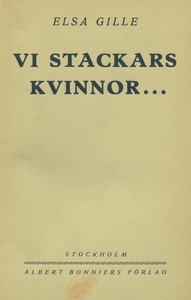
Vi stackars kvinnor ... by Elsa Gille
The Story
Elsa Gille doesn't just list facts and dates. She builds a bridge to the past by focusing on the everyday reality of women she calls 'vi stackars kvinnor'—we poor women. The book covers centuries, from the 17th century up to the early 20th, using women's own words: court records, private letters, birth diaries. You read about women fighting for the right to keep their children after a divorce, women forced into marriages they didn't want, and women punished for doing what men did for free—like writing. A key story is about a mother in 1800s Sweden who secretly falsified papers so her dying husband’s property didn't go to a male relative, taking a huge risk just to keep her kids fed. Gille avoids sounding like a preacher. Instead, she makes you understand that these weren't isolated victims; it was a system built to keep them down. Every story connects somehow to a piece of law, custom, or religion that treated a woman like property. But the heart of the book lies in how many found small ways to fight back—through work, through wit, through defiance tucked away in calm everyday actions.
Why You Should Read It
What’s special here is the honesty. Gille doesn't turn these women into martyrs or perfect heroes. Some are jealous, gossipy, and petty—because they were just people trying to survive a system that set them up to be each other's enemies. One story from the 1860s shows a woman turning in her own neighbor for wrong accusations of theft—just to keep her own small house safe. You wince reading it, but you get why she did it. This book made me mad at history, but not in a loud way. More like a smoldering sadness. Because the same old patterns of blaming women for 'causing trouble' still feel too alive today. It also made me grateful. The ease with which we can learn, earn, even complain, came from women like these—anonymous, overlooked, tough as nails in lace collars. If you like reading about character, resilience, and quiet rebellion, this is pure gold.
Final Verdict
So, who is this for? Perfect for history buffs who want the dirt underneath the carpets. Also for anyone who enjoys a good 'microhistory' angle where small pieces make the big picture clear. But honestly? Just read it if you’re someone that wonders about your own grandmothers and great-aunts, and how they survived. Non-fiction lovers will snap this up, and even reluctant readers will be pulled in all the way—it reads like a set of sharp conversations among old friends. Gille’s voice is so clear and direct you can almost hear her reading the quotes over coffee. Fair warning: if you were fine living with just the 'nice' version of women's clean, quiet historical role... this book will mess that up. But in the best way possible.”
Legal analysis indicates this work is in the public domain. Distribute this work to help spread literacy.
Ashley Moore
3 months agoUnlike many other resources I've purchased before, the author clearly has a deep mastery of the subject matter. Top-tier content that deserves more recognition.
Matthew Miller
7 months agoI wanted to compare this perspective with traditional views, the author doesn't just scratch the surface but goes into meaningful detail. This has become my go-to guide for this specific topic.




George Perez
5 months agoComparing this to other titles in the same genre, the structural organization allows for quick referencing of key points. This has become my go-to guide for this specific topic.