
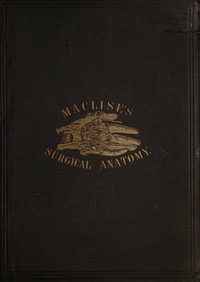
Surgical Anatomy by Joseph Maclise
Okay, let's clear something up first. 'Surgical Anatomy' by Joseph Maclise is not a novel. You won't find a plot with characters and dialogue. Instead, the 'story' is the journey of discovery itself. Published in the mid-1800s, this book was a revolutionary guide for surgeons. Before modern imaging, a surgeon's knowledge came from books and a few, grim dissections. Maclise set out to map the human landscape in breathtaking, full-color detail.
The Story
Think of it as an atlas of the human body. Each plate is a masterpiece. Maclise starts with the surface—the skin and muscles—and then systematically takes you deeper, revealing veins, arteries, nerves, and organs in their exact positions. He shows the body from different angles: front, back, and in cross-section. The 'narrative' is one of revelation. With each turn of the page, another layer is uncovered. You see how the shoulder joint fits together, how the nerves of the arm branch out, and how the abdominal organs are packed in. It's a visual story of how we are built, told with an artist's care for color and composition.
Why You Should Read It
I was drawn to this book for its art, but I stayed for its history. Holding a facsimile edition, you feel the weight of a different time. This book was a lifeline. For a surgeon in 1850, these illustrations were the difference between a successful operation and a fatal mistake. Maclise wasn't just drawing; he was creating a vital tool. The illustrations are strangely beautiful, even peaceful, which contrasts with their urgent, practical purpose. It makes you appreciate how far medicine has come and the brave individuals who mapped the way.
Final Verdict
This book is a niche treasure, but a powerful one. It's perfect for history buffs curious about medicine, artists fascinated by anatomical drawing, or anyone with a deep curiosity about the human body. If you enjoy museums, rare books, or the intersection of science and art, you'll find something captivating here. It's not a casual bedtime read, but as a piece of historical and scientific art, it's utterly absorbing. Approach it like you would a gallery exhibit, and be prepared to see the human form in a whole new light.
This masterpiece is free from copyright limitations. Access is open to everyone around the world.
Michael Johnson
8 months agoHaving read the author's previous works, the wealth of information provided exceeds the average market standard. A mandatory read for anyone in this industry.
Richard Lee
7 months agoAs a long-time follower of this subject matter, the breakdown of complex theories into digestible segments is masterfully done. I'm genuinely impressed by the quality of this digital edition.
Richard Martin
2 years agoBeautifully written.








Susan Thompson
6 months agoExtremely helpful for my current research project.