About 69 minutes
Thunder in space — Edition Insights
Machines Inventions Early Science Fiction
15,673 recorded words. 2 minutes difference from this book's estimate.
View Gutenberg source #72277
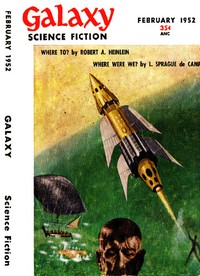
Before opening Conditionally Human — A Reader’s Guide, the edition data offers a quick orientation: 15,410 words, 1 hr 7 min estimated reading time, and 2 detected text sections.
The text analysis averages about 10.4 words per sentence, while the detected sections provide another way to judge how the source is divided.
Project Gutenberg metadata also associates the work with “Science fiction,” connecting these edition facts with the source record’s subject description.
Explore this collection
These alternatives are selected using recorded categories and estimated reading time.
About 69 minutes
Machines Inventions Early Science Fiction
15,673 recorded words. 2 minutes difference from this book's estimate.
View Gutenberg source #72277About 57 minutes
Machines Inventions Early Science Fiction
13,054 recorded words. 10 minutes difference from this book's estimate.
View Gutenberg source #67292About 48 minutes
Machines Inventions Early Science Fiction
10,877 recorded words. 19 minutes difference from this book's estimate.
View Gutenberg source #23534Search stored excerpts and compare books → Choose by your preferences →
Choices use stored catalog measurements. Estimates vary with reading speed. A shared category is a catalog label, not a claim that two books have the same argument or literary quality.
Search reads excerpt text stored with this catalog and links to its associated Gutenberg record. The connection is stored in the site database; this tool does not recheck that every excerpt is word-for-word identical to that external record. Excerpt search does not cover every chapter and does not verify historical publication dates.
Catalog snapshot checked: 2026-09-25. Coverage: 100 public books, 100 available source excerpts.
Read the complete public-domain text at its original source.
Read on Project GutenbergThe story opens with a domestic argument that immediately establishes its central conflict: Norris, a district pound officer for the Federation of Bio-Administration, must destroy unclaimed synthetic creatures called neutroids, but his wife Anne recoils at the idea of killing what she sees as near-human beings. The dialogue is sharp and revealing—Anne's accusation 'I didn't know you killed them' and Norris's defensive 'Intelligent as a human imbecile, maybe' set the moral stakes without exposition. Miller uses small physical details—the shivering shoulder, the cold marble face—to convey emotional distance.
The setting is a future where population control has made natural children rare, and neutroids are engineered to satisfy parental instincts. Norris's job is both mundane and horrific: he is a dogcatcher for artificial life. The excerpts show a world where technology has not erased but intensified human ambivalence about life and death.
Miller crafts dialogue that does not merely convey information but enacts power struggles. Norris and Anne's breakfast conversation is a series of verbal jabs: she calls the neutroids 'babies,' he calls them 'animals.' Each repetition of 'baby' or 'kill' sharpens the conflict. Norris's attempt at appeasement—listing the job's perks—is undercut by Anne's sweetly venomous retort: 'I suppose you have an aptitude for killing babies?' The word 'aptitude' echoes the bureaucratic language of aptitude tests, turning his professional identity into a moral indictment.
Later, when Peony, a deviant neutroid, speaks at dinner, her blunt 'I like Daddy's cooking better' introduces a third voice that is innocent yet disruptive. The family's strained politeness around her highlights the absurdity of treating a synthetic being as a guest while planning its possible destruction. Miller uses these conversational dynamics to show how language itself becomes a tool of evasion and accusation.
Miller embeds key information in physical details rather than narration. Norris notes Peony's temperature—'somewhere around 101°'—and her rapid maturation, which makes IQ testing impossible. These observations are clinical but carry emotional weight: the warmer-than-human body marks her as other, yet her skill with silverware suggests unsettling closeness to humanity. The tail, mentioned almost in passing, is the only obvious physical difference, but Norris's thought that 'still she was not born of the seed of Man' reveals the deeper unease.
Anne's body language—the shivering shoulder, the 'cold marble' face—mirrors her moral rigidity. Norris's own gestures, like touching her forehead or backing toward the door, show his retreat from confrontation. The story's physical world is sparse—a kitchen, kennels, a parlor window—but each detail, from the 'scattered lights of the suburbs' to the 'flame-haired cherub,' reinforces the tension between the familiar and the uncanny.
The excerpts reveal a society that has solved overpopulation by restricting human reproduction and manufacturing substitute children. Norris explains that 'unborn children were not eligible to vote when Man made his choice,' a sardonic comment on democratic decision-making. The Federation's aptitude-based job assignments leave no room for moral objection: Norris's only alternative is 'common labor.' This system is never fully described but emerges through casual references—the evolvotron, Anthropos, the F.B.A.—creating a backdrop of institutional control.
Miller does not explain how neutroids are made or why deviants must be destroyed; instead, he lets the characters' reactions imply the stakes. Norris's boss is unreachable, the law is absolute, and Anne's determination suggests she will force a crisis. The world feels both fully realized and deliberately opaque, leaving readers to piece together its rules from fragments of dialogue and description.
Norris tries to normalize his work by comparing it to an elected dogcatcher, but the comparison fails to convince even himself. His morning routine—putting on his coat, standing with hat in hand—is a ritual of avoidance. After the argument, he 'shuffled moodily out to the kennels to care for his charges,' a phrase that mixes duty with reluctance. The kennels, where neutroids are kept, are both a workplace and a site of moral discomfort.
Even Peony's presence is managed through small routines: propped on cushions, using silver, playing with walnuts. These domestic details make her seem almost human, which is precisely the problem. Norris's attempt to call her father—a routine gesture—is postponed, hinting at his deeper hesitation. Miller uses these mundane actions to show how Norris copes by focusing on procedure, even as the procedure becomes untenable.
Readers should attend to how Miller uses the neutroids as a lens for examining human ambivalence about creation and destruction. The story does not resolve its central question—what counts as human?—but instead lets it fester in the spaces between dialogue and description. Pay attention to the moments when characters touch or refuse to touch, and to the way institutional language (aptitudes, deviants, unclaimed units) clashes with the visceral reality of a childlike creature. The excerpts offer a tight, tense drama that rewards close reading of its small but precise details.
I’ve often lingered over Conditionally Human, that quiet ache of a father choosing what is real. It sits beside my memory of Two worlds for one — Edition Insights, not because they share plots, but because both understand how loving something artificial can feel remarkably like honesty.
Answer a few questions and save a private reflection on this device.









