About 171 minutes
That Sweet Little Old Lady — A Closer Reading
Machines Inventions Early Science Fiction
39,138 recorded words. 0 minutes difference from this book's estimate.
View Gutenberg source #23657
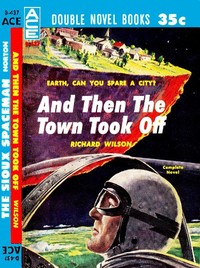
For And Then the Town Took Off — Reading Notes, the stored edition analysis reports 39,316 words, 2 hr 51 min estimated reading time, and 4 detected text sections.
The text analysis averages about 11.2 words per sentence, while the detected sections provide another way to judge how the source is divided.
Project Gutenberg metadata also associates the work with “Science fiction,” connecting these edition facts with the source record’s subject description.
Explore this collection
These alternatives are selected using recorded categories and estimated reading time.
About 171 minutes
Machines Inventions Early Science Fiction
39,138 recorded words. 0 minutes difference from this book's estimate.
View Gutenberg source #23657About 193 minutes
Machines Inventions Early Science Fiction
44,248 recorded words. 22 minutes difference from this book's estimate.
View Gutenberg source #22332About 199 minutes
Machines Inventions Early Science Fiction
45,716 recorded words. 28 minutes difference from this book's estimate.
View Gutenberg source #57904Search stored excerpts and compare books → Choose by your preferences →
Choices use stored catalog measurements. Estimates vary with reading speed. A shared category is a catalog label, not a claim that two books have the same argument or literary quality.
Search reads excerpt text stored with this catalog and links to its associated Gutenberg record. The connection is stored in the site database; this tool does not recheck that every excerpt is word-for-word identical to that external record. Excerpt search does not cover every chapter and does not verify historical publication dates.
Catalog snapshot checked: 2026-09-25. Coverage: 100 public books, 100 available source excerpts.
Read the complete public-domain text at its original source.
Read on Project GutenbergThe novel begins not with the town's ascent but with its absence: a truck driver named Pierce Knaubloch nearly drives into the pit where Superior, Ohio, once stood. Wilson establishes the mystery through official reactions—state police, National Guard, a Geiger counter that refuses to click—rather than through the townspeople's perspective. The missing Pennsylvania Railroad train, scheduled to pass through at 11:58, fixes the disappearance at midnight on Halloween, a detail that invites but does not insist on supernatural readings.
The opening chapter builds its effect through precise, understated language. The pit is described as looking as if "a great ice-cream scoop had bitten into the Ohio countryside," a simile that is both homely and eerie. The Geiger counter that "refused to click" personifies the instrument, suggesting a stubbornness that mirrors the town's inexplicable absence. Wilson avoids melodrama; the truck driver "screeched to a stop" but the narrative voice remains clinical, reporting that the pit "did not smell of" anything—the sentence trails off, leaving the reader to fill the void.
Wilson's dialogue reveals character and conflict through clipped exchanges. Don Cort and reporter Ed Clark discuss the self-proclaimed King Hector's plan to leverage Superior's satellite status for U.S. aid, with Clark noting the "undiplomatic but accurate" implication of neutrality. The banter between Don and Alis Garet—"Do you think he's king of the kangaroos?"—undercuts the absurdity of the situation. When the police chief becomes "General Sir Vincent Grande, Minister of Defense," his instant acquisition of a chestful of decorations, including the Good Conduct Medal, satirizes the speed of political transformation.
Wilson structures the narrative around the gap between extraordinary events and mundane reactions. The town's disappearance is treated as a logistical problem: the Pennsylvania Railroad complains about a missing train; the National Guard surrounds the pit to prevent falls. Later, the king's free lunch draws a crowd, and the bubble gum factory becomes a palace. This juxtaposition—cosmic displacement met with bureaucratic paperwork and free food—creates a tone of deadpan satire. The excerpts show no panic; instead, characters debate diplomacy and titles, as if the floating town were merely a new civic inconvenience.
Wilson seeds the text with small, recurring motifs that reinforce the theme of inverted normalcy. The flag flying from the McFerson mansion features a crown, a symbol of monarchy in a former factory. The police chief's military cap is "overrun with gold curlicues," a detail that emphasizes the ornamental over the functional. The king's proclamation, transmitted via a transceiver under Don's collar, hints at surveillance and hidden agendas. These details accumulate without explicit explanation, inviting the reader to infer the mechanisms of power in this floating microcosm.
Wilson's novel rewards attention to its offhand details and deadpan dialogue. The excerpts suggest a work that uses science fiction as a lens for political satire, but the incomplete text leaves the resolution of Superior's fate—and the professor's role—unclear. Readers should watch for how Wilson balances the absurd premise with the grounded reactions of his characters, and note the way bureaucratic language persists even as the town drifts into the unknown.
Reading about Superior's floating calm reminded me of a quiet winter evening when the power went out and our street felt suddenly suspended, everyone accepting the dark as ordinary. That same strange peace I found flipping through "What So Proudly We Hail..." — Reading Companion—not about heroics, just how a community holds still together, like a held breath that nobody notices.
Your answers remain private and are stored only in this browser.









