L
Liam Prescott
Guest
- Thread Author
- #1
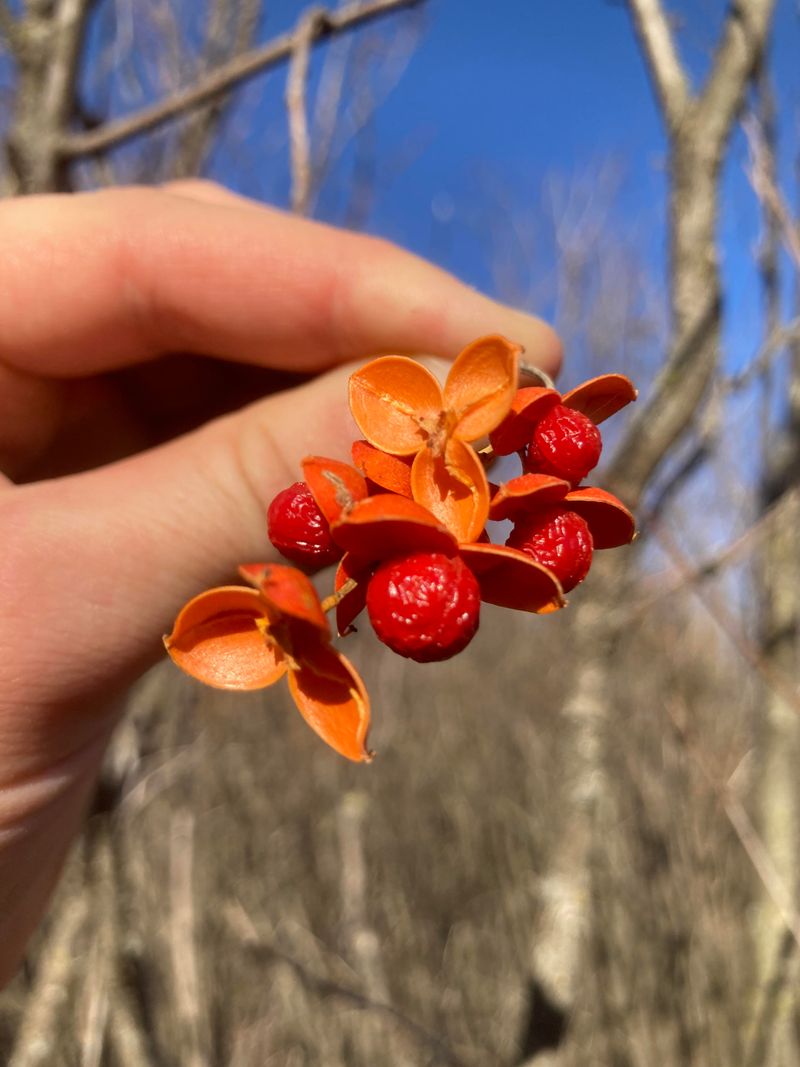
Small round berries are splitting open on thick vines that wrap around trees across Indiana right now. The yellow outer husk peels back in three neat parts and shows a glossy, bright red center.
I love how the color pops against gray bark and thinning leaves along Indiana roadsides in October. Cut stems of the vine were once sold in craft shops for fall wreaths, though Indiana now bans selling or moving the plant.
Birds eat the fruit through fall and winter and carry the seeds into woods, fields, and fencerows. Indiana’s invasive species groups list the vine as a problem, and land managers watch for it closely.
The vine can wrap a trunk tightly and climb high into the canopy of a tall tree. Have you spotted those orange clusters hanging from a fence or tree near your own yard this month?
© Reddit
Those splitting orange berries have a long travel story that begins on the other side of the world. Oriental bittersweet is a woody vine from East Asia, and it was brought to North America long ago.
Gardeners first planted it as an ornamental, since the twisting stems and bright fruit looked lovely in fall displays. Over time the vine escaped yards and gardens and began growing wild along fences, roadsides, and forest edges.
Indiana agencies treat the plant as a serious invader because it spreads quickly and crowds out native plants. Extension specialists and other land experts encourage residents to learn the plant so they can manage it early.
Its leaves are round to oval with tiny teeth along the edges, and they turn yellow in autumn. Right now in October, those yellow leaves make the orange fruit easier to spot from a trail or road.
The stems are woody, twisting, and often as thick as a wrist on older vines in the woods. Climbing stems spiral around trunks, and the coils can squeeze the bark as the stem thickens each year.
Orange roots are another clue, since the root bark of this vine shows a bright orange color when scratched. That detail can help you confirm the plant when fruit has already dropped or leaves have fallen.
Because it grows fast, even a small patch can spread into a larger tangle within a few seasons. Spotting young plants this fall gives you a head start, since small seedlings are much easier to pull.
© chickendvm.com
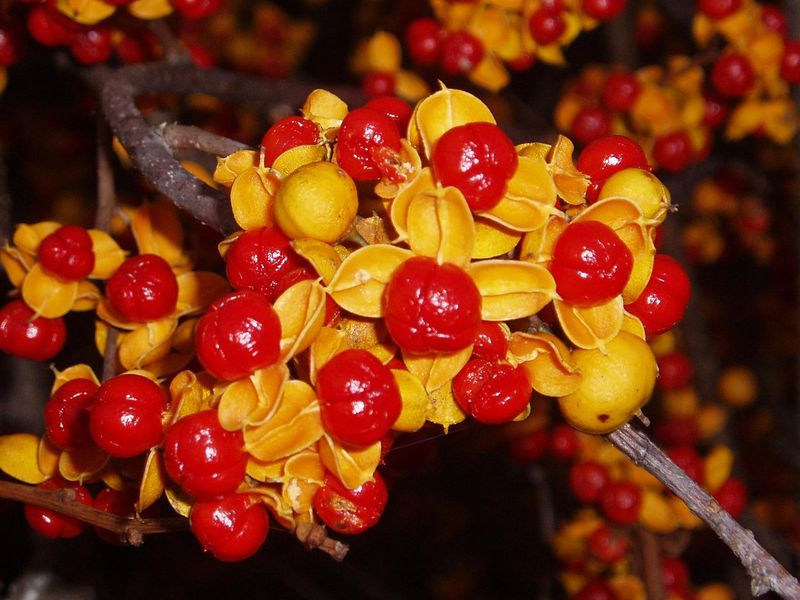
Tiny three-part capsules do the splitting, and the colorful show can last for weeks across the fall landscape. Botanists call them capsules, though most people call them berries because the bright color looks so much like fruit.
Each round capsule is about the size of a pea and turns yellow as autumn weather cools the air. Around now, the yellow shell cracks along three seams and folds back like tiny petals around the center.
Inside, each seed sits wrapped in a fleshy red-orange coating that stands out sharply against the pale husk. Birds notice that coating from far away, and it works like a bright signboard pointing toward a snack.
Look closely and you will see the fruits sit in small groups right beside the leaf joints. Native bittersweet holds its fruit differently, and a later section covers that difference in more detail.
Fruiting stems can look tempting for a vase, but moving them can scatter seeds and is not allowed under Indiana’s invasive plant rule. Skip using wild-cut stems in wreaths or compost piles, and bag any trimmings for the trash instead.
Fruits often stay on the vine well into winter, giving hungry birds a long supply of easy meals. Each seed that survives a bird’s trip can sprout in leaf litter, and seedlings often appear near fence lines.
A quick walk with a notebook can show you how many vines are fruiting in your own woods this month. Photos taken now, while the husks are open, will make identification easier when you ask for advice.
© Gardening Know How
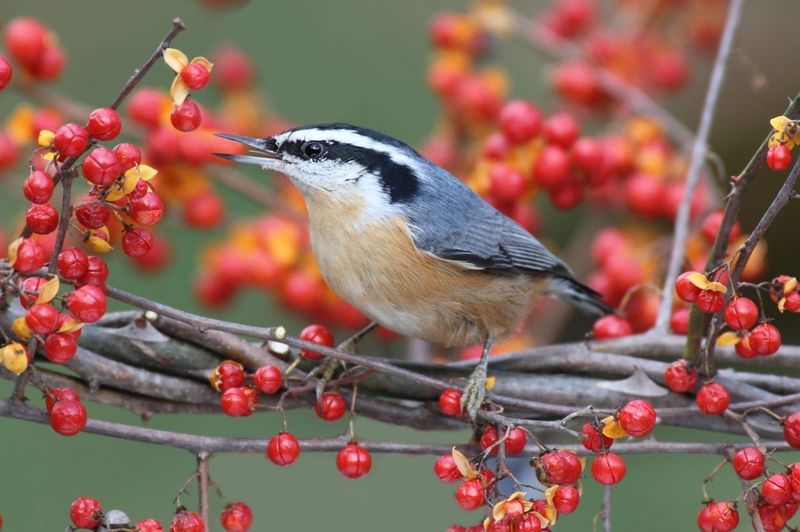
Birds such as robins and starlings are known to eat the fruit, so woodlot edges are good places to look. Seeds pass through the bird, and many stay able to sprout after landing under a perch or fence post.
That habit explains why new vines pop up in neat lines beneath power wires, fences, and low tree limbs. Birds rest on those spots, drop seeds below, and leave a pattern that is easy to follow once noticed.
Woodlots across Indiana make an inviting target because they offer perches, partial shade, and plenty of young trees to climb. Seedlings can grow in sun or shade, which gives the vine a wider range than many native climbers.
Small woodlots have lots of edge compared with interior forest, and edges give birds many landing spots. Landowners with wooded corners may want to walk those borders this fall and look for orange fruit.
Spread does not rely only on birds, since mowers, brush piles, and moving water can also carry stems or seeds. Cleaning boots and equipment after working near vines is a simple habit that helps limit new patches.
Because fruits ripen in autumn, this is a helpful time to map where plants are producing seed. Marking vines with bright flagging tape lets you return later in the season and treat the right stems.
Sharing what you find with a county Extension office or local conservation group helps track the vine’s spread. Even a quick photo with a location pin gives experts useful information about where seeds are landing.
© Reddit
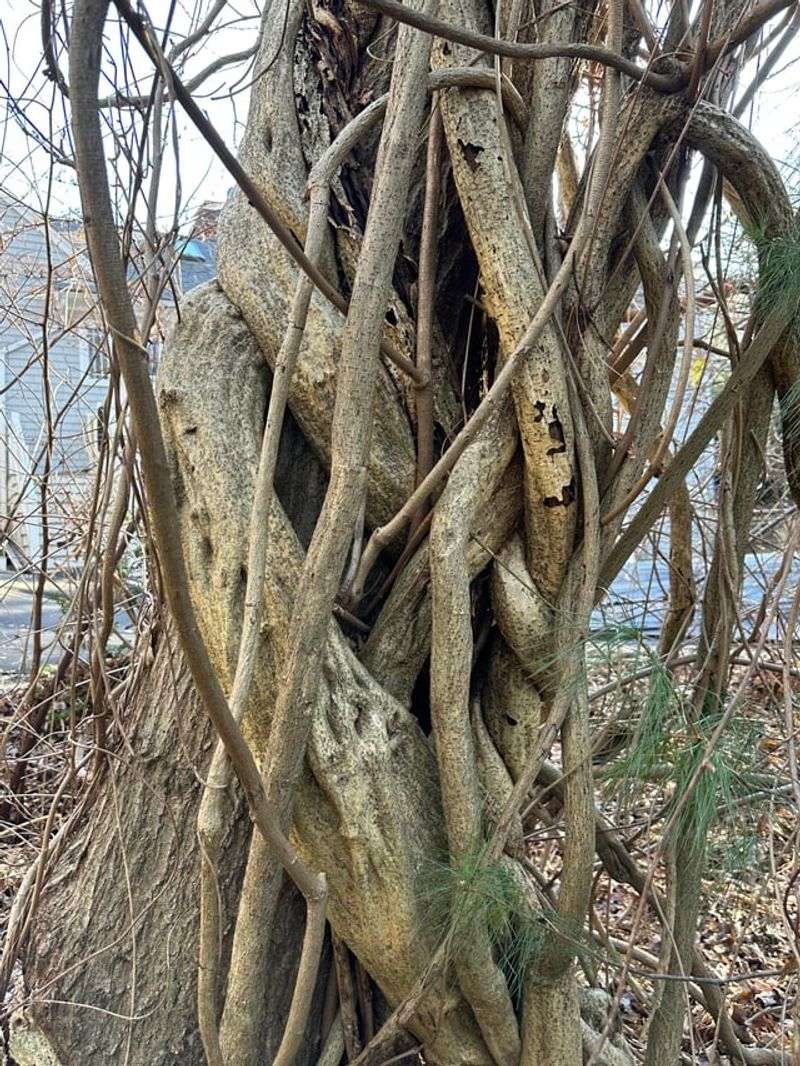
A tree draped in thick vines can catch far more ice and snow than a clean tree nearby. Extra weight on the limbs raises the chance of cracked branches when winter weather rolls through Indiana.
Tangled vine stems also hold onto snow and ice, so a thick mat can add a surprising amount of load. Younger trees with thin trunks and shallow roots often struggle the most under that pressure during storms.
Weight is only part of the story, because the vine also competes with its host for sunlight. Leaves piled in the upper canopy can shade out the tree’s own foliage during the growing season.
Woody stems that coil around a trunk can tighten as they grow thicker, squeezing the bark underneath. That squeezing can slow the movement of water and sugars, which leaves the tree weaker over many years.
Fall is a smart time to look up and check your trees before the first heavy storms arrive. Watch for sagging limbs, thick vines in the crown, and cracks near branch unions on large trees.
Trees near houses, driveways, and power lines deserve extra attention, since falling limbs can cause real trouble. Call a certified arborist for any work high in a tree, because climbing with tools is risky.
Cutting vines at the lower trunk now is a practical step that stops their growth before winter. Leave the upper vines hanging for now, since pulling them down can harm branches and bring debris overhead.
© Prairie Moon Nursery
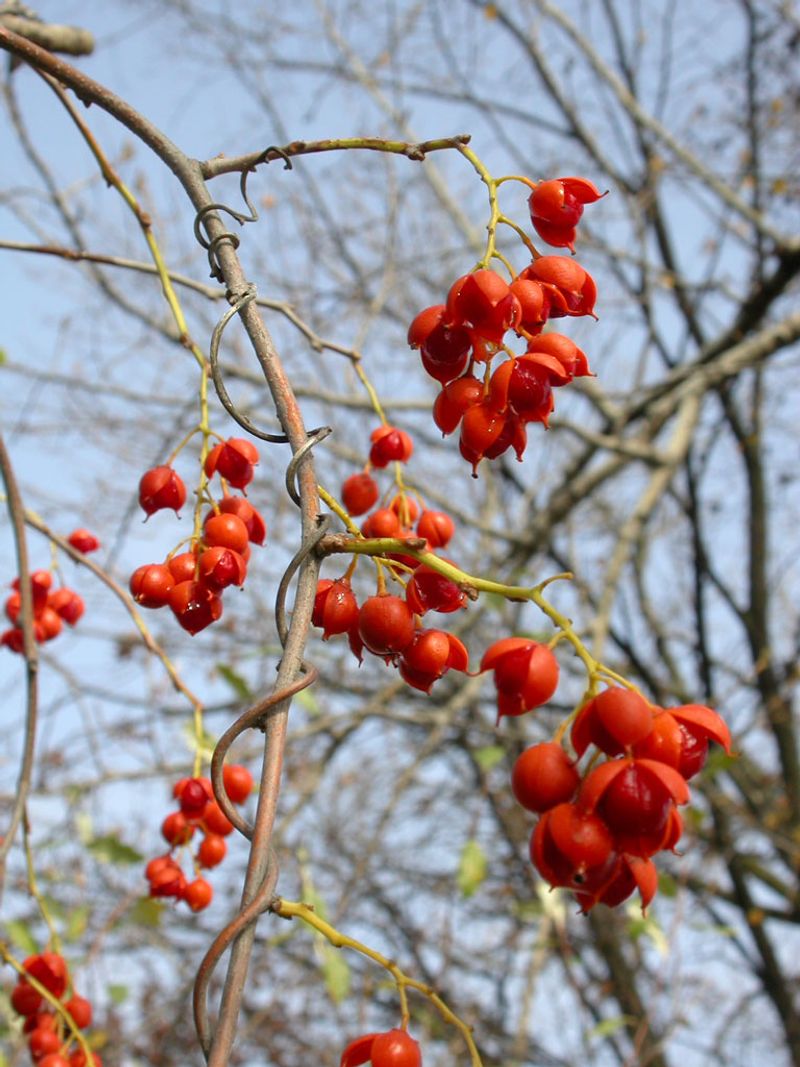
American bittersweet is the native cousin, and it grows wild in parts of Indiana, though far less often. Both vines twine, both show bright red-orange centers, and both can fool a quick glance from a moving car.
Check where the fruit sits first, since the native vine holds berries in clusters at the stem tips. The invasive vine instead tucks small groups of fruit along the stem, right beside the leaves.
Leaf shape adds another clue, because native leaves are longer, narrower, and more pointed than the rounded invasive ones. Hold a leaf next to a ruler or coin, and the difference in proportion becomes easier to see.
Because hybrids between the two vines can occur, even experts sometimes rely on several clues instead of just one. When you feel unsure, send photos to an Extension office and let a specialist confirm the identification.
Native bittersweet matters for wildlife and for natural woodland diversity, which makes careful identification worth the extra effort. Removing the wrong vine by mistake would take away a plant that belongs in Indiana woods.
Native bittersweet has become less common in some regions, partly because its invasive relative spreads so aggressively. Protecting any true native vines you find gives local birds and insects a better chance at healthy habitat.
Take a close look at every orange-fruited vine on your property before you cut anything this autumn. A few minutes with a hand lens and a field guide can prevent a costly mistake.
© Alliance for the Chesapeake Bay
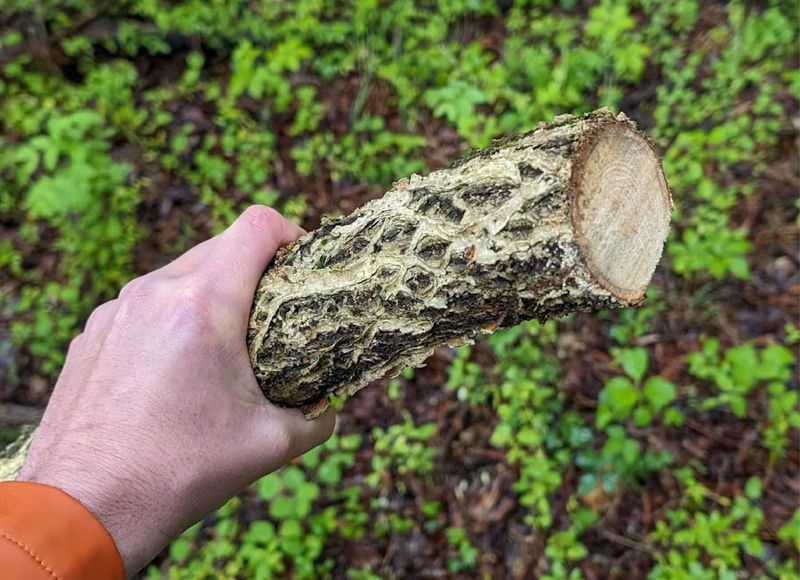
Grab loppers and a pair of sturdy gloves, because cutting stems near the ground is the standard first move. Severing the climbing stem close to the soil cuts the upper vine off from its roots right away.
Vines left hanging in the tree will slowly dry out and fade, so skip the urge to yank them down. Pulling on high stems can snap branches or drop heavy tangles onto your head, so stay on the ground.
Cut stumps often resprout, so extension guides usually recommend treating the fresh cut with a labeled herbicide. Follow the product label closely, and check Purdue Extension or the Indiana DNR for current advice on products.
Autumn works well for this job, since plants are moving energy toward the roots before winter arrives. Apply treatments on a dry day above the temperature listed on the label, and keep pets away.
Small seedlings come up easily when the soil is damp, so pull them by hand and remove the roots. Leave no root fragments behind, since bright orange pieces can sometimes sprout again if left in the ground.
Fruit-bearing stems need careful handling, so clip them into a sturdy bag and send them out with household trash. Compost piles and brush heaps may let seeds survive, and loose berries can drop while you carry them.
Plan to return next spring and again each fall, since regrowth is common and follow-up keeps the work effective. Patience pays off, and a few years of steady effort can open space for native seedlings to return.
The post Orange Berries Are Splitting Open On Vines Wrapped Around Indiana Trees appeared first on Positivebloom.
I love how the color pops against gray bark and thinning leaves along Indiana roadsides in October. Cut stems of the vine were once sold in craft shops for fall wreaths, though Indiana now bans selling or moving the plant.
Birds eat the fruit through fall and winter and carry the seeds into woods, fields, and fencerows. Indiana’s invasive species groups list the vine as a problem, and land managers watch for it closely.
The vine can wrap a trunk tightly and climb high into the canopy of a tall tree. Have you spotted those orange clusters hanging from a fence or tree near your own yard this month?
A Fast-Growing Invasive Vine Produces Those Split Berries
Those splitting orange berries have a long travel story that begins on the other side of the world. Oriental bittersweet is a woody vine from East Asia, and it was brought to North America long ago.
Gardeners first planted it as an ornamental, since the twisting stems and bright fruit looked lovely in fall displays. Over time the vine escaped yards and gardens and began growing wild along fences, roadsides, and forest edges.
Indiana agencies treat the plant as a serious invader because it spreads quickly and crowds out native plants. Extension specialists and other land experts encourage residents to learn the plant so they can manage it early.
Its leaves are round to oval with tiny teeth along the edges, and they turn yellow in autumn. Right now in October, those yellow leaves make the orange fruit easier to spot from a trail or road.
The stems are woody, twisting, and often as thick as a wrist on older vines in the woods. Climbing stems spiral around trunks, and the coils can squeeze the bark as the stem thickens each year.
Orange roots are another clue, since the root bark of this vine shows a bright orange color when scratched. That detail can help you confirm the plant when fruit has already dropped or leaves have fallen.
Because it grows fast, even a small patch can spread into a larger tangle within a few seasons. Spotting young plants this fall gives you a head start, since small seedlings are much easier to pull.
Yellow Husks Open To Reveal Bright Red Seeds Inside
© chickendvm.com
Tiny three-part capsules do the splitting, and the colorful show can last for weeks across the fall landscape. Botanists call them capsules, though most people call them berries because the bright color looks so much like fruit.
Each round capsule is about the size of a pea and turns yellow as autumn weather cools the air. Around now, the yellow shell cracks along three seams and folds back like tiny petals around the center.
Inside, each seed sits wrapped in a fleshy red-orange coating that stands out sharply against the pale husk. Birds notice that coating from far away, and it works like a bright signboard pointing toward a snack.
Look closely and you will see the fruits sit in small groups right beside the leaf joints. Native bittersweet holds its fruit differently, and a later section covers that difference in more detail.
Fruiting stems can look tempting for a vase, but moving them can scatter seeds and is not allowed under Indiana’s invasive plant rule. Skip using wild-cut stems in wreaths or compost piles, and bag any trimmings for the trash instead.
Fruits often stay on the vine well into winter, giving hungry birds a long supply of easy meals. Each seed that survives a bird’s trip can sprout in leaf litter, and seedlings often appear near fence lines.
A quick walk with a notebook can show you how many vines are fruiting in your own woods this month. Photos taken now, while the husks are open, will make identification easier when you ask for advice.
Birds Spread The Seeds Across Indiana Woodlots
© Gardening Know How
Birds such as robins and starlings are known to eat the fruit, so woodlot edges are good places to look. Seeds pass through the bird, and many stay able to sprout after landing under a perch or fence post.
That habit explains why new vines pop up in neat lines beneath power wires, fences, and low tree limbs. Birds rest on those spots, drop seeds below, and leave a pattern that is easy to follow once noticed.
Woodlots across Indiana make an inviting target because they offer perches, partial shade, and plenty of young trees to climb. Seedlings can grow in sun or shade, which gives the vine a wider range than many native climbers.
Small woodlots have lots of edge compared with interior forest, and edges give birds many landing spots. Landowners with wooded corners may want to walk those borders this fall and look for orange fruit.
Spread does not rely only on birds, since mowers, brush piles, and moving water can also carry stems or seeds. Cleaning boots and equipment after working near vines is a simple habit that helps limit new patches.
Because fruits ripen in autumn, this is a helpful time to map where plants are producing seed. Marking vines with bright flagging tape lets you return later in the season and treat the right stems.
Sharing what you find with a county Extension office or local conservation group helps track the vine’s spread. Even a quick photo with a location pin gives experts useful information about where seeds are landing.
Heavy Growth Can Weigh Down Branches In Winter Storms
A tree draped in thick vines can catch far more ice and snow than a clean tree nearby. Extra weight on the limbs raises the chance of cracked branches when winter weather rolls through Indiana.
Tangled vine stems also hold onto snow and ice, so a thick mat can add a surprising amount of load. Younger trees with thin trunks and shallow roots often struggle the most under that pressure during storms.
Weight is only part of the story, because the vine also competes with its host for sunlight. Leaves piled in the upper canopy can shade out the tree’s own foliage during the growing season.
Woody stems that coil around a trunk can tighten as they grow thicker, squeezing the bark underneath. That squeezing can slow the movement of water and sugars, which leaves the tree weaker over many years.
Fall is a smart time to look up and check your trees before the first heavy storms arrive. Watch for sagging limbs, thick vines in the crown, and cracks near branch unions on large trees.
Trees near houses, driveways, and power lines deserve extra attention, since falling limbs can cause real trouble. Call a certified arborist for any work high in a tree, because climbing with tools is risky.
Cutting vines at the lower trunk now is a practical step that stops their growth before winter. Leave the upper vines hanging for now, since pulling them down can harm branches and bring debris overhead.
A Native Look-Alike Carries Its Berries Differently
© Prairie Moon Nursery
American bittersweet is the native cousin, and it grows wild in parts of Indiana, though far less often. Both vines twine, both show bright red-orange centers, and both can fool a quick glance from a moving car.
Check where the fruit sits first, since the native vine holds berries in clusters at the stem tips. The invasive vine instead tucks small groups of fruit along the stem, right beside the leaves.
Leaf shape adds another clue, because native leaves are longer, narrower, and more pointed than the rounded invasive ones. Hold a leaf next to a ruler or coin, and the difference in proportion becomes easier to see.
Because hybrids between the two vines can occur, even experts sometimes rely on several clues instead of just one. When you feel unsure, send photos to an Extension office and let a specialist confirm the identification.
Native bittersweet matters for wildlife and for natural woodland diversity, which makes careful identification worth the extra effort. Removing the wrong vine by mistake would take away a plant that belongs in Indiana woods.
Native bittersweet has become less common in some regions, partly because its invasive relative spreads so aggressively. Protecting any true native vines you find gives local birds and insects a better chance at healthy habitat.
Take a close look at every orange-fruited vine on your property before you cut anything this autumn. A few minutes with a hand lens and a field guide can prevent a costly mistake.
Cutting Stems Near The Ground Is The Usual First Step
© Alliance for the Chesapeake Bay
Grab loppers and a pair of sturdy gloves, because cutting stems near the ground is the standard first move. Severing the climbing stem close to the soil cuts the upper vine off from its roots right away.
Vines left hanging in the tree will slowly dry out and fade, so skip the urge to yank them down. Pulling on high stems can snap branches or drop heavy tangles onto your head, so stay on the ground.
Cut stumps often resprout, so extension guides usually recommend treating the fresh cut with a labeled herbicide. Follow the product label closely, and check Purdue Extension or the Indiana DNR for current advice on products.
Autumn works well for this job, since plants are moving energy toward the roots before winter arrives. Apply treatments on a dry day above the temperature listed on the label, and keep pets away.
Small seedlings come up easily when the soil is damp, so pull them by hand and remove the roots. Leave no root fragments behind, since bright orange pieces can sometimes sprout again if left in the ground.
Fruit-bearing stems need careful handling, so clip them into a sturdy bag and send them out with household trash. Compost piles and brush heaps may let seeds survive, and loose berries can drop while you carry them.
Plan to return next spring and again each fall, since regrowth is common and follow-up keeps the work effective. Patience pays off, and a few years of steady effort can open space for native seedlings to return.
The post Orange Berries Are Splitting Open On Vines Wrapped Around Indiana Trees appeared first on Positivebloom.