
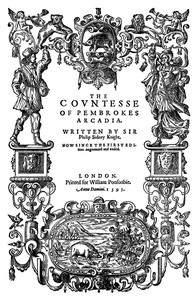
The Countess of Pembroke's Arcadia by Philip Sidney
So, you've picked up a book from the 1580s. You might be expecting something dry, but The Countess of Pembroke's Arcadia is anything but. It’s a sprawling, adventurous romance that feels like the great-grandparent of every fantasy epic you've ever loved.
The Story
Two brave princes, Pyrocles and Musidorus, get shipwrecked and find themselves in the idyllic land of Arcadia. The problem? Its king, Basilius, has run off to the woods with his family because of a creepy oracle. He's left his kingdom open to trouble. The princes decide to help, but they’re immediately smitten with the king's daughters. Pyrocles disguises himself as a woman named Zelmane to get close to Philoclea, while Musidorus poses as a shepherd to woo Pamela. Their secret missions of love get tangled up with a serious political plot. The king's scheming sister-in-law, Cecropia, kidnaps the princesses, trying to force one to marry her son and seize the throne. What follows is a chain of battles, rescues, betrayals, and dramatic speeches about love and duty. It’s a story where every character has a secret, and every peaceful meadow might hide an ambush.
Why You Should Read It
Look, the language is old-fashioned—I won't lie. But once you get into the rhythm, it’s incredibly rewarding. Sidney creates characters who feel real despite the ornate setting. You root for the princes, even when their disguises lead to hilarious and awkward situations. You despise the villainous Cecropia. The book asks big questions that still matter: What does it mean to be a good ruler? How do you balance love with responsibility? Is passion a strength or a weakness? It’s also just a great, twisty plot. You never know who’s going to ride over the next hill or confess their love in overly elaborate poetry. It’s a window into what people in the Renaissance found exciting and romantic.
Final Verdict
This book is perfect for patient readers who love classic literature and the origins of the fantasy genre. If you enjoyed The Once and Future King or even the political machinations in Game of Thrones, you'll find fascinating ancestors here. It’s also a great pick for anyone interested in Renaissance thought and storytelling. It’s not a quick beach read, but it’s a deeply satisfying journey. Give yourself permission to read it slowly, savor the language, and get lost in Arcadia.
This digital edition is based on a public domain text. You are welcome to share this with anyone.
Patricia Davis
2 years agoIf you're tired of surface-level information, the quality of the diagrams and illustrations (if applicable) is top-notch. Top-tier content that deserves more recognition.
Thomas Gonzalez
7 months agoIt’s refreshing to see such a high standard of digital publishing.
Joseph Garcia
4 months agoIt effectively synthesizes complex ideas into a coherent whole.
John Williams
1 year agoI decided to give this a try based on a colleague's recommendation, the chapter on advanced strategies offers insights I haven't seen elsewhere. I’ll definitely be revisiting some of these chapters again soon.






George Moore
10 months agoI stumbled upon this title during my weekend research and the way it handles controversial points with balance is quite professional. Simple, effective, and authoritative – what else could you ask for?